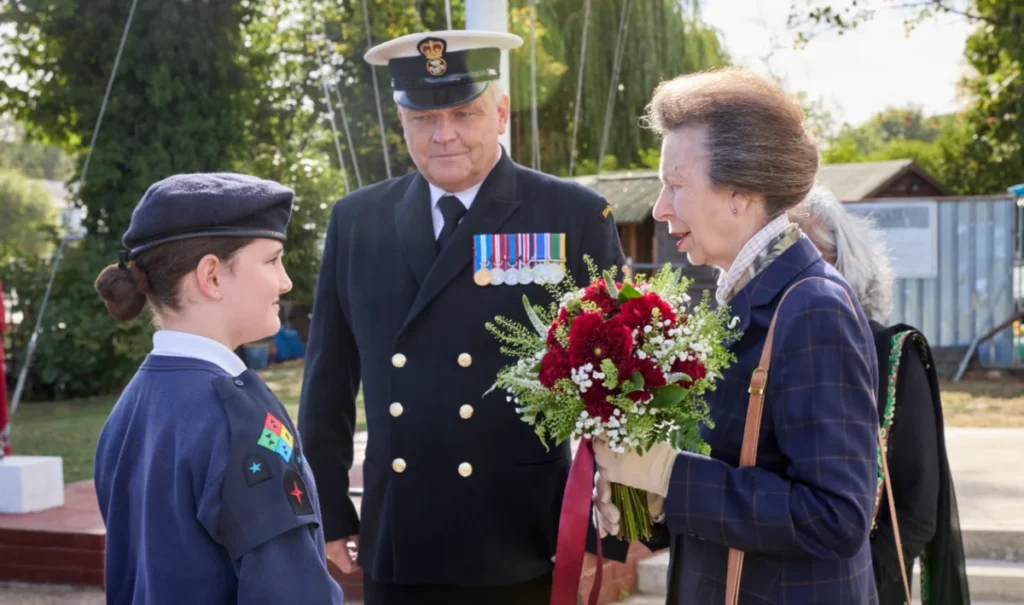

The Princess Royal has officially inaugurated the state-of-the-art new headquarters for the Sunbury and Walton Sea Cadets, marking the successful conclusion of a protracted 13-year fundraising and development effort to secure a permanent home for the unit. Serving as the Patron of the Marine Society and Sea Cadets (MSSC) alongside her role as Admiral of the Sea Cadet Corps, Her Royal Highness traveled to the banks of the River Thames to inspect the newly completed facility, meet with dedicated local volunteers, and engage directly with the young people whose lives are shaped by the organization’s maritime youth programs.
The arrival of the royal visitor signified more than just the ceremonial opening of a building; it represented the culmination of years of grassroots resilience, community campaigning, and logistical persistence. Situated directly adjacent to the waterway, the new facility grants cadets immediate access to the river, eliminating previous travel barriers and dramatically expanding the unit’s capacity to deliver hands-on waterborne training. During her tour, The Princess Royal observed various active training sessions, interacted with high-achieving cadets, and permanently commemorated the day by unveiling a special plaque dedicated to the unit’s future generations.
A Decadelong Journey: The 13-Year Path to a Permanent Home
The opening of the Sunbury and Walton facility closes a chapter of uncertainty that began over a decade ago. For years, the unit operated out of outdated, makeshift, or temporary spaces that severely limited its operational capabilities and constrained the number of young people it could accommodate. Establishing a modern, fit-for-purpose headquarters required navigating complex planning permissions, securing substantial funding streams, and relying on the unwavering dedication of local trustees, community partners, and volunteers.
The project faced numerous hurdles typical of large-scale community infrastructure initiatives, including economic fluctuations, fundraising deficits, and architectural constraints tied to the riverside location. Despite these obstacles, the community refused to abandon the vision. Volunteers organized local charity events, sought regional grants, and engaged with corporate donors who recognized the value of youth development programs in the borough of Spelthorne and surrounding areas.
Throughout this 13-year chronology, the core mission remained unchanged: to provide local youth with a secure environment fostering self-discipline, resilience, and practical life skills. The completion of the building ensures that Sunbury and Walton Sea Cadets will no longer face the existential threats of displacement or substandard facilities, anchoring the organization firmly within the local community for decades to come.
Inside the New Facility: Modern Infrastructure Meets Waterfront Access
Designed to meet the rigorous demands of contemporary youth training, the newly constructed headquarters offers a significant upgrade in both square footage and functional capability. The building features flexible, modern classrooms equipped for theoretical learning, dedicated storage spaces for expensive maritime equipment, and improved communal areas designed to encourage social cohesion and teamwork among cadets.
Crucially, the building’s strategic positioning on the River Thames provides direct, unhindered access to the water. This proximity is a game-changer for the unit’s curriculum. Historically, organizing water-based activities required extensive transport logistics, moving heavy boats, safety gear, and cadets to distant reservoirs or external water sports centers. Now, cadets can step directly from the headquarters onto the docks, maximizing the time available for active learning.
The enhanced infrastructure supports a wide array of accredited programs. Young people utilizing the facility will now have optimal conditions to train in:
- Traditional sailing and competitive rowing
- Modern paddlesports, including kayaking and canoeing
- Essential seamanship and knot-tying
- Advanced marine navigation and chart-reading
- Introductory marine engineering and mechanics
- Comprehensive first-aid and survival techniques
Furthermore, the integration of dedicated first-aid training spaces allows instructors to simulate emergency scenarios in controlled environments, ensuring that cadets achieve nationally recognized certifications that boost their personal development and future employability.
Personal Milestones: Cadet Perspectives on a Royal Visit
For the young members of the Sunbury and Walton unit, the royal visit provided an unforgettable milestone, blending high-pressure ceremonial duties with moments of personal triumph.
Leading Cadet Alice, 16, bore the responsibility of commanding the Cadet Guard and escorting The Princess Royal during the official plaque unveiling. Reflecting on the magnitude of the occasion, Alice admitted that when she first joined the Sea Cadets, she never could have envisioned standing shoulder-to-shoulder with a senior member of the British Royal Family. She credited the organization with instilling profound self-assurance and leadership capabilities, noting that her responsibilities often involve mentoring younger cadets out on the water. According to Alice, the new headquarters provides an invaluable spatial foundation that will enhance daily teaching methods, deepen peer bonds, and elevate the overall quality of training sessions.
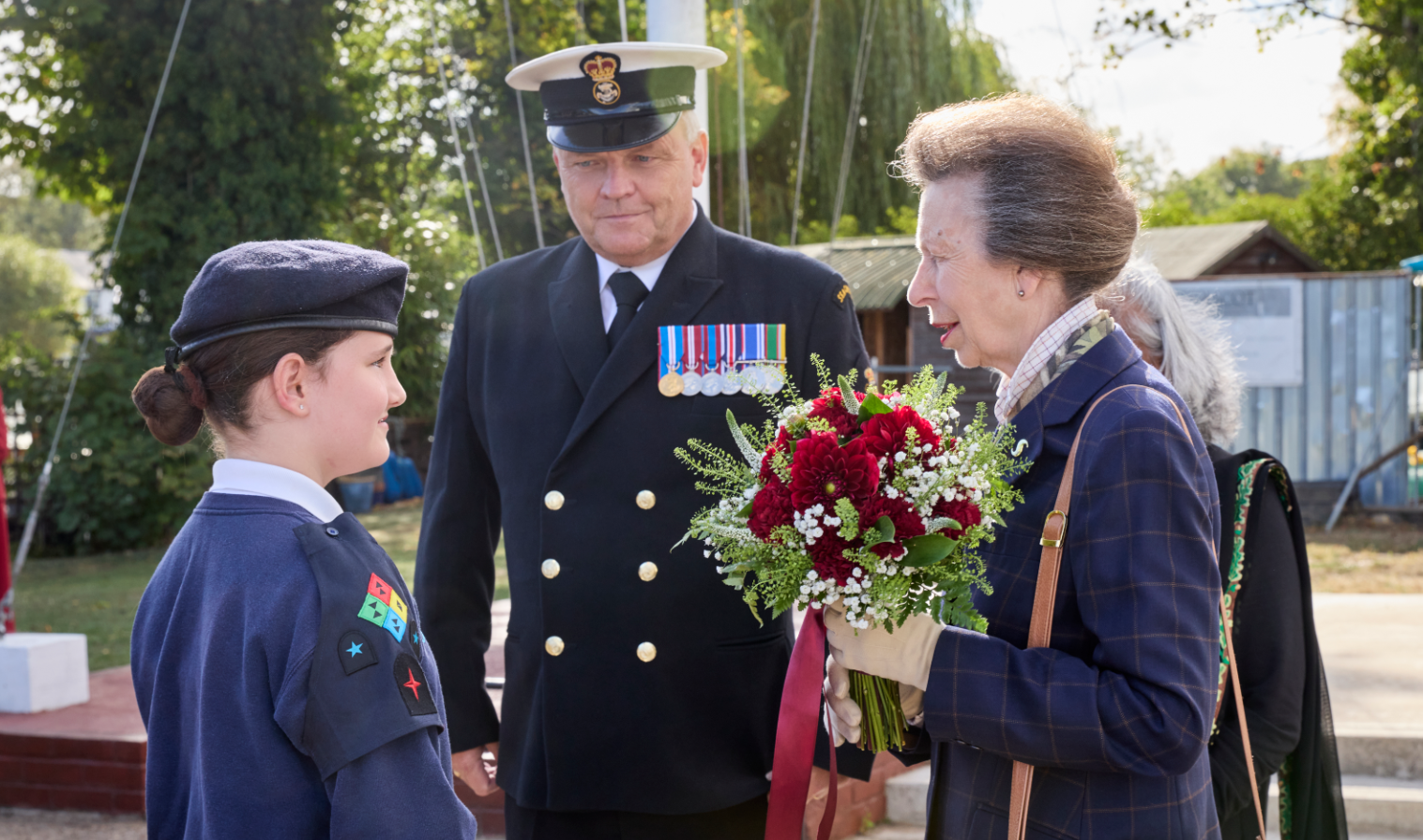
Similarly, 11-year-old Able Junior Cadet Breah Rough experienced a whirlwind of emotions during the royal itinerary. Having been a member of the unit for just over a year, Breah found herself participating in a live First Aid demonstration closely observed by The Princess Royal before presenting her with a traditional floral posy. Although she confessed that the encounter was initially nerve-wracking, Breah expressed immense pride in her performance and stated her clear intention to remain active within the organization until she ages out at 18. Like her older peers, Breah highlighted the sheer convenience of the riverside location, emphasizing how much more efficient training has become now that boats are accessible right outside the back door.
Leadership Reactions and Institutional Significance
Guy Holloway, Chief Executive Officer of the Marine Society and Sea Cadets, offered an official assessment of the milestone, characterizing the opening as a watershed moment for the unit and the regional community. Holloway praised the extraordinary resilience demonstrated by the volunteers, trustees, and supporters whose tenacity carried the project across the finish line over the span of 13 years.
"This new headquarters is not merely a collection of rooms; it is a permanent investment in the potential of our young people," Holloway stated. "The dedication shown by our local volunteers to secure this resource proves how deeply valued the Sea Cadets movement is within Sunbury and Walton. We have created a permanent, professional platform from which future generations can launch their personal and maritime adventures."
Institutional leaders within the wider charity sector have also noted the strategic importance of stabilizing community-level infrastructure. Facilities like the one in Sunbury and Walton serve as vital anchors for youth services, particularly in regions where traditional extracurricular funding has faced downward pressure.
Broader Impact and National Context of the Sea Cadets
To understand the true significance of the Sunbury and Walton opening, it must be viewed within the framework of the national Sea Cadets organization. As one of the United Kingdom’s premier maritime youth charities, the Sea Cadets operate on a scale that profoundly influences youth development nationwide.
Recent operational data released by the charity underscores the vast scope of its national footprint:
- Membership Reach: The organization currently supports more than 14,000 young people aged between nine and 17.
- Unit Network: These cadets are distributed across a network of more than 400 active units situated throughout England, Scotland, Wales, and Northern Ireland.
- Volunteer Backbone: Delivering these programs relies heavily on an army of approximately 9,000 adult volunteers who donate their time as instructors, administrators, and mentors.
- Boating Activity: During the 2025/26 operational period, cadets collectively completed in excess of 416,000 hours of active boating.
- Qualification Attainment: Young members earned more than 37,000 nationally recognized qualifications, ranging from sailing competencies to leadership certificates.
- Residential Training: Cadets participated in over 70,000 days of specialist off-site training away from their local home units.
These figures illustrate that the Sea Cadets function as far more than a recreational club; they operate as an alternative educational framework that imparts vital soft skills—such as teamwork, discipline, communication, and situational awareness—that are rarely taught in standard academic classrooms.
Analysis: The Future of Maritime Youth Development in the UK
The successful realization of the Sunbury and Walton headquarters offers a case study in modern community asset development. In an era where many youth organizations struggle with facility maintenance and shrinking municipal support, the 13-year endurance of the Sunbury and Walton unit demonstrates the viability of community-led capital projects.
Analysts examining the socioeconomic impact of uniformed youth groups frequently highlight the return on investment these organizations provide. By engaging young people from diverse socioeconomic backgrounds in structured maritime adventures, the Sea Cadets help bridge the adventure gap—the disparity in access to outdoor and water-based pursuits between affluent and disadvantaged youth.
Furthermore, the emphasis on maritime skills aligns with broader national interests concerning the maritime sector. With the UK historically relying heavily on maritime trade, engineering, and defense, early exposure to seamanship, navigation, and marine engineering sows the seeds for future career pipelines into the Royal Navy, Merchant Navy, commercial shipping, and coastal logistics industries.
The presence of The Princess Royal—herself holding high-ranking honorary military affiliations and demonstrating a lifelong commitment to naval and maritime charities—underscores the establishment’s recognition of these grassroots contributions. By lending her royal patronage and presence to the opening, she elevated the profile of the Sunbury and Walton unit, ensuring that its decade-long struggle culminated in a moment of national recognition.
As the doors officially open to the next generation of cadets, the Sunbury and Walton Sea Cadets stand as a fully equipped, modern institution. Armed with direct access to the River Thames, state-of-the-art classrooms, and a permanent home secured through 13 years of collective willpower, the unit is poised to train, mentor, and inspire local youth for decades to come.