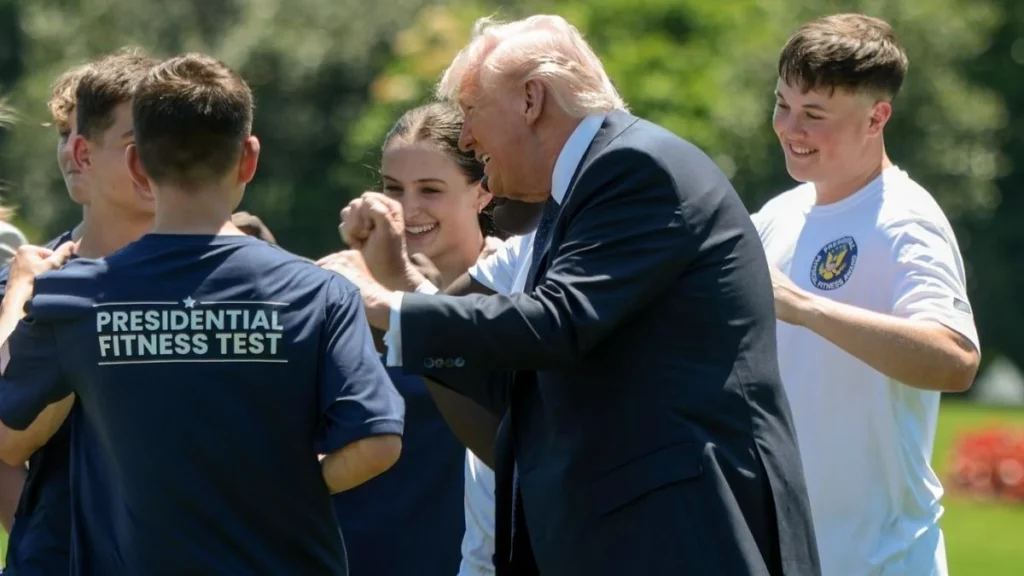

The South Lawn of the White House served as the backdrop for a multifaceted event focused on youth athletics and the revival of traditional physical fitness standards. President Donald Trump, joined by members of his cabinet and various professional athletes, hosted a group of student-athletes to celebrate the restoration of the Presidential Physical Fitness Award. However, the event, which was designed to highlight the importance of physical activity for the nation’s youth, also became a platform for the president to discuss his personal exercise habits, engage in a public demonstration of his golf skills, and offer commentary on international nuclear policy.
The gathering featured students from across the country participating in various sports stations, ranging from football drills to track and field exercises. This initiative marks a significant shift in the administration’s approach to national health, specifically moving back toward the competitive testing models that characterized previous decades. As the president moved between the various athletic stations, he eventually arrived at a temporary putting green, where he attempted to showcase the golfing abilities that have become a hallmark of his public persona and private leisure time.
The Putting Green Demonstration and Athletic Performance
Despite his frequent visits to his private golf clubs, the president’s performance on the South Lawn putting green did not mirror his usual confidence on the links. In front of a crowd of young athletes and members of the press, President Trump attempted several short-range putts. Observers noted that the president missed each of the attempts, failing to hole the ball despite multiple tries. After the unsuccessful demonstration, the president opted to step away from the green, moving on to engage with other participants in the event.
While the misses were lighthearted in the context of the day’s festivities, they provided a rare moment of public athletic fallibility for a president who frequently emphasizes his prowess in the sport. Golf has been a central pillar of the president’s personal brand for decades, and his administration has often highlighted his handicap and skill level as a testament to his vitality. Following the outdoor activities, the event transitioned to the Oval Office for the formal signing of a proclamation, where the tone shifted from physical activity to administrative policy and personal reflection.
Reviving the Presidential Physical Fitness Award
The primary policy objective of the event was the official revival of the Presidential Physical Fitness Award. This program, which originated during the Eisenhower administration in 1956 following reports that American children were less fit than their European counterparts, was a staple of the American educational experience for over half a century. It was notably championed by President John F. Kennedy, who viewed physical fitness as a matter of national security and vitality.
The award program was largely phased out and replaced during the Obama administration. In 2012, the "President’s Challenge" was redesigned to focus more on health-based standards and overall lifestyle rather than the high-performance, competitive metrics of the original award. This shift was part of a broader initiative led by former First Lady Michelle Obama’s "Let’s Move!" campaign, which prioritized nutrition and daily activity over specific athletic benchmarks like pull-ups or timed runs.
By reintroducing the original award structure, the Trump administration signaled a return to a more traditional, merit-based approach to youth fitness. Proponents of this move argue that competitive standards encourage children to push their physical limits and provide a clear goal for achievement. Critics, however, have historically suggested that the rigors of the old test could discourage less athletic children and focus too heavily on raw strength rather than lifelong healthy habits.
Presidential Health Metrics and Personal Exercise Habits
During the signing ceremony in the Oval Office, President Trump addressed the children regarding his own views on physical fitness. In a moment of self-deprecating humor, the president commented on the intensity of his personal routine. "I work so hard on a personal basis," the president remarked. "I work out so much—like about one minute a day max if I’m lucky."
The comment was met with laughter from the attendees, but it also highlighted the ongoing public interest in the president’s health. According to the most recent official medical report released by the White House physician, the president stands at 6 feet 3 inches and weighs 224 pounds. These metrics have been a point of discussion among medical professionals and the public, particularly given the president’s known preference for fast food and his stated belief that the human body possesses a finite amount of energy, which should not be "wasted" on excessive exercise.
Despite his jokes about limited exercise, the president remains highly active in the world of golf. Data tracking the president’s schedule indicates that he has spent a significant portion of his presidency on the golf course. As of the date of the fitness event, records show he has played golf on 106 of the 471 days since his inauguration—roughly 22% of his time in office.
The Role of the Trump Organization’s Golf Portfolio
The president’s affinity for golf is not merely a personal hobby but also a core component of his business enterprise. The Trump Organization currently owns or operates 15 golf courses globally, including high-profile properties in Florida, New Jersey, New York, and Scotland. These courses frequently serve as the venues for the president’s weekend excursions and have occasionally been used for official diplomatic meetings with foreign leaders.
However, the president’s golf properties have not been without controversy. Reports from various news outlets, including Golfweek, have highlighted a series of challenges facing these clubs. Several properties have faced allegations ranging from health code violations in their dining facilities to workplace misconduct and legal disputes regarding membership dues. Additionally, the environmental impact of some of his international developments, particularly the course in Aberdeenshire, Scotland, has been a subject of ongoing debate between the Trump Organization and local conservationists.
The intersection of the president’s private business interests and his public role as a promoter of fitness creates a unique dynamic. While he uses the sport to encourage youth activity, the commercial nature of his golf empire remains a point of scrutiny for ethics watchdogs who monitor potential conflicts of interest.
Unexpected Foreign Policy Remarks to Youth Athletes
In a departure from the primary theme of physical health, President Trump used the Oval Office gathering to discuss complex geopolitical issues with the student-athletes. Specifically, he addressed the administration’s stance on Iran and its nuclear program. The president has been a vocal critic of the Joint Comprehensive Plan of Action (JCPOA), from which he withdrew the United States earlier in his term, citing concerns that the deal did not sufficiently prevent Iran from obtaining a nuclear weapon.
"We can’t let Iran have a nuclear weapon. You might be too young for this," the president told the children. He continued by suggesting that the youth might have a better grasp of the situation than many adults. "They probably know better than most people, but you can’t let a bunch of lunatics have a nuclear weapon, or the world would be in trouble."
The inclusion of such heavy rhetoric during a youth-focused event drew immediate attention. While presidents often use public events to reinforce their policy positions, the directness of the "lunatics" comment to a group of children was seen by some observers as an unusual rhetorical choice. It underscored the president’s "maximum pressure" campaign against Tehran, which involves a combination of economic sanctions and diplomatic isolation.
Observations of the Event’s Atmosphere
The event also featured speeches from various cabinet members and members of the President’s Council on Sports, Fitness, and Nutrition. During these segments, which detailed the technical aspects of the new fitness initiatives and the importance of nutritional education, some attendees noted that the president appeared to be momentarily disengaged. Reports surfaced that the president seemed to be dozing off or closing his eyes for extended periods while his subordinates spoke about the specifics of the fitness programs.
This observation, while anecdotal, contributed to the broader narrative of the day’s event: a mixture of formal policy rollout and the president’s distinct, often unpredictable personal style. The contrast between the high-energy drills of the young athletes on the lawn and the more subdued atmosphere of the indoor speeches provided a vivid illustration of the administration’s public-facing activities.
Implications for National Health Policy
The revival of the Presidential Physical Fitness Award and the broader emphasis on youth sports represent a specific vision for American public health. By moving away from the nutrition-heavy focus of the previous administration and returning to a model of athletic excellence and competition, the Trump administration is attempting to instill a different set of values in the nation’s youth.
The long-term impact of this policy shift remains to be seen. Public health experts generally agree that increasing physical activity among children is vital, especially as rates of childhood obesity remain a concern. However, there is a lack of consensus on whether competitive testing or inclusive, activity-based programs are more effective at producing lasting health outcomes.
As the event concluded, the student-athletes departed the White House with a renewed sense of the traditional standards they are now expected to meet. For the president, the day served as a reminder of the challenges of public performance—both on the putting green and on the global stage—as he continues to balance his personal interests with the formal duties of the executive branch. The blend of sports, business, and high-stakes foreign policy remains a defining characteristic of his administration’s approach to public engagement.