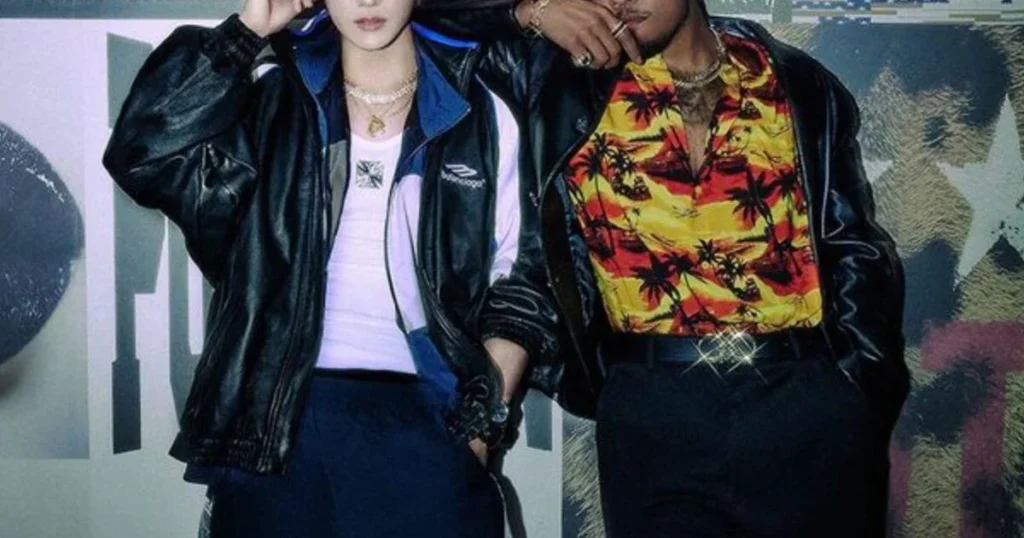

The global music industry is currently navigating a complex dialogue regarding the intersection of capital, cultural exchange, and professional etiquette following viral comments made by Anderson .Paak. The multi-Grammy-winning American singer, rapper, and producer recently sparked a significant online discourse after praising the business practices of Korean music labels and artists. During a recent public appearance and subsequent social media circulation of his remarks in mid-May 2026, .Paak highlighted what he perceived as a stark contrast between the financial reliability of the Korean music industry and other international markets. His assertion that Korean entities are among the few remaining sectors of the industry willing to provide substantial compensation and high-end hospitality for guest features has polarized fans and industry observers alike.
The Catalyst: Anderson .Paak’s Viral Commentary
The conversation began when a video clip of Anderson .Paak started circulating across platforms like X (formerly Twitter) and TikTok. In the footage, the Silk Sonic member candidly discussed the current state of collaborations in the music world. He noted that while many artists seek features based on clout or mutual interest, the logistical and financial realities often fall short. "Don’t nobody got no money except for Koreans," .Paak stated, adding that "International acts, they will pay you and fly you out and treat you right. Shout out to my Koreans."
The statement was delivered with .Paak’s signature charismatic flair, yet it touched upon a sensitive nerve within the music community. For many, it was seen as a validation of the rigorous and professional "K-pop system," which has become a dominant force in the global economy. For others, it raised questions about the transactional nature of cross-cultural collaborations and the ethics of Western artists engaging with the K-pop industry primarily for financial gain.
A History of Collaboration and Personal Connection
To understand the weight of .Paak’s comments, one must look at his long-standing relationship with South Korea. Anderson .Paak, born Brandon Paak Anderson, has a personal connection to the country; his mother was born in South Korea during the Korean War and was later adopted by an American family. This heritage has often informed his artistic journey and his openness to working with Seoul-based artists long before K-pop became a household name in the United States.
Over the years, .Paak has built an impressive portfolio of collaborations with Korean artists across various genres. He famously worked with the R&B singer DEAN on the 2015 track "Put My Hands On You." More recently, his interactions with the global juggernaut BTS have been well-documented. .Paak performed as a special guest drummer for BTS during their "Proof" Live performance of "Yet to Come," and his family, particularly his son, are known to be massive fans of the group. Beyond BTS, .Paak has been linked to projects involving NCT’s Taeyong, aespa, and BIGBANG’s G-Dragon. His remarks, therefore, come from a place of direct experience within the inner workings of major Korean entertainment agencies like HYBE, SM Entertainment, and YG Entertainment.
Netizen Response: A Spectrum of Perspectives
The reaction to .Paak’s comments was immediate and multifaceted, reflecting the broader tensions currently existing in the music world regarding K-pop’s global expansion.
The Professionalism Argument
A significant portion of the response was positive, with many netizens and industry professionals corroborating .Paak’s claims about the high standard of Korean production sets. One viral response came from a professional who had worked on a BTS music video set, stating, "He’s right… the best music video set I’ve EVER been on in my life was BTS. I left that set respecting tf out of how Koreans operate their business and treat the people they employ."
This sentiment highlights a recurring theme in the industry: while the K-pop training system is often criticized for its intensity, the production side is frequently lauded for its organization, punctuality, and willingness to invest heavily in talent and crew. In an era where Western labels are often tightening budgets due to dwindling streaming margins, the massive capital flight toward high-budget K-pop productions represents a shift in the industry’s economic center of gravity.
The Transactional and "Clout" Critique
Conversely, some fans expressed a sense of cynicism. A segment of the K-pop community has long been wary of Western artists "using" K-pop groups for "clout" or quick financial injections. These critics argued that .Paak’s comments confirmed their suspicions—that some Western collaborations are motivated more by the "deep pockets" of Korean agencies than by genuine artistic synergy. "Y’all wondered why he collaborated with K-pop idols… this might be one of the reasons," one user noted, suggesting that the "pay-to-play" model might be more prevalent than fans would like to believe.
The Cultural Appropriation Discourse
The most complex layer of the response involved the ongoing debate over cultural appropriation. Some observers pointed out the irony of Korean labels being praised for "paying well" while simultaneously being criticized for adopting aesthetics, sounds, and choreographies rooted in Black American culture.
One netizen remarked, "This opens up a new conversation about how Korean labels are more than willing to properly compensate Black artists (producers, composers, choreographers) while also [addressing] their ignorance in cultural appropriation of Black American culture." This perspective suggests that while the financial compensation is a step toward professional equity, it does not necessarily absolve the industry of the need for deeper cultural understanding and sensitivity.

Economic Context: The Power of the K-pop Machine
The financial reality .Paak alluded to is backed by industry data. According to recent market reports, the K-pop industry has seen a meteoric rise in export value, with major agencies reporting record-breaking revenues even amidst global economic fluctuations. Companies like HYBE and SM Entertainment have institutionalized the practice of "songwriting camps," where they fly in top-tier American and European producers, provide luxury accommodations, and pay competitive rates for demos and features.
In contrast, the traditional Western "urban" and R&B sectors have faced challenges in securing similar levels of investment for mid-tier artists. The "K-pop check" has become a lifeline for many Western songwriters and producers who find the Korean market more lucrative and reliable than the domestic streaming-heavy landscape. This economic migration has led to a distinctive "Westernized" sound in modern K-pop, created by the very producers .Paak mentioned.
Chronology of Modern K-pop/Western Collaborations
The evolution of these high-budget collaborations can be traced through several key milestones:
- The Early Inroads (2010-2015): Early collaborations like Snoop Dogg featuring on Psy’s "Hangover" or Kanye West working with JYJ began to set the stage for high-profile cross-continental features.
- The Professionalization Era (2016-2020): BTS’s rise led to more sophisticated partnerships, such as Halsey on "Boy With Luv" and Nicki Minaj on "Idol." During this time, the "K-pop set experience" became a talking point among Western stars.
- The Integrated Production Era (2021-Present): Artists like Anderson .Paak, Silk Sonic, and various R&B producers have become deeply integrated into the K-pop production pipeline, not just as featured voices but as essential creative architects.
Implications for the Future of Music
Anderson .Paak’s remarks, while seemingly casual, shed light on a fundamental shift in how global music is financed and produced. As Korean agencies continue to expand their footprint—acquiring American labels and investing in Western talent—the "respectful" and "well-paid" environment .Paak described may become the new global standard for high-end musical production.
However, the divided response serves as a reminder that financial equity is only one part of the equation. For the K-pop industry to maintain its upward trajectory and its collaborative spirit with Western artists, it must continue to navigate the fine line between appreciation and appropriation. The "shout out" from .Paak confirms that Korea has successfully branded itself as a premier destination for professional artistic business, but the social discourse surrounding his words suggests that the cultural stakes remain as high as the financial ones.
As the industry moves forward, the "Korean model" of treating collaborators with high-level hospitality and fair compensation will likely continue to attract top-tier global talent. Whether this leads to deeper cultural integration or remains a purely transactional relationship will depend on how these labels choose to engage with the histories and cultures of the artists they employ. For now, .Paak’s viral moment stands as a testament to the undeniable economic and professional clout of the Korean music scene in 2026.