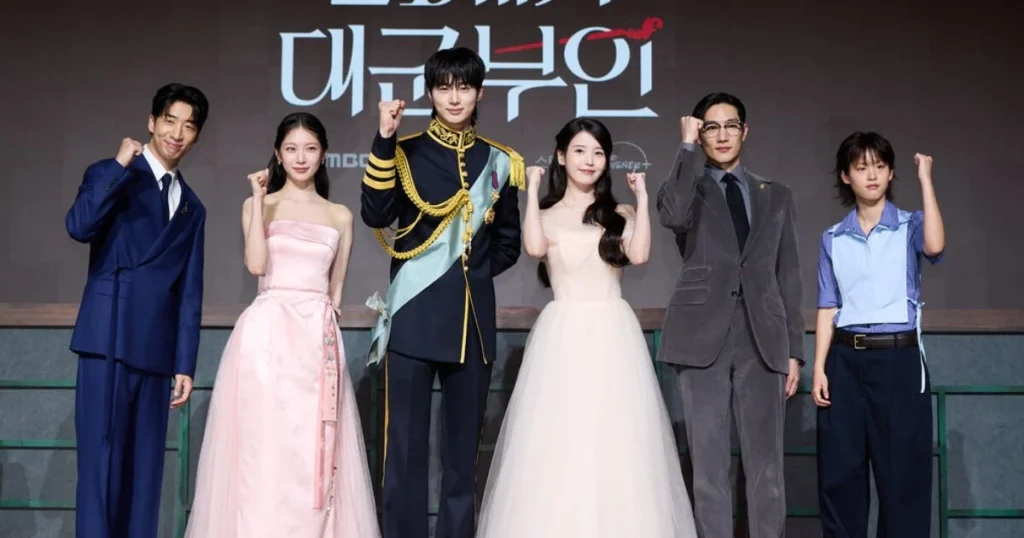

The production team behind the high-budget historical K-Drama Perfect Crown has found itself at the center of a mounting national controversy, as public outcry regarding historical inaccuracies reaches a fever pitch. Despite the escalating backlash from viewers and historians alike, the production has opted to proceed with its scheduled offline promotional events, albeit with significant modifications to the operational timeline. The decision to move forward with a physical pop-up store amidst calls for the drama’s total cancellation has ignited a fresh wave of criticism, highlighting a growing disconnect between the production’s commercial obligations and the public’s demand for historical integrity.
The controversy began following the broadcast of a recent episode that featured what many described as egregious "historical blunders." In a landscape where historical dramas, or sageuks, are held to a rigorous standard of cultural and factual accuracy, the errors in Perfect Crown were perceived by many as more than mere creative license. Critics pointed to the misrepresentation of key historical figures and the inclusion of anachronistic cultural elements that appeared to borrow heavily from neighboring influences rather than adhering to the specificities of the era being depicted. As clips of the offending scenes went viral on social media platforms and community forums like theqoo, the initial disappointment quickly curdled into a organized campaign for accountability.
The Anatomy of the Controversy
The historical inaccuracies in Perfect Crown have touched a sensitive nerve within the South Korean public, particularly regarding the preservation of national identity through media. While historical fiction often allows for dramatization, the specific nature of the "blunders" in Perfect Crown was seen as a distortion of the Joseon-era social hierarchy and diplomatic relations. Scholars and amateur historians noted that the drama’s portrayal of certain court rituals and the attire of high-ranking officials were fundamentally at odds with established records.
This is not the first time a major production has faced such scrutiny. In recent years, several high-profile dramas have been forced off the air or subjected to extensive re-editing due to historical distortion. The precedent set by these previous incidents has made the public more vigilant and less forgiving of perceived inaccuracies in big-budget productions. For Perfect Crown, the backlash was immediate, leading to a sharp decline in domestic viewership ratings and a surge in formal complaints filed with the Korea Communications Standards Commission (KCSC).
Official Responses and Crisis Management
In an attempt to stem the tide of criticism, the director of Perfect Crown issued a formal apology, physically bowing his head before the press to signify the gravity of his contrition. During the statement, the director claimed full responsibility for the oversight, admitting that the production team had failed to conduct sufficiently rigorous research during the pre-production and filming stages. He pledged that the team would take "full responsibility" for the matter, though he stopped short of detailing exactly what that responsibility would entail—leaving viewers to wonder if the drama would be edited, shortened, or cancelled entirely.
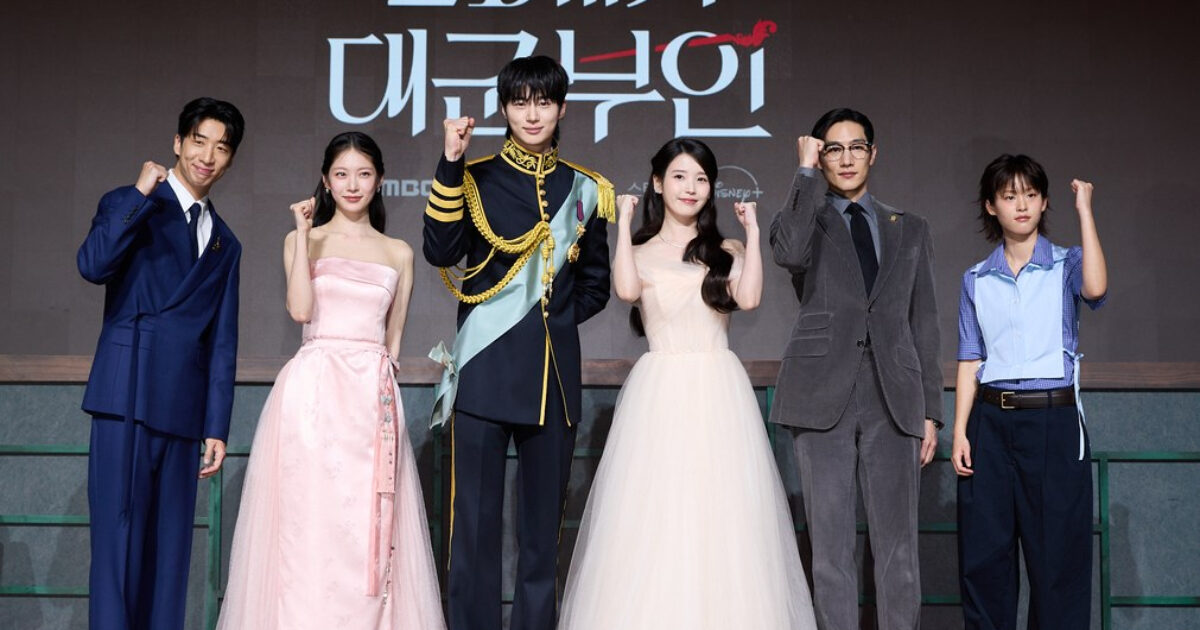
Following the director’s lead, the principal cast members also released individual apology letters via their social media accounts. The actors expressed their regret for not being more discerning regarding the script and the historical implications of their roles. In the Korean entertainment industry, where a celebrity’s image is closely tied to their perceived morality and patriotism, these apologies are seen as a necessary step for career preservation. However, many netizens remained skeptical, arguing that the responsibility for historical accuracy lies primarily with the writers, directors, and consultants rather than the performers who execute the script.
The Pop-Up Store Dilemma
Despite the somber tone of the official apologies, the commercial machinery behind the drama has continued to churn. The announcement of a promotional pop-up store, designed to sell merchandise and offer interactive experiences for fans, became the new focal point of the public’s ire. For many, the decision to continue with a revenue-generating event while the production was under fire for "insulting national history" was seen as tone-deaf and profit-driven.

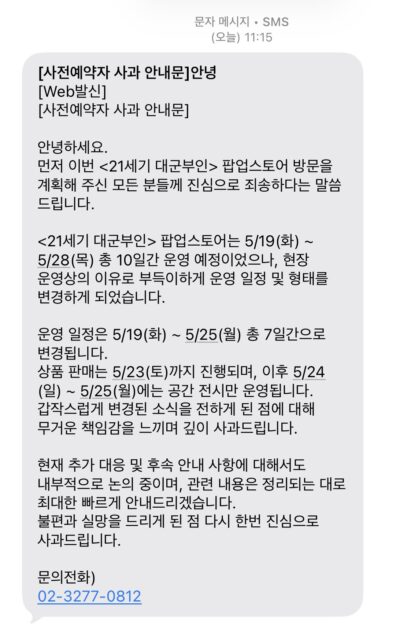
Netizens who had purchased pre-sale tickets for the event recently received a notification regarding a sudden change in the schedule. Originally, the pop-up store was slated to run for a full ten days, from May 19 to May 28. However, the production team issued a notice stating that the event would now be truncated to seven days, concluding on May 25.
The notice explained: “Hello, first, we would like to apologize to everyone who was planning to visit the drama’s pop-up store. While the pop-up store was scheduled to run for 10 days (5/19-5/28), due to operational reasons, it has been changed to run for seven days (5/19-5/25). Product sales will run until 5/23, and from 5/24-25, products will only be put on display. We truly apologize for the sudden change in schedule.”
Public Reaction and Netizen Sentiment
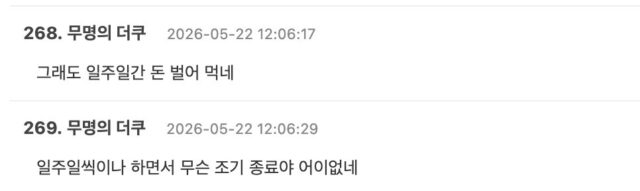
The explanation of "operational reasons" did little to satisfy the public. On major online communities, the prevailing sentiment was one of disbelief that the event was happening at all. Comments on platforms such as theqoo and Nate reflected a demand for the total shutdown of all promotional activities related to the drama.
"They are still trying to sell merchandise in the middle of this?" one netizen remarked, while another pointed out that "reducing the dates is just a way to save face while still squeezing out as much profit as possible before they are forced to close." The decision to transition from a sales-based event to a display-only event for the final two days was also mocked, with critics suggesting that the production was afraid of the optics of "selling out" while the nation was upset.
The backlash highlights a significant risk for the sponsors and retailers associated with the pop-up store. In South Korea, the "boycott" culture is highly effective; brands that remain associated with controversial media properties often find themselves targeted by secondary boycotts. This may be the true "operational reason" behind the shortened schedule, as partners look to minimize their exposure to the escalating scandal.
A Chronology of the Perfect Crown Crisis
To understand the current state of affairs, one must look at the rapid succession of events that led to this impasse:
- Initial Broadcast: The offending episode airs, featuring historical inaccuracies regarding court etiquette and foreign relations.
- Viral Backlash: Within hours, historians and viewers post side-by-side comparisons of the drama scenes versus historical records.
- Formal Complaints: Thousands of petitions are filed with the KCSC, and the drama’s official message board is flooded with demands for an explanation.
- Director’s Apology: The director holds a press conference to apologize and take responsibility.
- Cast Statements: Lead actors release written apologies to their fanbases.
- Pop-Up Store Announcement: Despite the apologies, the production confirms that the offline event will proceed as planned.
- Schedule Modification: Under pressure, the production announces a reduction in the event’s duration and a halt to sales two days before the new closing date.
Broader Impact and Industry Implications
The Perfect Crown situation serves as a cautionary tale for the Korean television industry. As K-Dramas gain more international prominence, the scrutiny on how they represent Korean history and culture has intensified. There is a growing tension between the desire to create "global-friendly" content—which sometimes involves simplifying or "beautifying" history—and the domestic audience’s demand for strict adherence to the historical record.
From a financial perspective, the shortening of the pop-up store represents a significant loss in potential revenue. Merchandising for a hit drama can often account for a substantial portion of the project’s profit margin. By cutting the sales period and the total duration of the event, the production is effectively conceding to the pressure, even if they are not yet willing to cancel the project entirely.
Furthermore, the controversy may have long-term effects on the careers of the creative team. In an industry where "historical distortion" is a label that can end a career, the director and writers of Perfect Crown may find it difficult to secure funding for future historical projects. For the actors, the challenge will be to distance themselves from the project’s negative reputation as they move on to new roles.
Conclusion and Future Outlook
As of now, the Perfect Crown pop-up store remains open for its shortened run. The atmosphere at the event is reportedly tense, with a heightened security presence and a noticeably lower turnout than initially projected based on pre-sale numbers. Many fans who had originally supported the drama have expressed that they no longer feel comfortable wearing or owning merchandise associated with the title.
The fate of the remaining episodes of Perfect Crown remains uncertain. While the production team has not announced a hiatus or cancellation of the broadcast, the pressure from the public and the KCSC continues to build. Whether the drama can navigate this storm through re-editing and further concessions remains to be seen. What is clear, however, is that the era of "creative license" in historical K-Dramas is being increasingly limited by a public that views historical accuracy as a non-negotiable component of cultural storytelling. The Perfect Crown controversy is a stark reminder that in the modern media landscape, an apology is often only the beginning of the road to redemption—and sometimes, it is not enough to save a sinking ship.