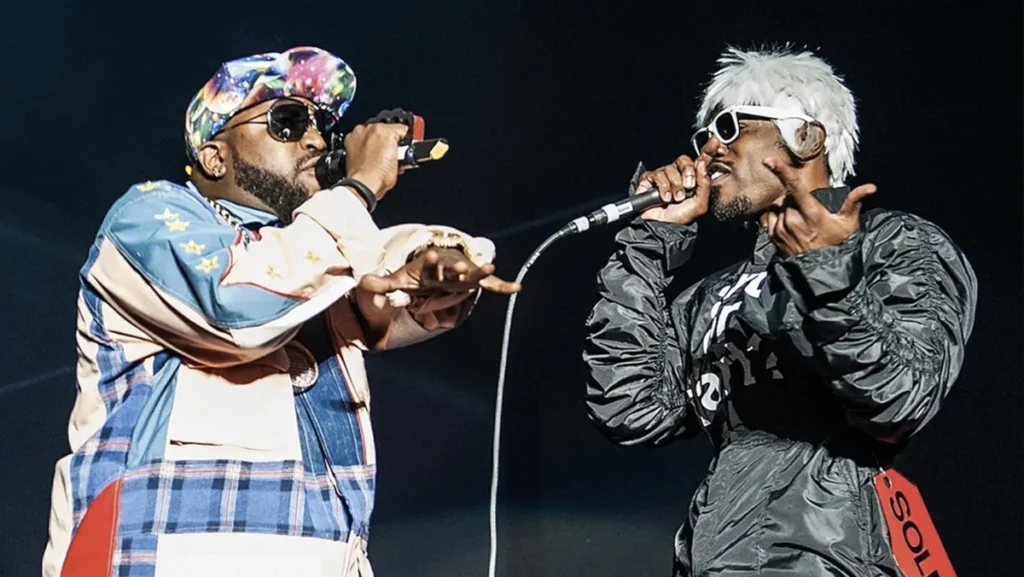

The legendary Atlanta hip-hop duo OutKast, comprised of André 3000 and Big Boi, has taken decisive legal action against the Oakland-based rapper and producer Silas Wilson, known professionally as Ovrkast. The lawsuit, filed on September 16 in a Georgia federal court by High Schoolers LLC—the corporate entity managing the duo’s intellectual property—alleges trademark infringement, unfair competition, and breach of contract. At the core of the legal dispute is the assertion that Wilson’s chosen moniker is a calculated attempt to capitalize on the multi-platinum success and cultural cachet of the OutKast brand.
The 31-page complaint serves as a comprehensive history of the duo’s efforts to protect their identity. It argues that Wilson’s stage name is phonetically and visually similar enough to cause widespread consumer confusion, effectively leading the public to believe that Wilson’s musical projects are endorsed by or affiliated with the iconic duo. By seeking a permanent injunction, the destruction of all promotional materials bearing the name, and unspecified monetary damages, OutKast is signaling a zero-tolerance approach to what they characterize as the bad-faith exploitation of their legacy.
A Chronology of the Dispute
The legal tension between the parties is not a sudden development but the culmination of months of failed private negotiations. According to the court filing, the conflict intensified throughout 2025 as OutKast’s legal representatives sought to address the naming issue through direct correspondence with Wilson.
The chronology outlined in the lawsuit suggests a period of initial cooperation followed by an alleged reversal of commitments:
- Early 2025: High Schoolers LLC identifies a growing pattern of public confusion, citing social media activity and digital streaming data where Wilson’s name is frequently conflated with the hip-hop duo.
- Mid-2025: Negotiations commence between the two parties. During these discussions, Wilson reportedly acknowledged the concerns raised by the OutKast camp regarding potential trademark dilution.
- Late 2025: A formal agreement is reached. Under the terms, Wilson agreed to undergo a "rebranding" process, transitioning away from the name "Ovrkast" in favor of the modified alias "Ovrkxst" by a firm deadline.
- July 2026: The agreed-upon deadline for the name change passes. The lawsuit alleges that Wilson failed to execute the transition, continuing to release music and market himself under the disputed name.
- September 16, 2026: Having exhausted administrative remedies, High Schoolers LLC officially files the lawsuit in federal court.
Evidence of Public Confusion
A pivotal component of the legal argument rests on the claim of actual consumer confusion. In trademark law, the "likelihood of confusion" test is a primary standard for determining infringement. OutKast’s legal team has pointed to a 2025 feature in Rolling Stone, in which Wilson explicitly discussed his name. In that interview, Wilson noted, "people read Ovrkast as Outkast," a statement that the plaintiffs are now using as evidence that the defendant was aware of the confusion his name generated and arguably profited from it.
By leveraging the name "Ovrkast," the plaintiffs argue, Wilson has intentionally traded on the "goodwill and reputation" of the Atlanta group. This is particularly significant given the stature of OutKast in the music industry. As pioneers who redefined Southern hip-hop, their brand represents decades of critical acclaim, including multiple Grammy Awards and the distinction of having one of the few hip-hop albums (the diamond-certified Speakerboxxx/The Love Below) to win Album of the Year. The lawsuit contends that any perceived association with a lesser-known artist, while not necessarily disparaging, infringes upon the group’s right to control their own commercial identity.
Background on the Parties
OutKast, formed in 1992, remains one of the most influential acts in music history. Their discography—including seminal works like Southernplayalisticadillacmuzik, ATLiens, and Stankonia—has cemented their status as cultural icons. Their management entity, High Schoolers LLC, functions as the guardian of these assets, tasked with licensing, copyright protection, and brand management.
Silas Wilson, performing as Ovrkast, emerged in the underground hip-hop scene around 2020. He gained significant traction as a producer, contributing to projects by prominent artists such as Earl Sweatshirt and Drake. His rise in the industry, while marked by creative merit, has now been overshadowed by this legal battle. While Wilson’s legal team has yet to file a formal response—they have a 30-day window to acknowledge receipt of the summons—the implications for his career are substantial. Should the court find in favor of OutKast, Wilson would be forced to abandon the brand identity he has built over the past six years, potentially necessitating a costly and disruptive rebrand.
Intellectual Property Implications in Hip-Hop
The case highlights a broader, ongoing challenge within the music industry: the intersection of artistic pseudonymity and trademark law. In an era of digital streaming, where algorithms often group artists based on metadata, names that sound or look alike can result in significant "leakage" of streams and search traffic.
Legal experts suggest that this case could serve as a precedent for how high-profile artists handle the "name squatting" or phonetic similarities of emerging acts. Trademarks in the music industry are designed to prevent the "dilution" of a brand. When an artist achieves the level of household recognition held by OutKast, their name functions not just as an artistic identifier but as a valuable commercial asset. The argument that a younger artist is "trading on the goodwill" of an established act is a classic hallmark of trademark litigation, but proving "malicious intent" adds a layer of complexity that may require substantial discovery in the coming months.
Official Responses and Future Trajectory
As of the date of this report, there have been no public statements from either the members of OutKast or Wilson regarding the ongoing litigation. The silence from Wilson’s camp is standard procedure during the initial phase of federal litigation, as counsel prepares the necessary filings to contest the claims of breach of contract.
The court will now move into the discovery phase, where both parties will likely be required to produce documents, communications, and evidence of how the name "Ovrkast" has impacted the commercial interests of both the duo and the producer. If the case proceeds to trial, the court will have to determine whether the phonetical similarity constitutes a violation of the Lanham Act, which governs trademarks and unfair competition in the United States.
For the music industry, this case serves as a stark reminder of the importance of intellectual property vetting. For independent artists, it underscores the risks inherent in choosing a name that mirrors an existing titan of the industry, regardless of the artistic intent behind the choice. Whether the dispute is settled out of court—perhaps with a revised name change agreement—or moves to a full trial, the outcome will likely influence how artists and their legal representatives navigate the crowded landscape of modern hip-hop nomenclature.
The legal battle also brings to light the protective measures that legacy artists employ to maintain the sanctity of their brand. In a digital economy where visibility is the primary currency, OutKast’s insistence that "the public has been led to falsely believe" in an association highlights the necessity for artists to act aggressively against potential infringements, lest they lose control over the narrative and reach of their own catalogs. As the 30-day window for a response closes, the music community awaits a move that will decide the future of the Ovrkast alias and the extent to which the legal system will shield legacy acts from emerging, phonetically similar competition.