
The 2026 Metropolitan Museum of Art Costume Institute Benefit, colloquially known as the Met Gala, witnessed a significant departure from traditional black-tie menswear, signaling a pivotal shift in red carpet aesthetics. Held on the first Monday in May, the event serves as the primary source of funding for the Costume Institute and traditionally sets the tone for the global fashion calendar. While previous years focused heavily on gilded glamour or camp sensibilities, the 2026 gala saw a concentrated emergence of leather-centric ensembles among high-profile male attendees. This "leather micro-trend" reflects a broader industry movement toward texture-heavy, subculture-inspired luxury, moving away from the dominance of velvet and silk that has characterized masculine evening wear for the past decade.
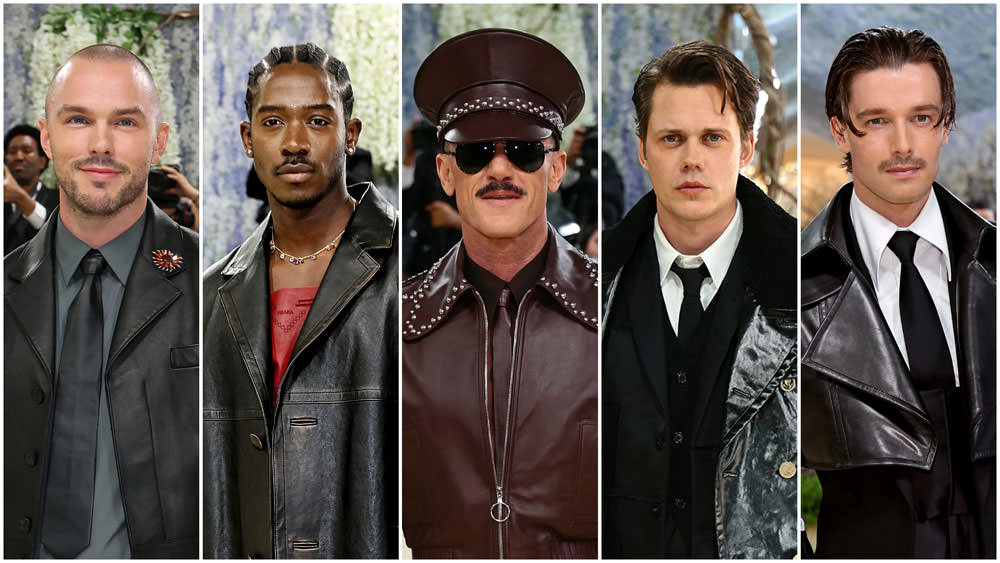
The appearance of what fashion critics have termed the "Leather Boys" suggests a fusion of high-fashion tailoring with elements of punk, biker culture, and queer iconography. Designers such as Thom Browne, Prada, and Palomo Spain led this movement, utilizing leather not merely as an accessory or outerwear material but as the primary textile for structured suiting and formal gowns. This trend underscores a growing appetite for "harder" materials in the spring/summer season, challenging the seasonal norms of the New York fashion cycle.
Chronology and Context of the 2026 Trend
The emergence of leather as a dominant theme in 2026 did not occur in a vacuum. Industry analysts point to a multi-year trajectory beginning in the early 2020s, where oversized leather trench coats and "matrix-core" aesthetics began to permeate the collections of Balenciaga and Rick Owens. By the time the 2026 Met Gala arrived, the material had been refined into high-luxury silhouettes suitable for the steps of the Metropolitan Museum.
The 2026 gala followed a series of spring fashion weeks in Paris and Milan that were notably "leather-heavy." Despite the event taking place in early May—a period typically associated with lighter fabrics and floral motifs—the unseasonably cool New York weather provided a pragmatic backdrop for the heavy-duty material. This environmental factor, combined with a desire for more architectural and protective clothing, created a perfect storm for the leather trend to dominate the red carpet.
Detailed Profile of Key Menswear Participants
Several high-profile actors and public figures became the faces of this movement, each interpreting the leather theme through the lens of their respective designers.
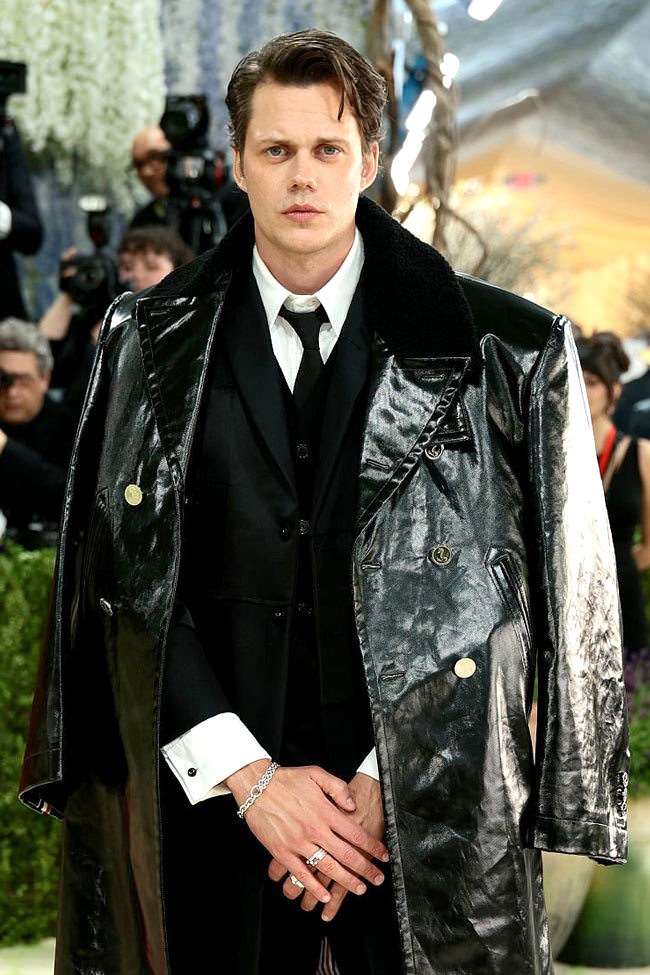
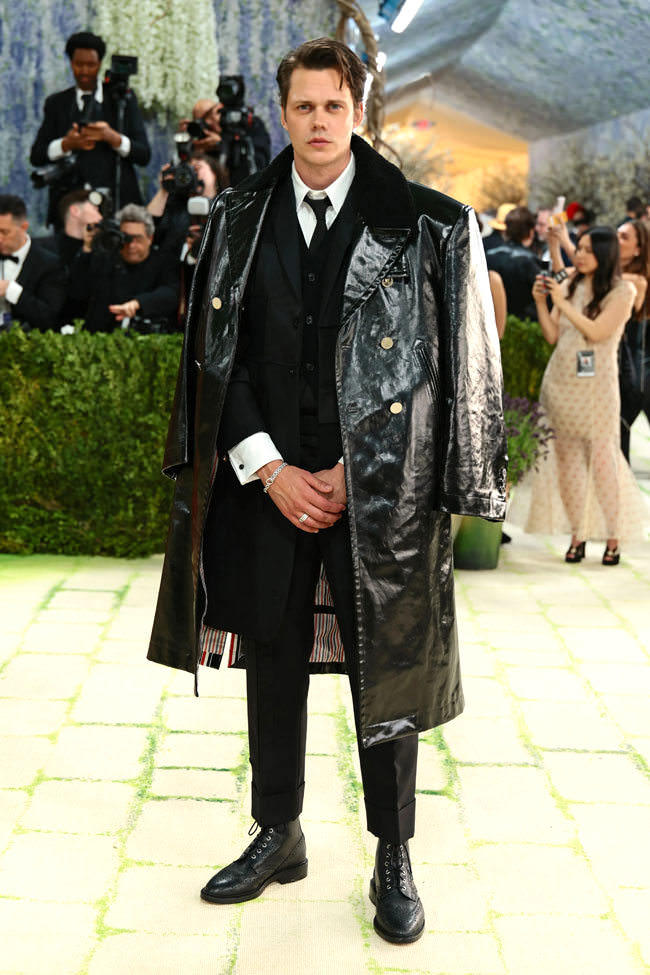
Bill Skarsgård in Thom Browne
Actor Bill Skarsgård arrived in a highly structured ensemble designed by Thom Browne. The look featured a meticulously tailored leather suit paired with a heavy leather overcoat. Critics noted that the silhouette evoked historical military uniforms, specifically leaning into mid-20th-century authoritarian aesthetics, though softened by impeccable styling. The look was accessorized with high-end jewelry and precise grooming, creating a tension between the "hard" exterior of the leather and the "soft" refinement of the styling. Skarsgård’s choice to make outerwear the focal point of a gala look was considered a bold subversion of traditional red carpet etiquette.
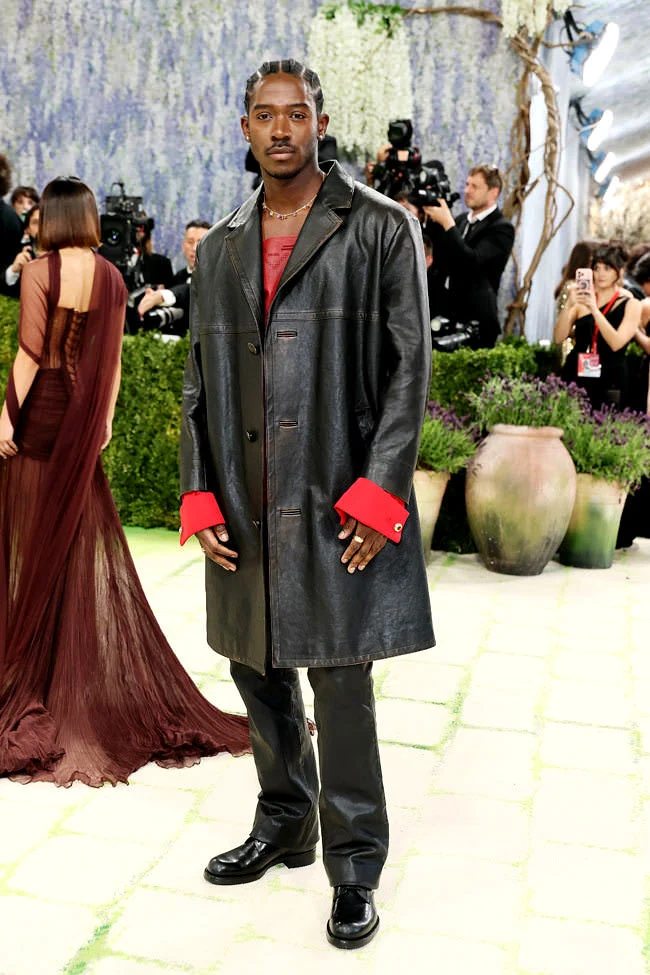
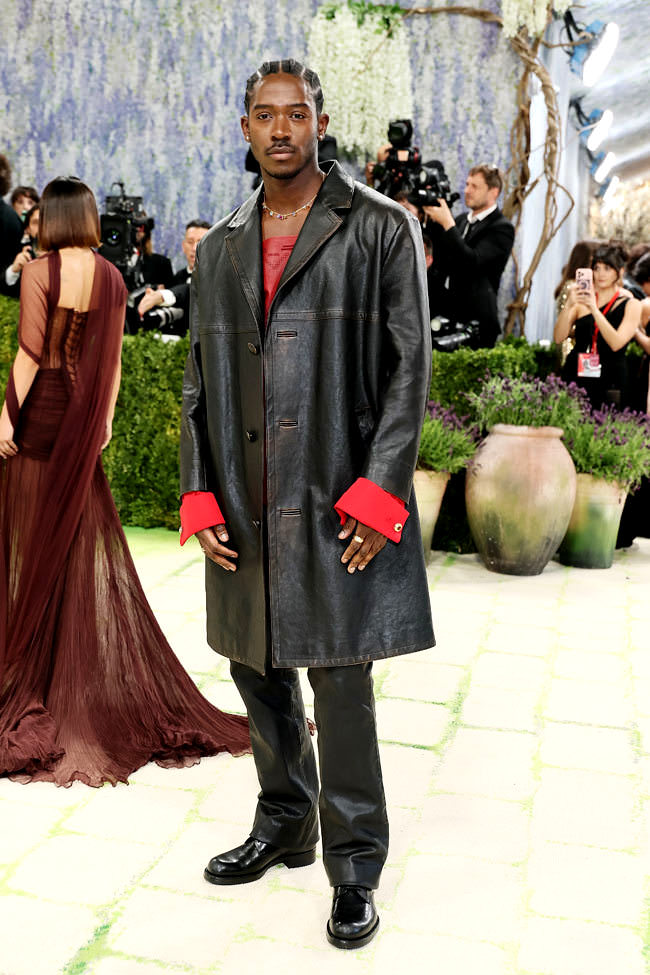
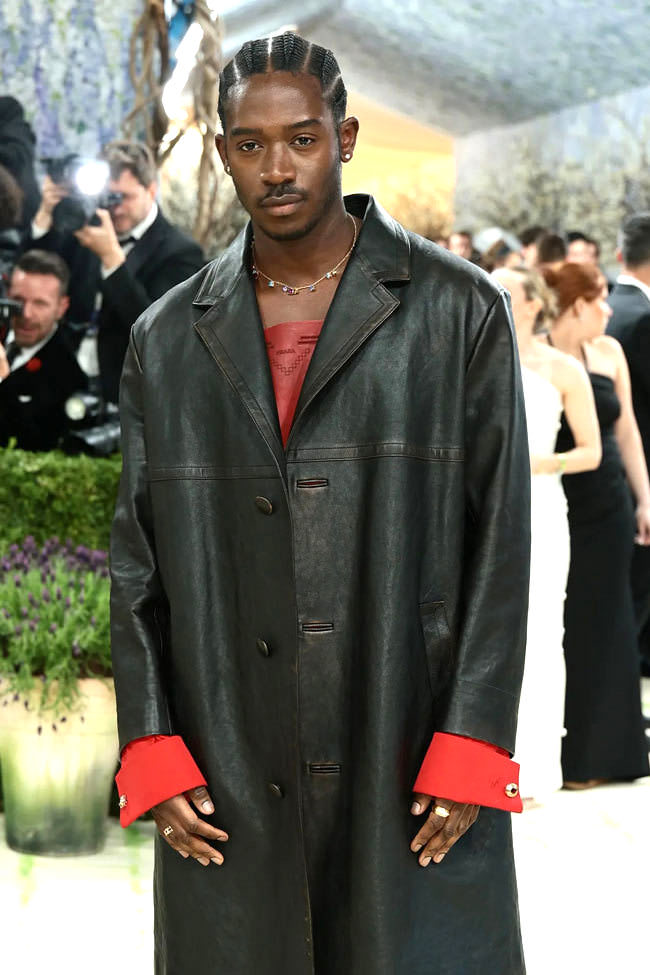
Damson Idris in Prada
Representing a more understated approach to the trend, Damson Idris wore a Prada-designed leather coat that prioritized minimalist lines and material quality. Prada, under the creative direction of Miuccia Prada and Raf Simons, has long championed the use of industrial materials in luxury contexts. Idris’s look was praised for its "glowy" finish and chic simplicity. Unlike Skarsgård’s more aggressive silhouette, Idris’s ensemble felt more aligned with modern street-style luxury, though some critics questioned if the look was perhaps too casual for an event of the Met Gala’s stature.
Nicholas Hoult in Prada
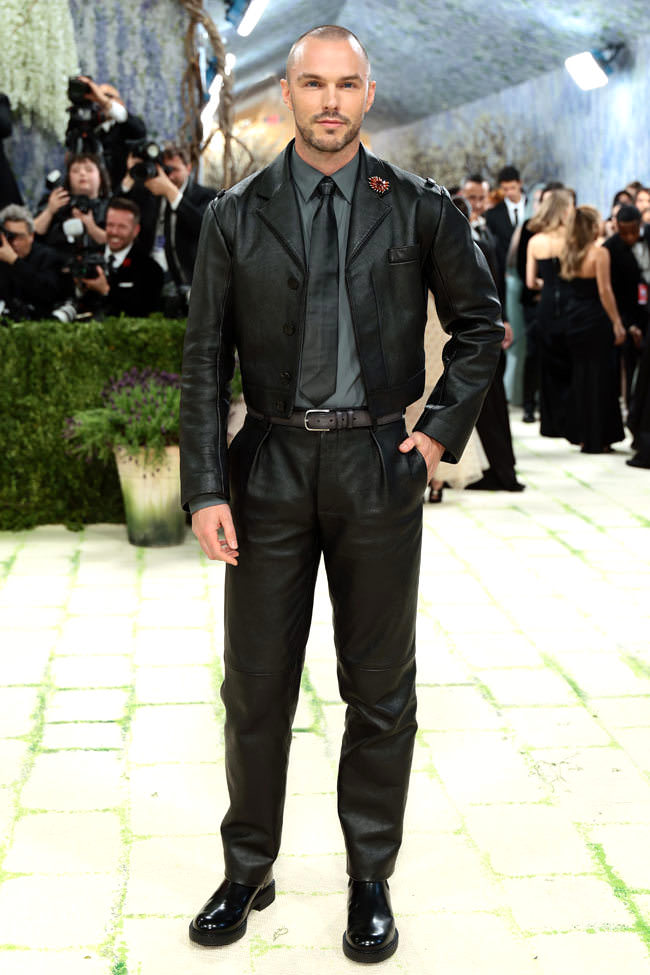
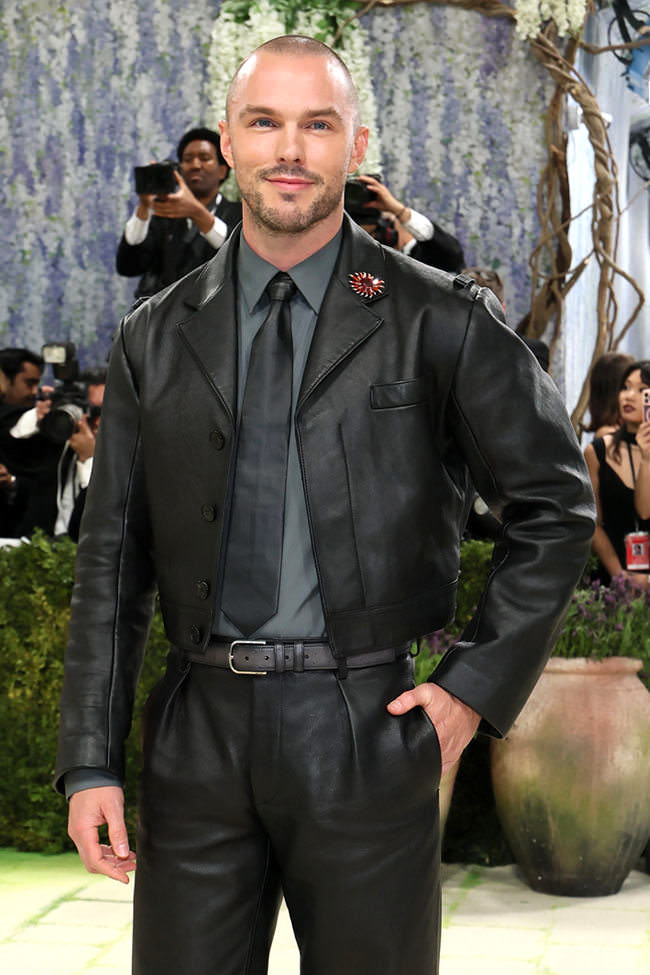
Also wearing Prada, Nicholas Hoult provided a counterpoint to Idris by incorporating a decorative brooch to soften the visual impact of his leather attire. The fit of Hoult’s garment was noted for its precision, highlighting the technical difficulty of tailoring leather to mirror the drape of traditional wool suiting. Hoult’s appearance reinforced the idea that leather could be "pretty" and sophisticated rather than purely rebellious or threatening.
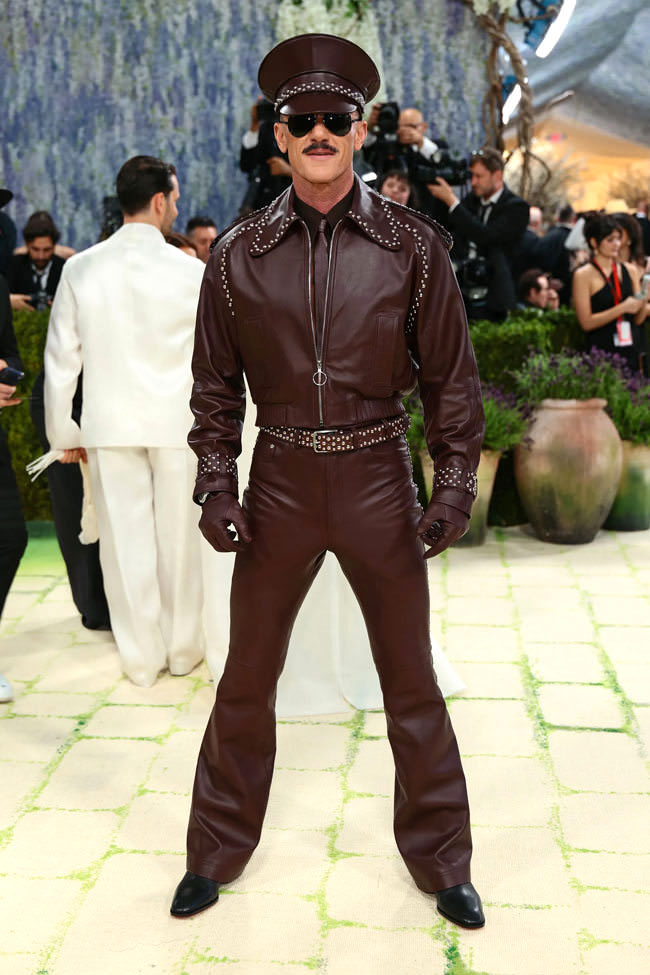
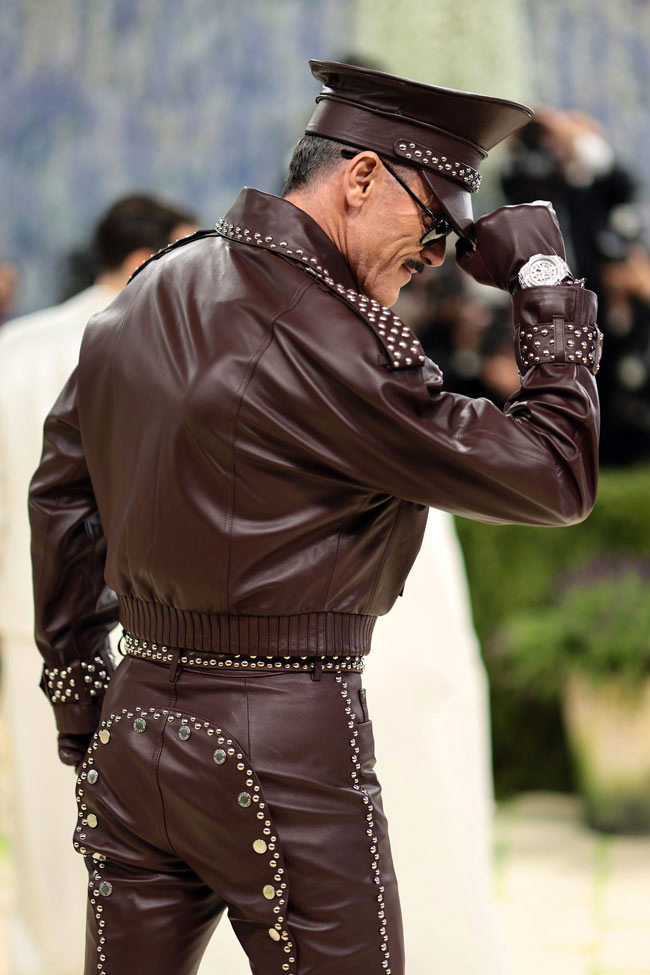
Luke Evans in Palomo Spain
Luke Evans utilized the leather trend to pay homage to the "leatherman" subculture, a move that resonated with his current theatrical work in The Rocky Horror Show. Designed by Palomo Spain—a brand known for its gender-fluid and queer-coded designs—Evans’s look was an unapologetic celebration of leather as a tool for identity expression. The ensemble was rendered with high-fashion flourishes that elevated the classic biker look into the realm of couture.
Patrick Schwarzenegger in Public School
Taking a more experimental path, Patrick Schwarzenegger collaborated with the New York-based label Public School. Known for their "hard-edged" urban aesthetic, the designers pushed Schwarzenegger toward a look that strayed far from his usual "preppy" persona. While the reception was mixed regarding how well the style suited his personal brand, the commitment to a risky, textured look was cited as an example of the gala’s role as a space for radical self-reinvention.
Supporting Data: The Economic and Cultural Shift
The prevalence of leather at the 2026 Met Gala is supported by market data indicating a resurgence in the leather goods sector. According to global luxury market reports, the demand for high-end leather apparel—distinct from accessories like bags and shoes—saw a 12% increase in the fiscal year leading up to 2026. This growth is largely attributed to the "longevity" trend, where consumers are increasingly investing in durable materials that offer a sense of permanence in a fast-fashion world.
Furthermore, the shift toward leather in menswear reflects changing demographics in luxury consumption. Gen Z and Millennial buyers, who now account for nearly 50% of the luxury market, show a high preference for materials that carry subcultural weight. The "Leather Boys" at the Met Gala represent the pinnacle of this consumer behavior, where the boundaries between subculture (punk, goth, BDSM) and high luxury are increasingly blurred.
Industry Reactions and Official Responses
While the Metropolitan Museum of Art does not officially comment on individual outfits, the curators of the Costume Institute have frequently noted that the red carpet serves as a living extension of their exhibitions. The 2026 leather trend is seen as a response to the "Materiality" themes often explored in recent years.
Designers involved in the trend have emphasized the craftsmanship required for these pieces. A spokesperson for Prada noted that "working with leather on this scale requires a return to traditional artisanal techniques, combined with modern laser-cutting technology to ensure the fit is as precise as a tuxedo." Thom Browne’s studio similarly highlighted the "architectural challenges" of creating a full leather suit that remains breathable and mobile for a high-profile social event.
Fashion critics from major outlets, including Vogue and The New York Times, have analyzed the trend with a mix of admiration and caution. While the craftsmanship is undeniable, some commentators expressed concern over the "heavy" and "ominous" connotations of all-leather ensembles, particularly those that mirror military or police uniforms. However, the consensus remains that the trend successfully broke the monotony of traditional menswear.
Broader Impact and Implications for Future Trends
The "Leather Boys" of 2026 are likely to influence menswear for several seasons to come. Historically, trends that dominate the Met Gala red carpet find their way into "ready-to-wear" collections within 12 to 18 months. We can expect to see an increase in leather-alternative materials—such as mushroom leather and lab-grown hides—as brands look to capitalize on this aesthetic while addressing environmental and ethical concerns.
The 2026 gala has also solidified the idea that menswear can be as varied and experimental as womenswear. By moving away from the safety of the black tuxedo and into the more challenging territory of leather, male celebrities are claiming a larger share of the fashion conversation. This evolution marks a significant moment in the history of the Met Gala, where the "boys" are no longer just the backdrop to the "girls" in gowns, but are instead leading the charge in defining the next era of style.
In conclusion, the 2026 Met Gala’s embrace of leather represents a complex intersection of climate-responsive dressing, subcultural homage, and technical innovation in tailoring. As the fashion world continues to digest the imagery from this year’s red carpet, the "Leather Boys" will stand as a symbol of a year when menswear chose to be tough, tactile, and transformative.