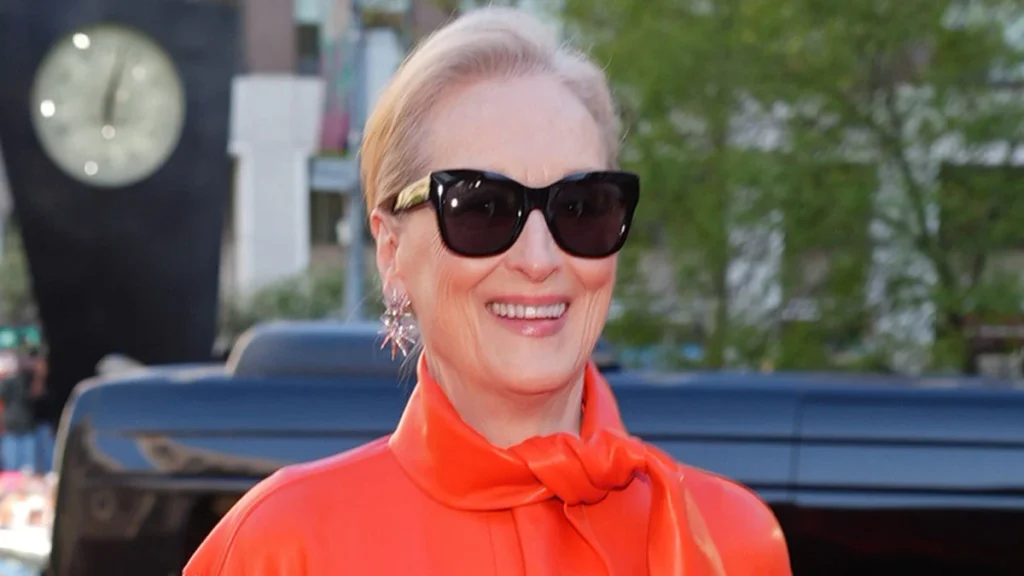

Veteran actress Meryl Streep, renowned for her unparalleled ability to portray complex and multifaceted characters across a career spanning over five decades, has voiced a critical perspective on the current state of cinematic storytelling, suggesting that an overreliance on simplified narratives, akin to those often found in superhero franchises, has led to a decline in originality and depth within the film industry. Her remarks, made during a recent interview with the Hits Radio Breakfast Show, coincided with the promotional tour for her newly released film, The Devil Wears Prada 2, a sequel to the critically acclaimed 2006 hit. Streep specifically cited her iconic role as the formidable fashion editor Miranda Priestly as an example of the kind of nuanced character she believes is increasingly absent from mainstream cinema, advocating for stories that embrace the inherent "messiness" and moral ambiguities of real life.
Streep’s assertion centers on the idea that contemporary filmmaking has become excessively "Marvel-ized," a term she uses to describe a pervasive tendency towards clear-cut distinctions between heroes and villains. In her view, this reductionist approach often sacrifices character development and thematic richness for the sake of straightforward conflict and spectacle. She explained that Miranda Priestly’s flawed nature in The Devil Wears Prada is precisely what makes the character, and by extension the film, compelling and realistic. "I think we tend to Marvel-ize the movies now. We got the villains and we got the good guys, and it’s so boring," Streep stated. She elaborated that the true intrigue of life lies in the complexities where "some of the heroes are flawed and some of the villains are human and interesting and have their own strengths." This preference for ambiguity and layered portrayals underpins her artistic philosophy and has defined her celebrated career.
The "Marvel-ization" Critique: A Deeper Look
Streep’s use of the term "Marvel-ized" is not merely a casual jab at a particular film franchise but rather a pointed commentary on a broader industry trend. The Marvel Cinematic Universe (MCU), initiated with 2008’s Iron Man, revolutionized Hollywood’s approach to blockbuster filmmaking. Its unprecedented success, marked by interconnected narratives, consistent character portrayals, and a clear brand identity, spawned a wave of imitators and fundamentally reshaped studio strategies. The MCU’s model emphasizes serialized storytelling, often leading to a formulaic structure where individual films serve as chapters in a larger saga, prioritizing plot progression and spectacular action sequences over standalone character studies or experimental narratives.
The Ascendancy of the Superhero Genre
The rise of the superhero genre, spearheaded by Marvel Studios and subsequently DC Films, has been nothing short of meteoric. From 2008 to 2023, the MCU alone has grossed over $30 billion worldwide across more than 30 films, consistently dominating global box office charts. This commercial success has undeniably influenced film production across the board. Studios, seeking to replicate this profitability and mitigate financial risks, have increasingly invested in established intellectual properties (IPs), shared universes, and spectacle-driven tentpole features. The genre’s appeal often lies in its clear moral compass, where good triumphs over evil, offering a sense of escapism and wish fulfillment. However, this clarity, as Streep implies, can come at the cost of the intricate character studies that have historically been a hallmark of cinematic art. The sheer volume of superhero content, from films to television series, has saturated the market, leading to concerns among some critics and filmmakers about a lack of diversity in storytelling and a homogenization of cinematic experiences.
Industry-Wide Shifts and the Blockbuster Imperative
The financial imperative driving Hollywood has led to significant shifts in film production and distribution. The mid-budget drama, once a staple of studio output, has largely migrated to streaming platforms or independent cinema. The theatrical release landscape is increasingly dominated by large-scale productions with budgets often exceeding $200 million, necessitating global appeal and predictable returns. This environment naturally favors narratives with broad, universal themes and easily digestible character arcs, characteristics often associated with "Marvel-ized" storytelling. Data from industry analysis firms like Comscore and The Numbers indicates a declining share of original screenplays and non-franchise films in major studio slates over the past decade, underscoring the shift towards proven formulas and established brands. This commercial pressure makes it challenging for projects focused on complex, morally ambiguous characters and realistic, "messier" narratives to secure significant theatrical distribution, thus limiting audience exposure to such films.
Meryl Streep’s Artistic Philosophy and Career
Meryl Streep’s commentary is particularly resonant given her distinguished career, which stands as a testament to the power of nuanced character portrayal. With a record 21 Academy Award nominations and three wins, Streep has consistently gravitated towards roles that challenge conventional archetypes, exploring the depths of human experience with remarkable precision and empathy. Her filmography is a masterclass in complexity, featuring characters who defy simple categorization and often operate in morally gray areas.
Streep’s Legacy: A Champion of Complexity
From her early roles in Kramer vs. Kramer and Sophie’s Choice to later performances in The Iron Lady and August: Osage County, Streep has consistently delivered performances that delve into the intricate psychology of her characters. She has embodied figures grappling with difficult choices, internal conflicts, and external pressures, allowing audiences to connect with their humanity, regardless of their perceived virtue or vice. Her artistic choices reflect a deep commitment to realism and a belief in the power of cinema to reflect the messy truths of life. This consistent pursuit of complexity and authenticity throughout her career lends significant weight to her current critique. Her statement is not an isolated opinion but rather an articulation of a philosophy she has embodied through her work for decades, advocating for a cinema that mirrors the multifaceted nature of human existence rather than simplifying it into archetypes.
Miranda Priestly: An Exemplar of Nuance
The character of Miranda Priestly from The Devil Wears Prada serves as a perfect illustration of Streep’s artistic preference. Miranda, the ruthless editor-in-chief of a high-fashion magazine, is initially presented as an antagonist, a demanding and seemingly heartless boss. However, Streep’s portrayal imbues her with layers of vulnerability, ambition, and a quiet dedication to her craft that complicates any easy judgment. The film subtly reveals the personal sacrifices Miranda has made for her career and the immense pressure she operates under, transforming her from a caricature of evil into a formidable, yet deeply human, figure. She is not a villain in the traditional "Marvel-ized" sense, nor is she a straightforward hero. Instead, she exists in a morally ambiguous space, a powerful woman navigating a cutthroat industry, whose actions, while often severe, are driven by a complex mix of professional excellence and personal struggle. This nuance is precisely what Streep champions, contrasting it with the perceived black-and-white morality of contemporary blockbusters. The timely release of The Devil Wears Prada 2 naturally brings this discussion to the forefront, as Streep once again steps into the shoes of a character who challenges audiences to look beyond surface impressions.
Broader Industry Reactions and Similar Critiques
Meryl Streep is not alone in expressing reservations about the direction of mainstream cinema. Her comments resonate with a growing chorus of prominent filmmakers, actors, and critics who have voiced similar concerns regarding the perceived artistic homogenization and commercial pressures within Hollywood. These sentiments highlight a long-standing tension between the artistic ambitions of cinema and the economic realities of a multi-billion dollar industry.
Echoes Across Hollywood: A Growing Industry Debate
Several luminaries in the film industry have publicly critiqued the dominance of large-scale franchise films. Perhaps most notably, legendary director Martin Scorsese famously described Marvel films as "not cinema" but rather "theme park rides" in 2019, sparking a wide-ranging debate about the definition and purpose of filmmaking. Francis Ford Coppola echoed these sentiments, calling them "despicable." Jodie Foster, another acclaimed actress and director, has spoken about the challenges faced by character-driven films in securing theatrical releases, observing a shift towards IP-driven blockbusters. These critiques, while sometimes controversial, underscore a shared anxiety among a segment of the filmmaking community that the emphasis on spectacle, brand recognition, and formulaic narratives is stifling creativity and artistic exploration. They argue that cinema, at its best, should provoke thought, explore complex human conditions, and challenge audiences, rather than merely entertain them with predictable escapism. This collective sentiment suggests that Streep’s "Marvel-ized" critique taps into a deeper, ongoing conversation within the industry about its artistic integrity and future trajectory.
The Economic Realities Versus Artistic Integrity
While artistic concerns are valid, the economic realities of the film industry cannot be ignored. Major studios are publicly traded corporations accountable to shareholders, with an inherent mandate to maximize profits. Superhero films, with their built-in fanbases, merchandising opportunities, and global appeal, represent a relatively safe investment in an increasingly volatile market. The average budget for a major studio blockbuster can easily exceed $200 million, with an additional $100-150 million spent on global marketing. Such massive investments necessitate a strategy that minimizes risk and maximizes potential returns, often leading to a preference for proven formulas and recognizable intellectual properties. From a studio executive’s perspective, investing in a film with a complex, morally ambiguous narrative and an uncertain box office appeal carries significantly higher risk compared to a well-marketed superhero sequel or reboot. This tension between artistic aspiration and commercial viability is a perpetual challenge in Hollywood, and Streep’s comments highlight the perceived imbalance that has emerged in recent years.
Statistical Context: Box Office Trends and Film Production
The shift Streep describes is quantifiable through an examination of box office trends and film production data. The market share commanded by superhero films and other franchise blockbusters has demonstrably increased over the last decade, often at the expense of original dramas and mid-budget features.
According to data compiled by industry analysts, films based on comic books or existing franchises consistently occupy a significant portion of the top-grossing films annually. For example, in recent years, these categories have accounted for over 50% of the total domestic box office revenue for the top 20 films. This dominance is not just about revenue but also about the sheer number of screens and marketing resources allocated. A typical superhero film might open on 4,000+ screens globally, while an independent drama might struggle to secure a few hundred. The average production budget for a superhero film is often in the range of $150-300 million, contrasting sharply with the $10-50 million typically allocated for original dramas or character-driven thrillers. This disparity in investment directly impacts the scale, marketing, and ultimately, the visibility of different types of films. The decline in the number of films produced in the $20-70 million budget range by major studios further illustrates this trend, as these films often represent the sweet spot for original, character-driven storytelling that doesn’t rely on massive special effects. While streaming services have provided an alternative outlet for some of these projects, the cultural impact and widespread discussion generated by a major theatrical release remain unparalleled, underscoring the challenge for diverse cinematic offerings in the current landscape.
Navigating the Future: Implications for Cinematic Diversity
Meryl Streep’s powerful statement, coupled with the similar critiques from other industry veterans, carries significant implications for the future trajectory of cinema and the diversity of stories presented to global audiences. It sparks a vital conversation about the balance between entertainment and art, and the role of film as a cultural mirror.
Her critique highlights a potential narrowing of cinematic scope, where the commercial success of one genre might inadvertently stifle the production of others. If studios continue to prioritize "Marvel-ized" narratives, there is a risk that audiences will become accustomed to a particular style of storytelling, potentially diminishing their appetite for more complex, challenging, or ambiguous narratives. This could lead to a self-perpetuating cycle where a lack of diverse offerings shapes audience preferences, which in turn reinforces studio production strategies. The long-term implication could be a cinema that increasingly favors spectacle over substance, and clear-cut morality over nuanced human experience.
However, the conversation also points to potential avenues for resilience and innovation. The rise of independent cinema, international productions, and diverse streaming platforms offers alternative spaces for the kind of "messy," character-driven storytelling that Streep champions. Film festivals continue to be crucial platforms for showcasing films that defy commercial formulas, nurturing new voices and artistic visions. Moreover, the very act of a figure as influential as Meryl Streep speaking out can itself serve as a catalyst for introspection within the industry, encouraging creators and executives to consider the broader artistic legacy they are building. Her comments serve as a powerful reminder that while entertainment is essential, the profound capacity of cinema to explore the depths of the human condition remains its most enduring and valuable attribute, one that should be fiercely protected and continuously fostered.
Meryl Streep’s insightful critique regarding the "Marvel-ization" of movies serves as a significant contribution to an ongoing, crucial debate within the film industry. Her advocacy for complex characters and nuanced narratives, exemplified by her own storied career and her role in The Devil Wears Prada, underscores a growing concern about the balance between commercial viability and artistic integrity in contemporary cinema. While the dominance of blockbuster franchises is an undeniable economic reality, Streep’s comments, echoed by other prominent voices, call for a renewed commitment to cinematic diversity, ensuring that the art form continues to explore the rich, often messy, tapestry of human experience. As the industry evolves, the challenge will be to find innovative ways to support and promote stories that, like Miranda Priestly herself, defy easy categorization and offer a more realistic, and ultimately more compelling, view of the world.