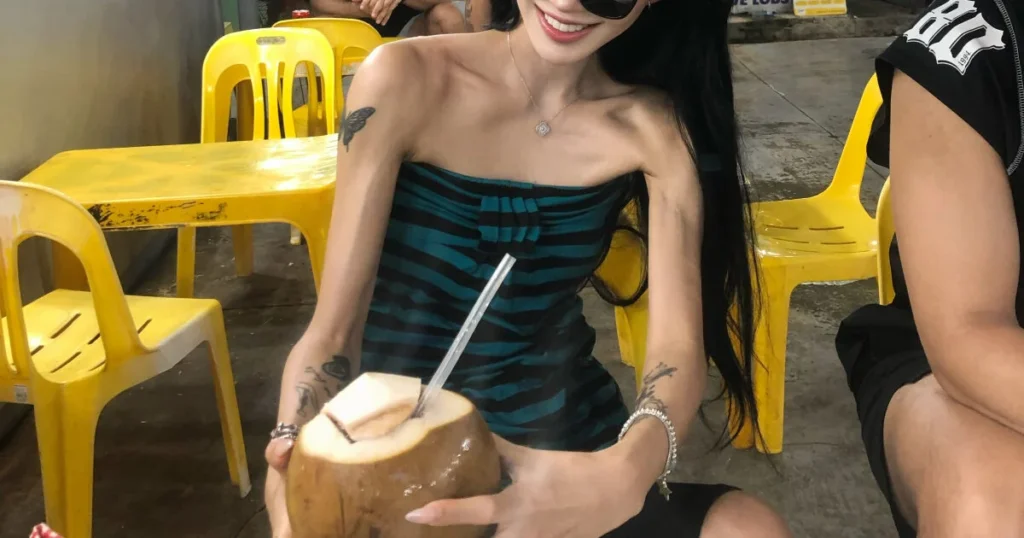

Choi Jun Hee, who has frequently made headlines for her dramatic physical transformation over the last several years, posted the images to her Instagram account accompanied by candid captions detailing her travel experiences. In the posts, she is seen enjoying the local culture and amenities of Da Nang, a popular coastal city known for its sandy beaches and French colonial history. "By the way, this is Da Nang city, Da Nang city," she wrote. "It was a day I dressed up nicely, but after this day, it got so hot that I wandered around like a rag."
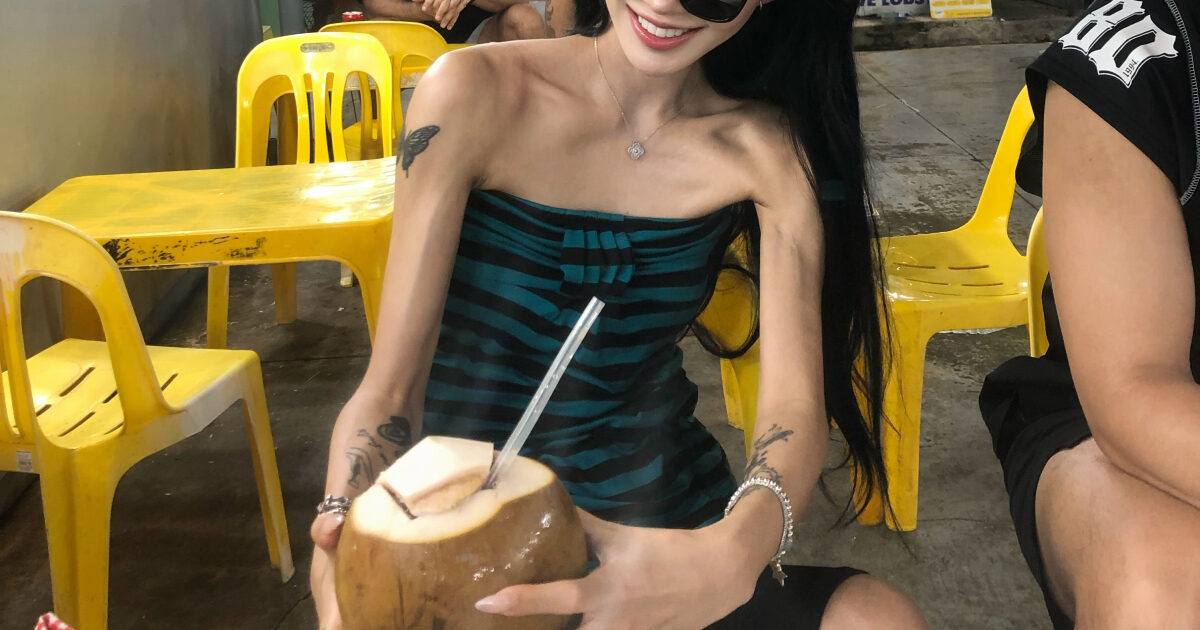
The photographs depict Choi in various settings, including a local restaurant and a swimming pool. One particular image showed her dining on spicy beef tripe pho, a Vietnamese staple, while another featured a playful interaction where she stretched her feet toward her partner, whom she referred to as "Oppa," asking for a foot massage. Despite the lighthearted nature of the captions, the visual content of the posts—specifically Choi’s highly visible collarbones, slender upper arms, and overall lean frame—immediately drew a wave of scrutiny from netizens.
The Physical Transformation and Statistical Context
Choi Jun Hee’s current physical state is the result of a well-documented and often controversial weight loss journey. Standing at 170 centimeters (approximately 5 feet 7 inches) and weighing 41 kilograms (approximately 90 pounds), her Body Mass Index (BMI) sits at roughly 14.2. According to World Health Organization (WHO) standards, a BMI below 18.5 is categorized as underweight, with a figure below 15.0 often classified as severely underweight.
This statistical reality has fueled much of the public "slamming" mentioned in the headlines. Critics argue that promoting such an extreme physique is irresponsible for a public figure with a significant following among young women. However, Choi has remained steadfast in her defense of her appearance. She previously addressed the criticism by stating, "People criticize my bony look as unconventional beauty, but so what? Being underweight feels better to live with." This defiant stance marks a departure from the traditional celebrity response to public concern, which often involves apologies or promises to prioritize health. Instead, Choi has embraced her aesthetic as a personal choice, signaling a "no f*cks given" attitude toward conventional societal expectations.
Historical Background: From Medical Struggles to Weight Loss
To understand the intensity of the public’s reaction to Choi Jun Hee’s current figure, one must look back at her medical history and the trajectory of her public life. In 2019, Choi revealed that she had been diagnosed with Systemic Lupus Erythematosus (SLE), an autoimmune disease in which the body’s immune system attacks its own tissues and organs.

A common treatment for Lupus involves the use of corticosteroids, such as prednisone. While effective at managing inflammation, these medications are notorious for causing significant weight gain, often referred to as "moon face" or a "buffalo hump" due to fat redistribution. During the height of her treatment, Choi’s weight reportedly surged to 96 kilograms (211 pounds). The psychological toll of this rapid physical change, compounded by the grief of losing her mother at a young age, was a frequent subject of her early social media presence.
Her journey from 96 kilograms down to 41 kilograms has been a multi-year process involving strict dieting and rigorous exercise. While many initially praised her for regaining her health and managing her Lupus symptoms, the momentum of her weight loss has eventually led to the current concerns regarding disordered eating or exercise addiction. Choi, however, views her current frame as a hard-won victory over the physical limitations imposed on her by her illness.
The Cultural Significance of the "Bone-Thin" Aesthetic
The controversy surrounding Choi Jun Hee is situated within a broader cultural context in South Korea, where "lookism" and a preference for extreme slenderness are deeply ingrained. In the K-pop and K-drama industries, the "paper-thin" or "ant-waist" look is often idealized, despite growing international calls for body positivity and healthier representation.

South Korean beauty standards have long favored a "tall and thin" silhouette, but the rise of "pro-ana" (pro-anorexia) communities on social media has alarmed health professionals. When a celebrity like Choi Jun Hee—who is already under a microscope due to her family lineage—showcases a BMI of 14.2 and expresses a preference for being underweight, it ignites a clash between two factions: those who view it as a dangerous glorification of an eating disorder and those who defend it as a form of personal liberation and aesthetic choice.
Netizens’ reactions have been sharply divided. Some comments on her posts express genuine worry, with users urging her to "eat more for the sake of her health" and questioning if her Lupus is still in remission. Others have been more caustic, accusing her of seeking attention through "shock value" and setting a poor example for her younger fans. Choi’s response—or lack thereof—to these specific criticisms suggests a conscious decision to disconnect her self-worth from the collective opinion of the digital masses.
Chronology of the Vietnam Trip and Recent Updates
The recent events unfolded over a period of several days in late July:

- July 20-21: Choi Jun Hee arrived in Da Nang, Vietnam, for a summer vacation. She shared initial stories of the tropical climate and the luxury accommodations.
- July 22: The primary "controversial" post was uploaded. This included the photos of her in a summer dress and swimwear, along with the comments about her "summer body" and her meal of spicy pho.
- July 23: Following a surge in media coverage and netizen comments, Choi continued to post updates, including photos of her enjoying local delicacies and relaxing by the water, effectively ignoring the growing controversy regarding her weight.
- July 24: In response to direct inquiries about her diet during the trip, she emphasized that she was "feeling full" and enjoying her meals, countering the narrative that she was starving herself to maintain her figure.
Implications for the Celebrity-Fan Dynamic
Choi Jun Hee’s refusal to conform to public pressure reflects a shifting dynamic in the relationship between South Korean celebrities and their audience. Historically, the "public’s daughter" (a title often associated with Choi due to her mother’s legacy) would be expected to maintain a wholesome and "healthy" image to satisfy the collective maternal/paternal instincts of the nation.
By asserting that she "gives no f*cks" about the criticism, Choi is reclaiming her narrative. This defiance is a hallmark of a younger generation of influencers who prioritize individual identity over communal approval. However, the implications are complex. As an influencer with a platform, her "unconventional beauty" remains a powerful visual cue that can influence the behavior of her followers.
From a clinical perspective, the transition from a high weight caused by medication to a severely low weight can put significant strain on the cardiovascular and endocrine systems. Medical professionals often note that for patients with a history of autoimmune disorders, maintaining a stable, nutrient-dense diet is crucial for preventing flares. The public concern, therefore, is not entirely rooted in "hate," but often in a documented understanding of the risks associated with extreme weight fluctuations.

Analysis of the Broader Impact
The ongoing scrutiny of Choi Jun Hee serves as a case study for several societal issues:
- The Legacy of Trauma: As the daughter of Choi Jin Sil, Jun Hee has lived her entire life in the shadow of tragedy. The public’s hyper-fixation on her body may be a projection of their unresolved feelings toward her mother, leading to an over-monitoring of her well-being.
- The Normalization of Extreme Dieting: By labeling a BMI of 14.2 as a "good summer body," there is a risk of normalizing a state of malnutrition. In a society where cosmetic surgery and extreme dieting are multi-billion dollar industries, the line between "self-care" and "self-harm" becomes increasingly blurred.
- Social Media as a Double-Edged Sword: Platforms like Instagram allow Choi to communicate directly with her supporters and bypass traditional media gatekeepers. However, they also expose her to immediate, unfiltered vitriol, which may further entrench her "us vs. them" mentality regarding her lifestyle choices.
In her final remarks on the trip, Choi noted that she had "maintained a good summer body" and seemed satisfied with the results of her efforts. Whether this confidence will eventually lead to a more balanced approach to health, or if it will continue to be a point of contention with the public, remains to be seen. For now, Choi Jun Hee remains a polarizing figure, standing at the intersection of celebrity culture, medical resilience, and the relentless gaze of the internet. As she returns from Vietnam, the conversation she sparked regarding the limits of beauty and the rights of the individual over their own body continues to resonate across the Korean digital landscape.