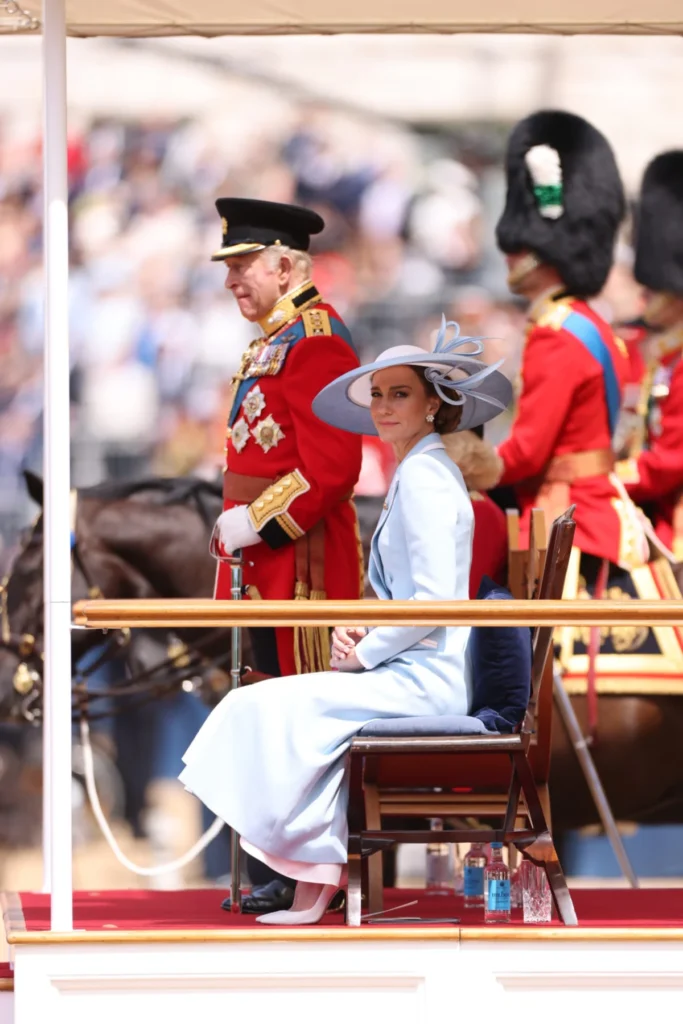

The King, a picture of regal composure in his full military uniform, stood at the centre of the meticulously orchestrated pageantry of Trooping the Colour, celebrating his official birthday. While the eyes of the nation and the world were fixed on the ceremonial splendour, observant spectators and royal watchers noted a subtle, yet significant detail that contributed to His Majesty’s comfort during the lengthy parade: a readily accessible supply of chilled mineral water. This year’s Sovereign’s Birthday Parade, held at the historic Horse Guards Parade, saw King Charles, alongside Queen Camilla and Catherine, Princess of Wales, take their place on a specially erected dais, shaded from the burgeoning London summer sun.
The decision to provide this simple refreshment was more than just a practical measure against the rising temperatures; it underscored the consideration given to the well-being of the senior royals during an event that demands prolonged periods of standing and ceremonial duties. As London basked in unseasonably warm June weather, the royal podium offered a welcome respite from the direct rays, its covering a visual cue to the prevailing conditions. However, it was the discreet arrangement beneath the chairs that drew particular attention. A row of mineral water bottles, neatly positioned, served as the King’s, the Queen’s, and the Princess of Wales’s secret weapon against the heat.
Adding a touch of regal elegance even to this practical provision, the royals were not handed disposable cups or plastic bottles. Instead, they were presented with elegant cut-glass tumblers, a detail that speaks volumes about the enduring commitment to tradition and refinement that permeates royal engagements. The absence of commonplace disposable drinkware in favour of these sophisticated vessels highlighted the desire to maintain an air of dignity and ceremony, even in the face of practical necessity. This subtle touch ensured that the act of hydrating was itself a reflection of royal grace.
The Princess of Wales, ever attuned to sartorial elegance and the practicalities of the occasion, had already made a statement in her choice of attire. Opting for an ice-blue ensemble, she radiated a cool and composed presence. Her coat dress, a sophisticated design by Catherine Walker, featured crisp white trim, perfectly complemented by a pale blue straw hat crafted by the renowned milliner Philip Treacy. This deliberate choice of colour and style not only reflected the celebratory nature of the event but also served as a visual embodiment of her serene demeanour amidst the summer heat.
Queen Camilla, demonstrating her steadfast dedication to her ceremonial role, was attired in a bespoke Fiona Clare jacket. This exquisite piece was meticulously designed to harmonise with the uniform of the Grenadier Guards, of whom she holds the esteemed position of Colonel. Having worn this distinguished outfit for Trooping the Colour previously, she chose it once more this year, a poignant nod to her regiment’s honour of trooping their colour on this particular occasion. Her attire was a powerful visual representation of her connection to the troops and the significance of the day’s central ceremony.
The procession to Horse Guards Parade itself was a spectacle of royal tradition. King Charles and Queen Camilla arrived by carriage, setting the tone for the day’s proceedings. The Princess of Wales, accompanied by her three children – Prince George, aged 12, Princess Charlotte, aged 10, and 8-year-old Prince Louis – travelled from Buckingham Palace in a separate Ascot Landau. This inclusion of the younger royals offered a glimpse into the future of the monarchy and added a heartwarming dimension to the formal proceedings.
Other members of the Royal Family also participated in the grand procession. The Duchess of Edinburgh and Sir Tim Laurence were present in the first landau departing the palace, while the Duke and Duchess of Gloucester also made their arrival by carriage. Demonstrating a different form of participation, the Prince of Wales, alongside the Princess Royal and the Duke of Edinburgh, rode on horseback along The Mall, a powerful visual testament to their active involvement in the military tradition.
King Charles III took the salute at the conclusion of the parade, a pivotal moment that signifies the formal acknowledgement of his role as Sovereign. This marked the fourth Sovereign’s Birthday Parade of his reign, a significant milestone. His Majesty’s presence and active participation are particularly noteworthy, especially when recalling the 2022 parade. In that year, King Charles stood in for his mother, Queen Elizabeth II, who, unable to travel to Horse Guards due to her then-deteriorating health, reviewed the troops from the balcony of Buckingham Palace as they returned. This year’s event, therefore, held a particular resonance, with the King fully embodying the ceremonial duties associated with his birthday parade.
As the grand spectacle of Trooping the Colour drew to a close, King Charles and Queen Camilla, following the traditional route back to Buckingham Palace, were set to participate in another cherished royal tradition: the iconic fly-past. This aerial display, a highlight of the monarch’s birthday celebrations, is typically followed by a balcony appearance at Buckingham Palace, offering the public a final glimpse of the Royal Family and a collective moment of celebration.
The Significance of Trooping the Colour
Trooping the Colour, officially known as the Sovereign’s Birthday Parade, is a deeply ingrained military ceremony that has been a staple of the British calendar for centuries. Its origins can be traced back to the 17th century, when colours, or regimental flags, were carried down the ranks of soldiers to be seen and recognised by all, ensuring that soldiers could identify their regiment in the chaos of battle. This tradition evolved into the elaborate parade witnessed today, serving as a powerful symbol of national unity, military strength, and the enduring connection between the monarch and the Armed Forces.
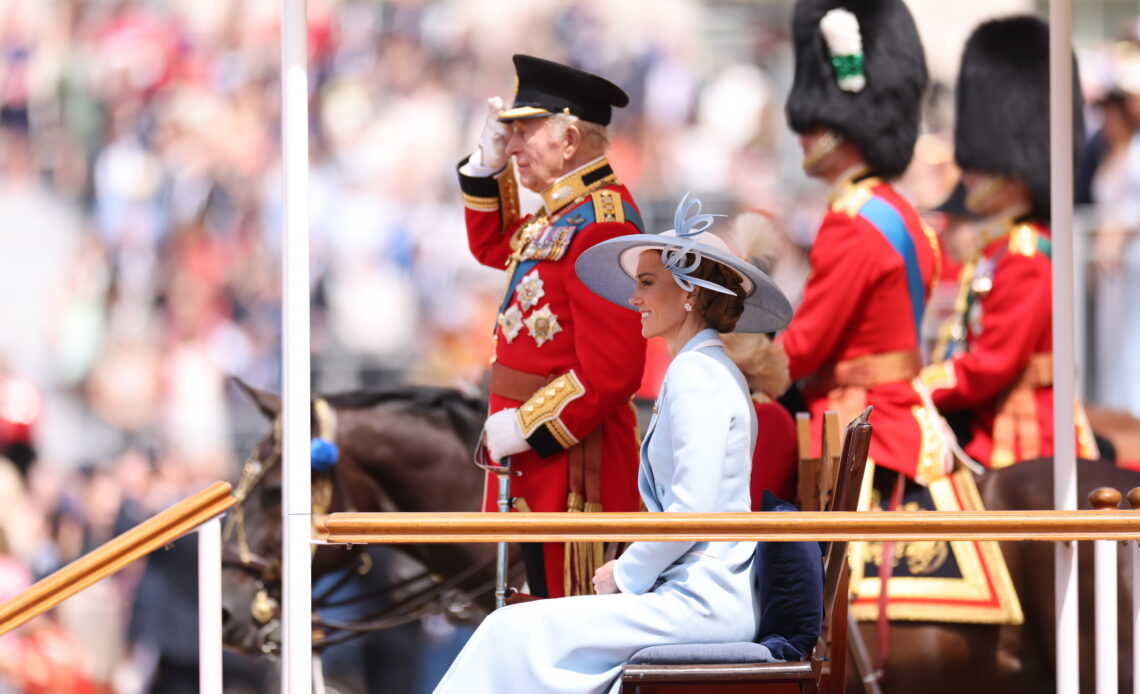
The ceremony typically takes place on the second Saturday in June, regardless of the monarch’s actual birthday. It involves a spectacular display of military precision and pageantry, featuring hundreds of soldiers, drummers, and horses. The core element of the parade is the "trooping" of the Colour, where one of the Sovereign’s Escorts’ Regimental Colours is carried down the ranks. This year, it was the Welsh Guards who had the honour of trooping their Colour.
A History of Royal Participation
The Royal Family’s involvement in Trooping the Colour is extensive and deeply rooted. While the monarch is the central figure, other senior royals have historically played significant roles, either on horseback, in carriages, or taking the salute. The tradition of the monarch taking the salute dates back to King George III. In recent decades, Queen Elizabeth II was a constant presence, her unwavering dedication to the ceremony a testament to its importance. Her Majesty’s Platinum Jubilee celebrations in 2022, for instance, featured a particularly poignant Trooping the Colour.
King Charles’s assumption of the salute duty, both as Prince of Wales and now as Sovereign, highlights the continuity of tradition within the monarchy. His commitment to participating fully, even in challenging weather conditions, underscores his dedication to his constitutional and ceremonial responsibilities.
Royal Fashion and Symbolism
Beyond the military precision and regal presence, Trooping the Colour is also a showcase for the sartorial choices of the Royal Family. The outfits worn by the King, Queen, and Princess of Wales are carefully considered, often reflecting personal style, ceremonial duties, and national symbolism. King Charles’s choice of military uniform is a direct acknowledgement of his role as Commander-in-Chief. Queen Camilla’s selection of an outfit that complements her regimental affiliation, as seen with her Fiona Clare jacket for the Grenadier Guards, is a powerful visual statement of her dedication to her patronages.
Catherine, Princess of Wales’s ensembles are also keenly observed. Her preference for elegant coat dresses and meticulously chosen hats, as demonstrated by her ice-blue ensemble, often incorporates subtle nods to the occasion or the season. The use of specific designers, such as Catherine Walker and Philip Treacy, further highlights the Royal Family’s patronage of British craftsmanship and artistry.
The Broader Context: A Nation’s Celebration
Trooping the Colour is more than just a military parade; it is a national celebration. It serves as a focal point for the United Kingdom to express its pride in its Armed Forces and to acknowledge the enduring reign of its monarch. The event draws crowds from across the country and around the world, with millions more watching on television. The fly-past and the balcony appearance at Buckingham Palace are integral parts of this broader celebration, culminating in a moment of collective national pride.
The presence of the younger royals, such as Prince George, Princess Charlotte, and Prince Louis, on the balcony is particularly significant. It offers a glimpse into the future of the monarchy and reinforces the idea of continuity and succession. Their appearances, often met with widespread affection, underscore the public’s enduring interest in the Royal Family and its role in British society.
The Practicalities of Royal Protocol
While the public face of Trooping the Colour is one of seamless grandeur, the logistical and practical considerations behind such an event are immense. Ensuring the comfort and well-being of the participating royals, especially during periods of hot weather, is a testament to the meticulous planning undertaken by the royal household and the military. The provision of water, the shaded dais, and the carefully selected attire all contribute to the smooth execution of the ceremony.
The use of cut-glass tumblers, rather than disposable options, exemplifies the Royal Family’s commitment to sustainability where possible, while also upholding standards of elegance. This nuanced approach to practicalities, integrated seamlessly into the fabric of the ceremony, ensures that tradition and modern considerations can coexist harmoniously.
In conclusion, while the regal spectacle of Trooping the Colour rightfully captures the attention, the subtle details, such as King Charles’s secret weapon against the heat, offer a fascinating insight into the careful orchestration and considerate planning that underpin these significant national events. The event serves not only as a celebration of the Sovereign’s birthday but also as a powerful affirmation of military tradition, national identity, and the enduring presence of the monarchy.