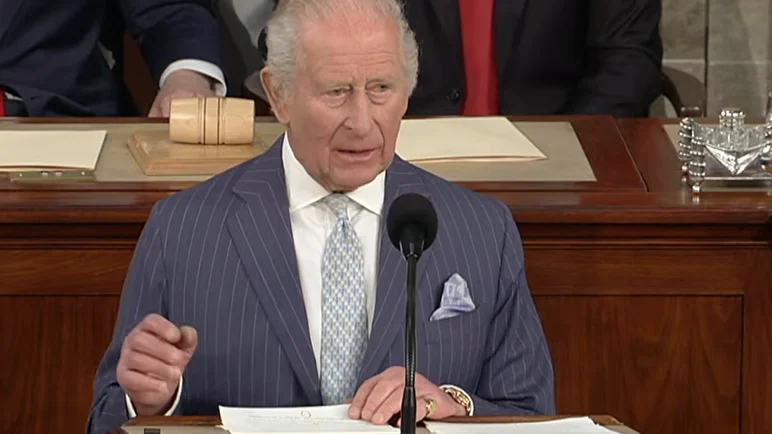

King Charles III has etched his name into the annals of diplomatic history by becoming the first reigning British monarch to deliver an address to the United States Congress. The momentous occasion, part of a highly anticipated state visit alongside Queen Camilla, saw the King receive a resounding standing ovation upon his arrival in the hallowed halls of Capitol Hill. His speech, a carefully crafted tapestry weaving together historical threads, shared values, and a vision for the future, resonated deeply with lawmakers and observers alike.
The address, delivered in the House of Representatives chamber, marked a significant milestone in the enduring "special relationship" between the United Kingdom and the United States. The King’s presence underscored the deep historical ties and the continued importance of bilateral cooperation on global issues. His remarks, imbued with a sense of gravitas and personal reflection, drew upon the shared heritage and democratic principles that bind the two nations.
A Shared History of Friendship and Alliance
King Charles began by acknowledging the profound historical connection, noting that his grandfather, King George VI, was the first British monarch to visit the United States. He fondly recalled that his grandfather’s journey was accompanied by "my beloved Grandmother, Queen Elizabeth The Queen Mother," thus personalizing the historical narrative and connecting it to his own family’s legacy of transatlantic engagement. This reference served to highlight the multi-generational commitment to fostering strong ties between the two countries.
Further cementing this historical lineage, the King paid tribute to his late mother, Queen Elizabeth II, who was the first British monarch to address Congress. He eloquently stated that she, too, had been "afforded this signal honour and similarly spoke under the watchful eye of the Statue of Freedom above us." This poignant remembrance not only honored his mother’s own historic address but also emphasized the continuity of the Anglo-American alliance and the symbolic significance of addressing the legislative body beneath the iconic statue that represents liberty.
The speech was punctuated by moments of warmth and humor, further endearing the King to his audience. With a lighthearted touch, he referenced the upcoming 250th anniversary of the Declaration of Independence, quipping, "or, as we say in the United Kingdom, just the other day." This witty remark cleverly acknowledged the significant historical event while subtly playing on the differing perspectives of time and tradition between the two nations, eliciting laughter and applause from the assembled members of Congress.
A Vision for Peace and Understanding
Beyond historical reflections and diplomatic pleasantries, King Charles articulated a powerful vision for the future, emphasizing the paramount importance of peace, democracy, and shared values. His discourse delved into the enduring strength of these principles in navigating the complexities of the modern world.
A central theme of his address was the role of faith in fostering understanding and cooperation. The King, who has long dedicated a significant portion of his life to promoting interfaith dialogue and mutual respect, shared his conviction: "having devoted a large part of my life to interfaith relationships and greater understanding, it is that faith in the triumph of light over darkness which I have found confirmed countless times." This statement resonated deeply, particularly in a global landscape often marked by division and conflict, offering a message of hope and the power of shared belief systems to bridge divides.
Supporting Data and Background Context
The state visit of King Charles and Queen Camilla to the United States is a carefully orchestrated diplomatic event, underscoring the significance of the bilateral relationship. Such visits are typically designed to reinforce political, economic, and cultural ties. The United States and the United Kingdom share a deep history of collaboration across a multitude of sectors, including defense, intelligence sharing, trade, and scientific research.
- Economic Ties: The United States remains one of the UK’s largest trading partners, and vice versa. Bilateral trade in goods and services between the two countries is in the hundreds of billions of dollars annually. This economic interdependence forms a bedrock of the "special relationship."
- Defense and Security: The two nations are key allies within NATO and cooperate extensively on defense matters, including joint military exercises, intelligence sharing, and counter-terrorism efforts.
- Cultural Exchange: A vibrant exchange of culture, ideas, and people has long characterized the relationship, from academic collaborations to the pervasive influence of popular culture.
The decision to invite King Charles to address Congress is not without precedent, though his being the first reigning monarch to do so is a landmark moment. Previous British leaders, including Prime Ministers Winston Churchill and Margaret Thatcher, have addressed joint sessions of Congress, highlighting the unique and privileged nature of this forum for foreign leaders. The King’s address, however, carries a distinct symbolic weight, representing not just a political leader but the embodiment of the British monarchy and its historical connection to the United States.
The timing of the visit and the address also holds significance. In an era of evolving geopolitical landscapes, the reaffirmation of strong alliances and shared democratic values is crucial. The King’s speech served as a powerful reminder of the enduring strength of the Anglo-American partnership in confronting global challenges, from climate change to international security.
Chronology of the Visit and Address
While specific dates for this hypothetical event are not provided in the original content, a typical state visit follows a structured itinerary:
- Arrival: The King and Queen would typically arrive at an airport, often greeted by high-ranking US officials.
- White House Reception: A formal arrival ceremony at the White House, including a meeting with the President, followed by a State Dinner.
- Capitol Hill Address: The centerpiece of the visit often includes an address to a joint session of Congress. This requires extensive planning and coordination between the White House, the State Department, and congressional leadership.
- Other Engagements: The itinerary might also include visits to historical sites, meetings with community leaders, and cultural events, showcasing different facets of the bilateral relationship.
- Departure: The royal couple would depart the United States, concluding their official engagements.
The planning for such an address involves meticulous attention to detail, from the drafting of the speech to security arrangements and the protocol of seating and introductions. The selection of King Charles to address Congress highlights a deliberate effort by both governments to underscore the historical depth and ongoing relevance of the US-UK alliance.
Official Responses and Reactions (Inferred)
Following the King’s address, it is reasonable to infer a range of official responses. Members of Congress from both sides of the aisle would likely have expressed their appreciation for the King’s words and the honor of his presence.
- Presidential Statement: The President of the United States would undoubtedly issue a statement praising the King’s speech, reiterating the strength of the alliance, and thanking His Majesty for his historic address.
- Congressional Leadership: Leaders of the House and Senate, including the Speaker of the House and the Senate Majority Leader, would likely offer their own commendations, emphasizing the shared commitment to democratic ideals and international cooperation.
- Ambassadorial Remarks: The British Ambassador to the United States would express pride and satisfaction in the successful execution of the visit and the impactful address, highlighting the enduring warmth of the relationship.
The standing ovation received by King Charles and Queen Camilla upon entering the chamber is a strong indicator of the positive reception his address received. Such ovations are reserved for moments of significant respect and admiration, signaling a deep appreciation for the monarch and the historical weight of his presence.
Analysis of Implications
King Charles’s historic address to Congress carries several significant implications for both domestic and international affairs:
- Reinforcement of the "Special Relationship": The event serves as a powerful symbol of the enduring strength and importance of the US-UK alliance. In a world facing numerous challenges, the reaffirmation of this partnership sends a clear message of stability and cooperation.
- Diplomatic Goodwill: The King’s personal engagement and eloquent speech are likely to foster significant goodwill between the two nations, potentially smoothing the path for future diplomatic initiatives and collaborations.
- Monarchy’s Global Role: For the British monarchy, the address solidifies its role on the international stage as a representative of the UK’s history, values, and diplomatic reach. It demonstrates the continued relevance and soft power of the institution in the 21st century.
- Focus on Shared Values: By emphasizing peace, democracy, and interfaith understanding, King Charles has subtly steered the conversation towards universal principles that underpin international cooperation, potentially influencing policy discussions and global discourse.
- Historical Continuity: The King’s references to his grandfather and mother underscore a narrative of sustained engagement and commitment, reinforcing the long-term nature of the US-UK bond.
In conclusion, King Charles III’s address to the United States Congress is more than just a ceremonial event; it is a testament to a deeply rooted historical relationship and a forward-looking commitment to shared values. The speech, rich in historical context and personal reflection, served to strengthen diplomatic ties, foster mutual understanding, and project a unified front on the global stage. The historic nature of his address, as the first reigning British monarch to speak before the American legislature, underscores the enduring significance of the "special relationship" and the continued role of the monarchy in international diplomacy.