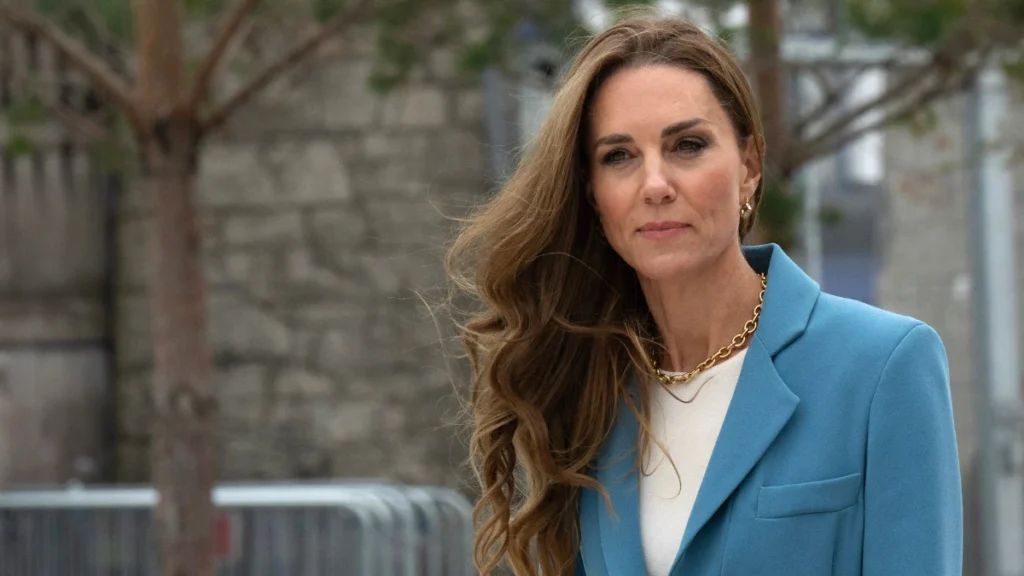

In a deeply personal and significant public appearance, Catherine, Princess of Wales, returned to the Royal Marsden Hospital in London, the esteemed institution where she underwent her own cancer treatment. The September 11 visit marked a poignant milestone in her post-treatment journey, highlighting not only her ongoing recovery but also her commitment to transforming the future of oncology care. During her time at the hospital, the Princess engaged with patients currently undergoing treatment and reviewed ambitious architectural plans for a new facility dedicated to holistic wellbeing and recovery.
The primary catalyst for the visit was the public unveiling of the profound impact generated by a grueling and previously undisclosed physical feat. In June, the Princess secretly completed the grueling National Three Peaks Challenge, scaling the highest mountains in Scotland, England, and Wales—Ben Nevis, Scafell Pike, and Snowdon—within a rigorous 24-hour timeframe. The endeavor served as a major fundraising initiative designed to bolster holistic cancer care across the United Kingdom, directly channeling resources into the institutions that provide comprehensive medical and emotional support networks for individuals battling the disease.
A Secret Asccent: The National Three Peaks Challenge
The revelation of the Princess’s participation in the National Three Peaks Challenge stunned the public, casting a new light on her physical resilience following months of demanding medical treatments. The challenge requires participants to scale Ben Nevis in Scotland (1,345 meters), Scafell Pike in England (978 meters), and Snowdon in Wales (1,085 meters) consecutively, navigating treacherous terrain, unpredictable weather conditions, and severe physical exhaustion, all within a single day.
For the Princess of Wales, the grueling climb was far more than an athletic test; it was a deeply symbolic gesture of gratitude. Sources close to the royal household noted that training for the event took place discreetly over several months as part of her post-treatment rehabilitation, allowing her to safely rebuild her strength while remaining focused on a philanthropic goal. By undertaking the challenge in secret, she avoided unnecessary media distraction, allowing the pure objective of the climb—raising awareness and vital funds for cancer care innovation—to remain the central focus.
When she finally addressed the patients and staff at the Royal Marsden Hospital, the emotional weight of her journey was palpable. Reflecting on her personal experiences within the facility’s walls, the Princess expressed her profound appreciation for the medical team that oversaw her recovery.
“This is my small way of being able to give back and say thank you to you,” the Princess stated during her address to hospital staff and patients. “I had incredible care here and support from a huge team. I am really, really grateful on a personal level.”
The Evolution of Oncology: Championing Holistic Care
Beyond the immediate medical interventions required to combat cancer, the Princess of Wales used her platform to spotlight the critical importance of holistic care—an approach that treats the whole person rather than just the disease. Medical oncology has increasingly recognized that physical treatments such as chemotherapy, radiotherapy, and surgery take an immense toll on a patient’s mental, emotional, and social wellbeing. Holistic care bridges this gap, integrating therapeutic support, nutritional guidance, mindfulness, and environmental factors into the standard treatment framework.
During her interactions with patients at the Royal Marsden, the Princess emphasized that supportive therapies outside the clinical treatment room are just as vital to long-term recovery as the medical procedures themselves.
“The holistic care, the treatments and therapeutic support on the outside is so important,” she explained, pointing to elements such as nature, proper nutrition, and continuous psychological support during difficult treatment cycles. She noted that these integrative practices had personally helped her navigate the darkest days of her diagnosis and recovery, adding, “It made a big difference to me and it made a huge difference to lots of patients who I’ve spoken to.”
This advocacy aligns closely with broader shifts in modern medicine. Oncological experts increasingly advocate for psycho-oncology and integrative medicine as standard components of cancer care plans. Studies consistently demonstrate that patients who receive comprehensive psychological and therapeutic support experience lower levels of anxiety, better adherence to treatment regimens, and an enhanced overall quality of life during and after their illness.
Investing in the Future: The Center for Holistic Wellbeing and Recovery
A central highlight of the Princess’s itinerary was learning about the development of the new Center for Holistic Wellbeing and Recovery at the Royal Marsden. During the visit, she viewed the specific site where the state-of-the-art facility will eventually be constructed. The center is envisioned as a sanctuary designed to support the physical, emotional, spiritual, and social wellbeing of patients and their families.
The funds raised through the Princess’s secret National Three Peaks Challenge will directly contribute to the realization of this transformative project. The facility aims to offer integrated therapeutic programs, counseling services, nutritional workshops, and rehabilitation spaces tailored to individuals navigating the complex aftermath of a cancer diagnosis.
“I think it will be transformative not only for patients but for families too,” the Princess remarked while reviewing the architectural blueprints and speaking with the hospital’s leadership team.
The Royal Marsden NHS Foundation Trust has long been a global pioneer in cancer research, diagnosis, and treatment. The integration of a dedicated holistic wellbeing center represents the next evolutionary step in the institution’s patient-centered care model. The Princess’s active involvement with the trust—cemented when she became Joint Patron of The Royal Marsden NHS Foundation Trust in 2025—has significantly elevated the national and international profile of holistic cancer care initiatives.
Chronology of Events
To understand the full context of the Princess’s recent visit, it is helpful to trace the timeline of her public service, health journey, and philanthropic milestones:
- Early 2024: The Princess of Wales steps back from public duties following major abdominal surgery, during which cancer was subsequently detected, leading to the commencement of preventative chemotherapy treatments.
- Late 2024 to Early 2025: Following the successful completion of her chemotherapy course, the Princess gradually resumes public-facing engagements, placing a renewed emphasis on health advocacy, early detection, and patient support systems.
- 2025: The Princess officially assumes the role of Joint Patron of The Royal Marsden NHS Foundation Trust, deepening her longstanding relationship with the hospital where she received her own treatment.
- June: In strict secrecy, the Princess successfully completes the National Three Peaks Challenge, scaling Ben Nevis, Scafell Pike, and Snowdon within a 24-hour window to raise funds for holistic cancer care.
- September 11: The Princess returns to the Royal Marsden Hospital in London. She tours the site of the future Center for Holistic Wellbeing and Recovery, meets with current patients, thanks hospital staff, and publicly reveals her mountaineering fundraiser.
Broader Impact and Implications for Public Health
The return of the Princess of Wales to the Royal Marsden and the disclosure of her fundraising climb carry significant implications for public health awareness and charitable giving. In the realm of public advocacy, high-profile figures sharing their personal health battles often prompt measurable increases in health screenings and public engagement. This phenomenon, frequently studied by public health researchers, is often referred to in media studies as the "awareness effect." Following initial revelations regarding her diagnosis, cancer charities across the United Kingdom reported unprecedented surges in website traffic and inquiries regarding symptoms and screening processes.
By shifting the narrative toward holistic care and recovery, the Princess has helped destigmatize the mental health and emotional struggles associated with life-threatening illnesses. Cancer diagnoses frequently carry heavy psychological burdens, yet patients often feel societal pressure to remain stoic or solely focused on physical survival. By openly discussing the necessity of therapeutic support, nature, and emotional wellbeing, the Princess validates the multifaceted challenges faced by millions of patients worldwide.
Furthermore, the financial impact of her athletic endeavor cannot be understated. Specialized facilities like the forthcoming Center for Holistic Wellbeing and Recovery rely heavily on philanthropic contributions and charitable trusts to fund innovative programs that fall outside standard government healthcare funding models. The infusion of capital resulting from the National Three Peaks Challenge ensures that patients at the Royal Marsden will have access to world-class integrative therapies for generations to come.
As the Princess of Wales continues her gradual return to full royal duties, her advocacy for cancer patients has clearly established itself as a cornerstone of her public platform. Her firsthand experience as a patient, combined with her unique ability to mobilize resources and public attention, positions her as a formidable champion for advancements in modern oncology. Through her visit to the Royal Marsden, she has transformed a personal trial into a lasting public benefit, ensuring that future generations of patients and their families will find solace, comprehensive support, and healing within an increasingly holistic medical landscape.