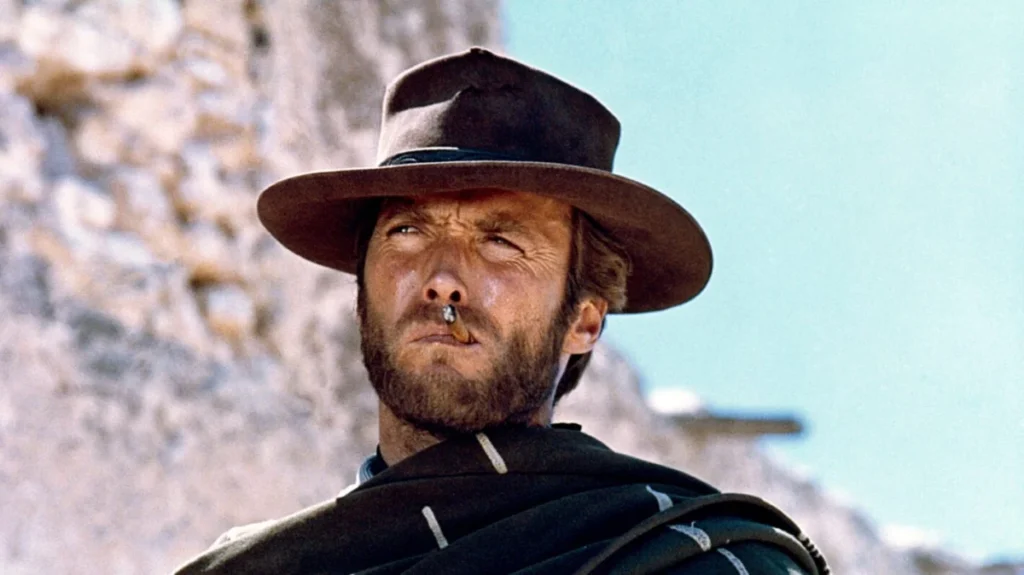

Clint Eastwood’s indelible mark on Hollywood is a testament to a career that has spanned over seven decades, a rare feat in an industry known for its fleeting trends and fickle fortunes. From his iconic squint and steely gaze that defined the tough-guy persona to his evolution as a celebrated director, Eastwood has not merely acted in films; he has shaped them, leaving an unparalleled legacy that continues to resonate with audiences and industry professionals alike. His journey from the dusty plains of television’s Rawhide to the directorial helm of his latest project, Juror #2, slated for a 2024 release, encapsulates a remarkable trajectory of talent, perseverance, and artistic evolution.
The Genesis of a Western Icon: From Television to Spaghetti Westerns
Eastwood’s ascent to stardom began in the late 1950s, with his breakout role as Rowdy Yates in the CBS Western television series Rawhide. The show, which aired from 1959 to 1965, chronicled the arduous journeys of a cattle drive and provided Eastwood with the foundational platform to hone his acting craft. His portrayal of the spirited and often rebellious cowpuncher quickly captivated viewers, establishing him as a compelling presence on the small screen. The success of Rawhide not only cemented his status as a television star but also served as a crucial stepping stone towards larger opportunities in Hollywood.
The 1960s witnessed Eastwood’s pivotal transition to the silver screen, most notably through his collaborations with Italian director Sergio Leone. This period marked the birth of the "spaghetti western," a genre that, while often produced with lower budgets and filmed in Europe, redefined the American Western with its gritty realism, morally ambiguous characters, and operatic violence. Eastwood’s performance as the Man with No Name in Leone’s "Dollars Trilogy" propelled him to international superstardom.
- A Fistful of Dollars (1964): This seminal film introduced the world to Eastwood’s enigmatic anti-hero, a lone gunman who plays two rival gangs against each other for his own gain. The film’s minimalist dialogue, striking cinematography, and Eastwood’s laconic intensity created a character that was both alluring and dangerous. Its critical and commercial success proved that Eastwood possessed a unique magnetism that transcended traditional heroic archetypes.
- For a Few Dollars More (1965): The second installment of the trilogy saw Eastwood’s character join forces with a rival bounty hunter, portrayed by Lee Van Cleef, to track down a notorious bandit. The film further developed the complex dynamic between the two leads and showcased Eastwood’s growing command of the screen.
- The Good, the Bad and the Ugly (1966): Widely considered the masterpiece of the trilogy and a landmark in Western cinema, this epic tale of three gunslingers searching for Confederate gold during the American Civil War solidified Eastwood’s global fame. Ennio Morricone’s iconic score became synonymous with the genre, and Eastwood’s portrayal of "Blondie" (the Good) cemented his status as a cultural icon. The film’s sprawling narrative, intense standoffs, and unforgettable characters set a new standard for the Western.
These films not only established Eastwood as the quintessential tough guy but also demonstrated his ability to embody characters who operated in shades of gray, challenging the conventional notions of heroism. His distinctive squint, his terse delivery, and his mastery of conveying emotion through subtle gestures became his trademarks, captivating audiences worldwide and paving the way for his continued success.
Diversifying the Portfolio: From Dirty Harry to Directorial Acclaim
The 1970s proved to be a period of significant artistic growth and diversification for Clint Eastwood. While continuing his work in Westerns, he also ventured into other genres, showcasing a remarkable range as an actor and beginning to explore his capabilities behind the camera. This decade saw the creation of some of his most enduring and iconic roles, further solidifying his status as a Hollywood powerhouse.
- Two Mules for Sister Sara (1970): This Western, directed by Don Siegel, saw Eastwood team up with Shirley MacLaine. The film offered a blend of action, humor, and unexpected camaraderie, highlighting Eastwood’s ability to engage with a variety of co-stars and genres.
- Dirty Harry (1971): This gritty police procedural introduced audiences to Inspector "Dirty" Harry Callahan, a no-nonsense San Francisco detective who operates outside the bounds of the law to catch criminals. The film was a massive commercial success and spawned a franchise that would define Eastwood’s tough-guy image for a generation. Callahan’s catchphrase, "Go ahead, make my day," became ingrained in popular culture. The film’s controversial portrayal of vigilantism and its unflinching depiction of urban crime sparked considerable debate, yet it resonated deeply with audiences seeking a more morally assertive protagonist in an era of shifting social norms.
- The Outlaw Josey Wales (1976): Directed by Eastwood himself, this revisionist Western explored themes of revenge and redemption. His performance as a Missouri farmer seeking vengeance after his family is murdered was critically acclaimed for its depth and complexity.
- Every Which Way but Loose (1978): This action-comedy, featuring an orangutan named Clyde, showcased a more lighthearted and comedic side of Eastwood. The film’s unexpected success demonstrated his versatility and his ability to connect with audiences across a spectrum of genres.
Beyond his acting prowess, the 1970s also marked a significant period in Eastwood’s directorial career. He had already directed several films prior, but his work in this decade solidified his reputation as a capable and visionary filmmaker. His directorial style, often characterized by efficient storytelling, understated performances, and a keen eye for visual composition, began to take shape. He often favored a less-is-more approach, allowing the narrative and the performances to speak for themselves. This ability to seamlessly transition between acting and directing became a hallmark of his career, allowing him unparalleled creative control over his projects.
A Legacy of Versatility: The 1980s and Beyond
The 1980s and 1990s saw Clint Eastwood continue to defy expectations, further cementing his status as a cinematic legend. He maintained his presence as a leading man in action films while increasingly focusing on his directorial endeavors, earning critical acclaim and numerous awards. His career, far from slowing down, entered a new phase of artistic maturity and critical recognition.
During the 1980s, Eastwood continued to star in popular action films like the Sudden Impact (1983), the fourth installment of the Dirty Harry series, and Pale Rider (1985), a return to the Western genre that he had helped redefine. However, his directorial work began to garner significant attention.
- Bird (1988): This biographical drama about the life of jazz saxophonist Charlie Parker was a departure from his typical fare and was lauded for its sensitive portrayal and innovative use of music. It earned Eastwood a Golden Globe Award for Best Director.
- Unforgiven (1992): This seminal Western, which Eastwood directed and starred in, is widely regarded as one of the greatest films ever made. It deconstructed the myths of the Old West, portraying violence with brutal honesty and exploring the moral complexities of revenge. Unforgiven swept the Academy Awards, winning Best Picture and Best Director for Eastwood, and Best Supporting Actor for Gene Hackman. This marked a significant critical validation of his directorial talent and a testament to his ability to craft profound cinematic narratives. The film’s success also signaled a renewed appreciation for the Western genre, as interpreted through Eastwood’s mature and reflective lens.
The 1990s saw Eastwood continue to balance his acting and directing roles with critical success. He directed films such as The Bridges of Madison County (1995), a critically acclaimed romantic drama, and Absolute Power (1997), a political thriller. His acting career remained vibrant with roles in films like In the Line of Fire (1993), where he starred alongside John Malkovich.
The Director’s Chair: A Continuing Evolution
As Eastwood transitioned into the 21st century, his directorial output became increasingly prominent. He demonstrated an enduring ability to tackle diverse subject matter with his signature understated yet powerful style.
- Mystic River (2003): This crime drama, starring Sean Penn and Tim Robbins, earned critical acclaim and Oscar nominations for Best Picture and Best Director for Eastwood.
- Million Dollar Baby (2004): A powerful and poignant drama about a female boxer and her trainer, this film won the Academy Award for Best Picture and Best Director for Eastwood, as well as Best Actress for Hilary Swank and Best Supporting Actor for Morgan Freeman. It solidified his reputation as a master storyteller capable of eliciting profound emotional performances from his actors.
- Flags of Our Fathers and Letters from Iwo Jima (2006): Eastwood directed two companion films that offered contrasting perspectives on the Battle of Iwo Jima during World War II, showcasing his ambition and his commitment to exploring complex historical events. Letters from Iwo Jima, told from the Japanese perspective, received widespread critical praise for its humanistic portrayal and earned an Oscar nomination for Best Picture.
- Gran Torino (2008): Eastwood starred in and directed this poignant drama about a Korean War veteran and his evolving relationship with his Hmong neighbors. The film was a commercial and critical success, resonating with audiences for its themes of prejudice, redemption, and intergenerational understanding.
- American Sniper (2014): This biographical war drama, starring Bradley Cooper, became a massive box office success and sparked considerable discussion about its portrayal of the Iraq War and its protagonist. It earned Eastwood his fourth nomination for Best Picture as a producer.
- The Mule (2018): Eastwood starred in and directed this crime drama about an elderly man who becomes a drug mule, demonstrating his continued vigor and his ability to draw audiences to films he both acts in and directs.
- Cry Macho (2021): His most recent acting role prior to Juror #2, this neo-Western drama saw Eastwood in his familiar tough-guy persona, albeit with a more contemplative edge.
The Final Cut: Juror #2 and a Lasting Legacy
The announcement of Juror #2, slated for a 2024 release, marks a potentially significant moment in Clint Eastwood’s illustrious career. While details surrounding the plot are still emerging, the project is expected to see Eastwood in his capacity as director, potentially concluding his directorial tenure with a film that, given his track record, is likely to be a thoughtful and compelling narrative. The film’s production itself signifies a remarkable continuity in an industry that often discards talent with age.
Eastwood’s career is not just a story of an actor or a director; it is a narrative of enduring influence. His films have consistently explored themes of morality, justice, redemption, and the human condition, often through the lens of characters who embody resilience and a certain unyielding spirit. His impact can be seen in the countless actors and filmmakers who have been inspired by his work, his dedication to craft, and his unwavering commitment to artistic integrity.
The data speaks volumes: Eastwood has been involved in over 70 films as an actor and over 40 as a director. His films have garnered numerous accolades, including multiple Academy Awards, Golden Globe Awards, and BAFTA Awards. His box office success, both as an actor and director, is staggering, with his films consistently drawing large audiences and generating significant revenue.
The implications of Eastwood’s continued work are profound. In an era of rapid technological change and evolving storytelling formats, his consistent output and critical success demonstrate the enduring power of strong narrative, compelling characters, and masterful filmmaking. His ability to connect with audiences across generations speaks to the universal themes he explores and the timeless quality of his cinematic vision.
While the details of Juror #2 remain under wraps, its anticipation is a testament to the deep respect and admiration the public and the industry hold for Clint Eastwood. His career is a masterclass in longevity, adaptation, and artistic excellence, a legacy that will undoubtedly continue to inspire and entertain for decades to come. The man who once rode the dusty trails of Rawhide and became the icon of the Western has, through sheer talent and dedication, remained at the forefront of cinema, a true titan of the industry.