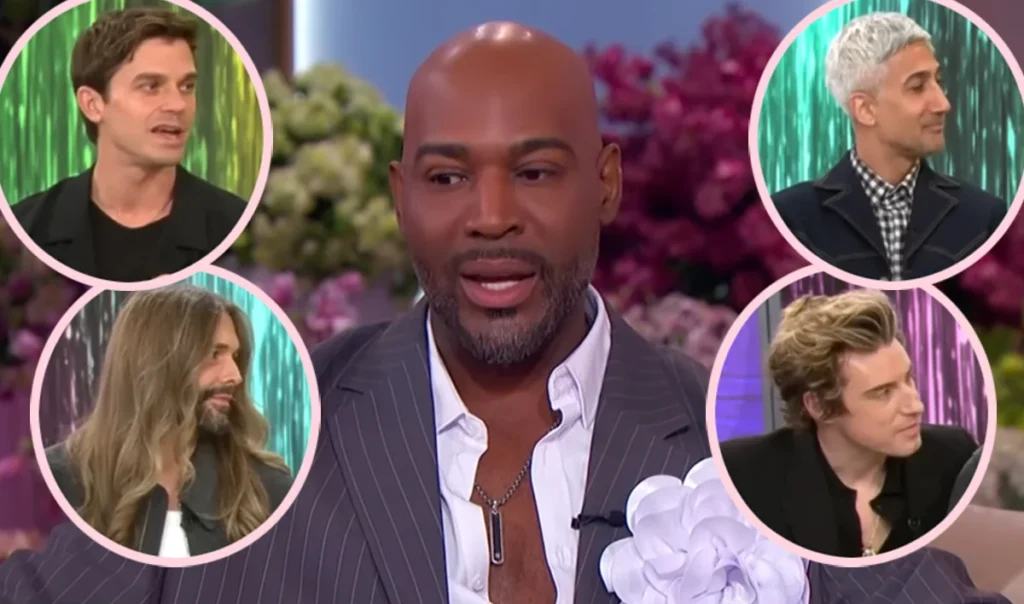

Karamo Brown, the culture expert from Netflix’s critically acclaimed Queer Eye reboot, has publicly disclosed the profound struggles and "toxic" dynamics that led to a significant falling out with his co-stars, Jonathan Van Ness, Antoni Porowski, and Tan France. These revelations, shared in an exclusive interview with People magazine, shed light on years of alleged bullying, exclusion, and a deeply fractured working relationship that culminated in a "hot mic" incident during the filming of the show’s final season. The discord has been so severe that Brown notably absented himself from recent promotional activities for Queer Eye, signaling an irreparable rift within the once-celebrated "Fab Five."
The Genesis of a Cultural Phenomenon: Queer Eye‘s Impact
The Queer Eye franchise first captured public imagination with Queer Eye for the Straight Guy, which premiered in 2003 on Bravo. This groundbreaking series introduced viewers to five gay professionals who offered makeovers and life advice to heterosexual men, blending fashion, grooming, interior design, food, and culture. The show was lauded for its positive representation of LGBTQ+ individuals and its message of self-improvement and acceptance, running for five successful seasons.
In 2018, Netflix revived the concept with a new cast and a refreshed mission, rebranding it simply as Queer Eye. The reboot quickly became a global sensation, resonating with a new generation of viewers through its empathetic approach, diverse subjects, and the charismatic personalities of its new "Fab Five": Antoni Porowski (food and wine), Tan France (fashion), Karamo Brown (culture), Bobby Berk (interior design), and Jonathan Van Ness (grooming). The show transcended its predecessor’s premise by focusing on individuals from various backgrounds, tackling deeper societal issues, and promoting radical self-love and compassion. Its emotional depth and genuine connections forged between the experts and their "heroes" garnered numerous awards, including multiple Emmy Awards, and cemented its status as a cultural touchstone. The public perceived the Fab Five as a cohesive, supportive, and loving unit, often expressing their strong bond and mutual admiration. This public image, however, now stands in stark contrast to the internal realities detailed by Karamo Brown.
A Timeline of Growing Discord: From Casting to Crisis
Brown’s account suggests that the seeds of conflict were sown much earlier than previously understood, dating back to the show’s initial casting phase. He revealed that an early "fun and flirty" relationship with one of his co-stars quickly soured when that individual filed a complaint against him. While an investigation cleared Brown of any wrongdoing, the incident, which he later learned was initiated by an anonymous third party, created an immediate and lasting "divide" within the group. "It broke us," Brown told People, indicating that the underlying tension was present from the very beginning of their journey together. "We all knew the divide between us."
Over the subsequent years of filming, Brown claims he endured a consistent pattern of "bullying and bad behavior" from several of his co-stars. He recounted how production executives and team members often dismissed his concerns, simply stating, "Well, that’s just that person," rather than addressing the unprofessional conduct. This institutional brushing-off of his complaints exacerbated the problem, making Brown feel increasingly isolated and devalued. "It impacted me negatively, consistently," he stated, highlighting the cumulative toll on his well-being. The environment became so oppressive that Brown admitted to becoming "depressed" while filming the series. The irony was not lost on him: "It felt shameful because I was teaching people that they could be better, but in my own life I was trapped."
Further reports corroborate a pattern of exclusion, with sources indicating that Brown was "purposefully excluding him" by his castmates. This sense of being an outsider was reportedly compounded by the arrival of Jeremiah Brent, who replaced Bobby Berk as the design expert for the final season. Bobby Berk’s departure in 2023, though cited for different reasons related to contract negotiations and project burnout, had already signaled a shift in the cast dynamic and perhaps hinted at deeper, unaddressed issues within the group. Berk himself had alluded to challenges, stating that he and Tan France had a "situation" that led to a falling out, though he refrained from detailing specifics. While not directly related to Brown’s grievances, Berk’s exit underscored the fragility of the "Fab Five" unit.
The "Hot Mic" Moment: The Ultimate Betrayal
The long-simmering tensions reached a critical boiling point during the filming of Queer Eye‘s final season last summer. The catalyst was a "jaw-dropping hot mic moment" that Brown’s mother, Charmaine, inadvertently overheard while visiting the set. According to Brown, his mother witnessed Antoni Porowski, Tan France, and Jonathan Van Ness gossiping about him. While Brown himself chose not to press his mother for the exact details of what was said, the impact on her was profound and immediately visible.
DailyMail.com sources, however, had previously reported on the content of the overheard conversation, claiming that Porowski, France, and Van Ness were criticizing Brown’s appearance, specifically "the way he looked and dressed." More damagingly, the sources alleged that the conversation escalated to critiques of his professional performance as the show’s life coach. "But then it turned into complaining about what he tells the subjects on the show," the sources claimed. "Since he is the life coach, that’s obviously not something that anyone wants to hear — that they aren’t doing a good job. It’s especially hard when it’s coming from your so-called friends."
The emotional distress this caused Brown’s mother was undeniable. He recounted the tears in her eyes and her repeated, heartbroken question: "’I thought they were your friends.’" This moment served as the definitive "final straw" for Brown. He realized he could no longer remain silent about the consistent emotional abuse and marginalization he had experienced. The public perception of the Fab Five as an unbreakable bond of friendship shattered in that instant, revealing a deeply troubled reality behind the cameras.
Official Responses and Lingering Questions
In the wake of this pivotal incident, Karamo Brown made the difficult decision to withdraw from all press appearances with the rest of the cast for the final season. He reflected on his choice, stating, "The group had always come together because of the fans, but because of the work I’d done on myself, I asked, ‘If I stay quiet right now and pretend I’m sick or something, whose peace am I protecting?’" His absence from promotional tours, which typically involve the entire cast, became a public indicator of the deep chasm that had formed.
Brown has not spoken to most of his co-stars since the hot mic incident, with the exception of Jonathan Van Ness, about whom he surprisingly offered words of commendation. "The work I have seen Jonathan pouring into himself is commendable and inspiring," Brown stated. "Growth isn’t always public-facing, but I respect him for how he’s currently moving through life." This nuanced perspective suggests that while the past was fraught with conflict, Brown acknowledges personal growth in at least one of his former colleagues, leaving a sliver of possibility for future understanding, if not reconciliation.
Crucially, Brown also took a moment for self-reflection, acknowledging his own role in the strained dynamics. "There were times I was hurt and would lash back out. I recognize my part and how things I did impacted people," he admitted. This self-accountability adds a layer of maturity and balance to his narrative, moving beyond a simple victim-blaming scenario.
As of the publication of Brown’s interview, Jonathan Van Ness, Antoni Porowski, and Tan France have remained publicly silent on the specific accusations. Their silence could be strategic, awaiting further developments, or indicative of a desire to avoid exacerbating the public dispute.
In response to Brown’s claims, Queer Eye‘s production companies, ITV America and Scout Productions, issued a joint statement to People. They strongly refuted any characterization that concerns raised during production were ignored or dismissed: "We strongly disagree with any characterization that concerns raised during the production of Queer Eye were ignored, dismissed or allowed to continue unchecked. Throughout the series’ run, any issues brought to production leadership were taken seriously and addressed appropriately. Production consistently fostered a respectful and professional environment for the cast and crew — which included ongoing training, coaching and other support for the cast — maintaining clear workplace policies and practices throughout filming. We remain incredibly proud of Queer Eye‘s lasting impact and the community the series helped build over more than 20 years." This statement represents a standard corporate defense, emphasizing due diligence and adherence to workplace policies, but it directly contradicts Brown’s personal experience of feeling unheard and unsupported.
Broader Implications: The Legacy of Queer Eye and Reality TV Dynamics
Karamo Brown’s candid revelations pose significant questions about the nature of workplace environments, particularly within the often-glamorized world of reality television. The narrative of the "Fab Five" as an unshakeable brotherhood of empathy and positivity was central to Queer Eye‘s appeal. These disclosures challenge that carefully cultivated image, forcing viewers to reconcile the show’s profound message of self-acceptance and kindness with the alleged internal strife and toxicity.
The incident highlights the immense pressure placed on reality TV personalities, who are expected to present an authentic yet often idealized version of themselves and their relationships. The blurring of lines between personal friendships and professional obligations can create fertile ground for conflict, especially when compounded by the relentless scrutiny of public life and the demands of a high-stakes production schedule. For a show whose very premise is about emotional transformation and fostering healthy relationships, the internal breakdown of its main cast carries an especially poignant and ironic weight.
Moreover, Brown’s experience underscores the persistent issue of workplace bullying and the challenges individuals face when reporting such behavior, particularly when those in positions of authority may be perceived as minimizing the concerns. His journey from silent suffering to public disclosure reflects a broader cultural shift towards greater transparency about mental health struggles and the demand for accountability in professional settings.
The future impact on the individual careers of the Fab Five, as well as the enduring legacy of Queer Eye, remains to be seen. While the show’s positive influence on countless lives is undeniable, these revelations will undoubtedly cast a long shadow over its concluding season. Fans, who once celebrated the undeniable chemistry and genuine affection among the cast, are now left to grapple with the painful reality that what they saw on screen may not have reflected the full truth behind the scenes. Whether the Fab Five can ever reconcile, or if this marks a definitive end to their collective journey, will continue to be a subject of intense public interest and speculation. For now, Karamo Brown has broken his silence, offering a stark and honest account of the price of fame and the fragility of even the most outwardly harmonious relationships.