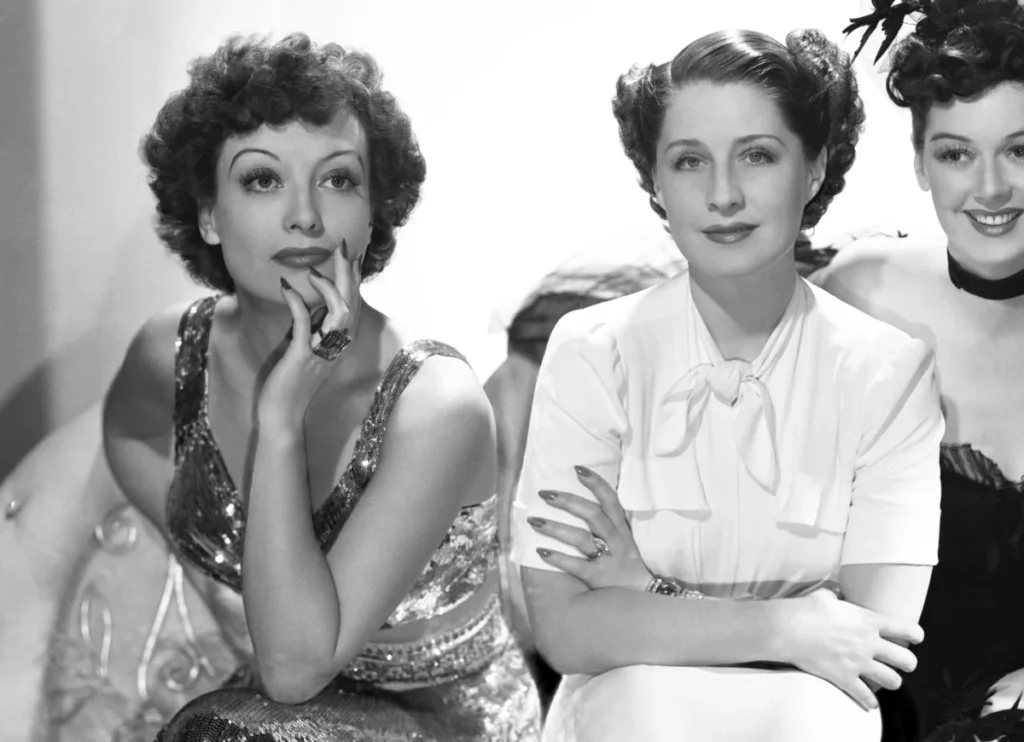

The release of author and actress Illeana Douglas’s new book, Jungle Red! The Making of MGM’s The Women, published on September 15 by Lyons Press, brings renewed attention to George Cukor’s 1939 cinematic masterwork. Boasting an all-star, entirely female cast that included Joan Crawford, Norma Shearer, Rosalind Russell, Paulette Goddard, and Joan Fontaine, the film served as a foundational template for modern female-driven serialized media such as Sex and the City and The Real Housewives. Beyond its cinematic innovations, however, the production is permanently etched in Hollywood lore for housing what Douglas argues is the greatest on-screen and off-screen rivalry in motion picture history: the intense, multifaceted feud between Joan Crawford and Norma Shearer.
Main Facts and Historical Context
To understand the animosity that defined the production of The Women, one must examine the divergent socioeconomic and professional backgrounds of its two principal stars. Norma Shearer reigned as the undisputed "First Lady of MGM," a status solidified by her marriage to studio production chief Irving Thalberg, who passed away in 1936. Shearer was a polished, studio-protected elite who commanded prestige, top-tier dramatic roles, and frequent Academy Award recognition. Conversely, Joan Crawford fought her way up from humble beginnings, cultivating an ambitious, fiercely independent persona that relied on mass public appeal and a rigorous work ethic.
While studio publicity departments eagerly fanned the flames of their mutual disdain—capitalizing on the lack of male actors or romantic subplots to market the film as a catfight—the underlying tension was entirely genuine. Anita Loos, the screenwriter for The Women, noted that Shearer and Crawford came from entirely different worlds, with Shearer viewing Crawford as crude and pushy, while Crawford perceived Shearer as overbearing and privileged. Despite their personal antipathy, both veterans recognized the commercial value of their rivalry and subtly collaborated with studio press agents to keep their feud in the public eye.
Chronology of a Legendary Production
The friction between the two stars escalated through a carefully documented series of events leading up to and during the production of the film in the spring of 1939:
- February 1939: George Cukor is officially signed to direct The Women, with Norma Shearer already attached to star as the tragic heroine, Mary Haines.
- March 1939: Amid a massive casting search for 135 speaking roles, Joan Crawford actively campaigns for the antagonist role of Crystal Allen, viewing it as her long-awaited opportunity to go head-to-head with Shearer on equal footing. Crawford reportedly bypasses traditional studio channels, lobbying producer Hunt Stromberg and studio head Louis B. Mayer directly.
- April 25, 1939: Production officially commences under working title #1091. Pre-filming tensions are immediately highlighted when studio publicist Howard Strickling approves a Look magazine cover featuring Shearer and Crawford glaring at one another, accompanied by a headline detailing Hollywood feuds.
- Principal Photography (Spring–Summer 1939): On-set logistics become a logistical nightmare for director George Cukor. Incidents range from petty trailer placement disputes—where Shearer demands Crawford’s dressing room be moved back by a single foot to maintain hierarchical distance—to Crawford playing loud opera recordings during Shearer’s rehearsals.
- Late 1939: Following the completion of filming, Shearer skips the wrap luncheon hosted for the press, while Crawford openly embraces the public narrative of their mutual hostility. Upon the film’s release, both actresses publicly downplay their cooperation while privately taking subtle digs at each other’s acting styles and studio standing.
Supporting Data and Studio Politics
The rivalry between Crawford and Shearer was deeply rooted in a decade of studio politics, unequal distribution of prestige projects, and Academy Awards statistics. By 1939, Shearer had accumulated five Academy Award nominations and one Best Actress win for The Divorcee (1930), largely supported by MGM’s formidable internal voting bloc and Thalberg’s active advocacy. Meanwhile, Crawford—despite delivering critically acclaimed performances in pictures such as Grand Hotel (1932) and Sadie McKee (1934)—had yet to secure a single Oscar nomination, fueling a profound sense of professional injustice.

The tension reached a boiling point in 1938 when Crawford lost the lead role in Idiot’s Delight to Shearer, a project Crawford had desperately sought to star in opposite Clark Gable to revitalize her waning box office appeal. When Crawford was finally cast as Crystal Allen in The Women, it marked a calculated tactical move. Realizing she needed a major box office hit following a string of underperforming pictures, Crawford calculated that the only way to claim a dominant supporting role was to anchor herself directly opposite her primary studio rival.
Official Responses and Industry Reactions
Studio executives and key creative personnel were acutely aware of the friction, often leveraging it to extract emotionally raw performances from both women. Director George Cukor employed a strategy of strict physical separation—coordinating staggered rehearsal times, wardrobe fittings, and makeup tests—to minimize off-camera altercations.
Industry columnists, including Hedda Hopper and Harry Mines, frequently reported on the psychological chess match playing out on the MGM lot. When Crawford temporarily halted production by calling in sick with reported exhaustion and intestinal complications, rumors circulated regarding the high-stress environment of the set. Upon her return, Crawford delivered a bravura performance during their critical face-to-face dressing room confrontation, proving that professional survival trumped personal grievance.
Broader Impact and Implications
The legacy of The Women extends far beyond the confines 1930s Hollywood studio politics. The film established a viable commercial model for ensemble casts centered entirely on female dynamics, shedding traditional romantic tropes in favor of sharp, character-driven social satire.
Ultimately, the Crawford-Shearer feud transformed from a corporate headache into a masterclass in early Hollywood public relations. By weaponizing their mutual animosity, both actresses retained absolute control over their public images, securing their respective places in cinema history not merely as contract players, but as architects of their own enduring myths.