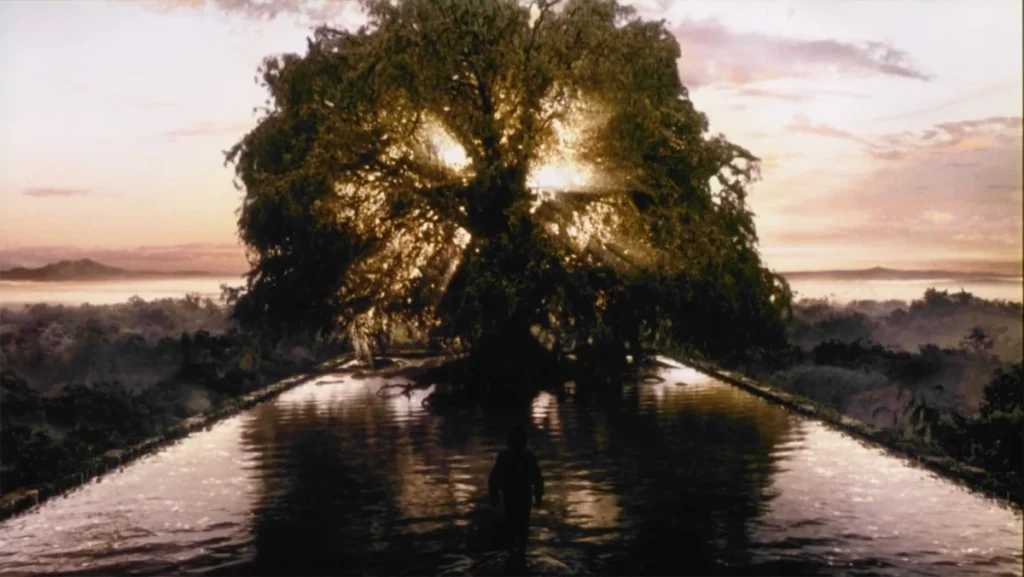

The cinematic landscape of 2006 was graced by the release of Darren Aronofsky’s "The Fountain," a film that, despite its modest box office performance, has since solidified its status as a cult classic and a testament to audacious filmmaking. This ambitious science fiction drama, which grapples with profound themes of love, mortality, spirituality, and the enduring human quest for meaning, continues to captivate audiences and provoke discussion nearly two decades after its initial debut. This retrospective explores the genesis of "The Fountain," its challenging production, its thematic richness, and its lasting impact on cinema.
The Genesis of an Odyssey: From Pitt and Blanchett to Jackman and Weisz
The journey of "The Fountain" from conception to screen was a protracted and arduous one, marked by significant creative and financial hurdles. Director Darren Aronofsky, following the critical acclaim of his sophomore feature, "Requiem for a Dream" (2000), initially envisioned "The Fountain" as a grand, $70 million production. The original leading roles were slated for Hollywood powerhouses Brad Pitt as the protagonist and Cate Blanchett as his love interest. However, this ambitious iteration of the film ultimately faltered. Pitt’s withdrawal from the project and escalating production costs led Warner Bros. to pull the plug, a devastating setback for Aronofsky and his creative team.
Undeterred, Aronofsky embarked on a painstaking process of reimagining the film. He significantly revised the screenplay, paring down the narrative and reducing the budget to a more attainable $35 million. This recalibration paved the way for a new leading duo: Hugh Jackman, known for his role as Wolverine in the X-Men franchise, and Rachel Weisz, an Academy Award-winning actress. Their involvement breathed new life into the project, allowing Aronofsky to finally bring his vision to fruition. The casting of Jackman and Weisz proved to be a pivotal moment, injecting a potent combination of star power and dramatic gravitas into the film’s complex narrative.
A Thousand-Year Voyage: Narrative Structure and Thematic Depth
"The Fountain" is distinguished by its intricate, multi-layered narrative that unfolds across three distinct timelines and locations, spanning over a millennium. The film interweaves the story of Tommy (Hugh Jackman), a modern-day neuroscientist desperately seeking a cure for his wife Izzi’s (Rachel Weisz) terminal brain tumor; the tale of Tomas (also played by Jackman), a 16th-century conquistador in pursuit of the legendary Tree of Life in the New World; and the journey of Tom (again, Jackman), a contemplative astronaut in the distant future, navigating a celestial nebula in a bid to reach a dying star and find spiritual enlightenment.

This interwoven structure serves as a powerful metaphor for the cyclical nature of life, death, and rebirth. The protagonists, despite their disparate temporal settings, are all engaged in a singular, overarching quest: to confront mortality and find a way to transcend its inevitability. The film explores profound philosophical and spiritual questions, prompting viewers to contemplate the nature of existence, the meaning of love in the face of loss, and the enduring human desire for immortality, whether through legacy, remembrance, or a spiritual ascent.
The core of the narrative revolves around the character of Izzi, whose writings about a fantastical quest for a Tree of Life inspire Tommy’s scientific endeavors and, implicitly, Tomas’s historical expedition. Her character acts as a spiritual anchor, imbuing the film with a sense of hope and the belief in interconnectedness across time and space. The film’s tagline, "Our bodies are prisons for our souls," encapsulates its exploration of the human condition and the yearning for liberation from physical limitations.
A Visual and Auditory Masterpiece: Cinematography and Score
Beyond its narrative ambition, "The Fountain" is a feast for the senses, characterized by its breathtaking visual design and evocative musical score. The cinematography, by Paul Lauston, is stunning, employing a rich palette and a dreamlike aesthetic to differentiate the three timelines while maintaining a cohesive visual language. The futuristic sequences, in particular, are notable for their ethereal beauty, featuring striking imagery of space, nebulae, and the enigmatic Tree of Life, which serves as a central symbolic element. The film’s visual effects, especially considering the budget constraints, are remarkably effective in creating a sense of wonder and otherworldliness.
Complementing the visual splendor is the film’s haunting and unforgettable score, composed by Clint Mansell. Mansell, who previously collaborated with Aronofsky on "Requiem for a Dream," delivered a score that is both melancholic and majestic, perfectly capturing the film’s emotional weight and spiritual aspirations. The recurring theme, often featuring Kronos Quartet, has become iconic in its own right, imbuing the film with a profound sense of longing and transcendence. The score is not merely an accompaniment but an integral part of the storytelling, amplifying the emotional resonance of key scenes and underscoring the film’s philosophical undertones.
Production Challenges and Critical Reception
The production of "The Fountain" was fraught with difficulties that extended beyond the initial budget issues. Aronofsky has spoken about the intense pressure and creative compromises he faced, including the challenge of conveying complex ideas within the confines of a mainstream film. The film’s unconventional narrative structure and its unabashed embrace of philosophical and spiritual themes meant that it was never intended to be a crowd-pleaser in the traditional sense.

Upon its release on November 22, 2006, "The Fountain" garnered a polarized critical reception. While some critics lauded its artistic ambition, visual splendor, and thematic depth, others found its narrative convoluted and its philosophical musings pretentious. The film’s box office performance was also disappointing, grossing a mere $16.5 million domestically against its $35 million budget. This financial underperformance led some to initially dismiss it as a commercial failure.
However, over time, "The Fountain" has experienced a significant re-evaluation. Audiences have increasingly gravitated towards its unique vision, and critical appreciation has grown, with many now recognizing its artistic merit and its enduring power. Its cult following has ensured that it is frequently discussed, analyzed, and celebrated as one of Aronofsky’s most personal and daring works.
Supporting Cast and Key Contributions
While Hugh Jackman and Rachel Weisz anchor the film with their compelling performances, the supporting cast of "The Fountain" also delivers memorable turns. Ellen Burstyn, a frequent collaborator with Aronofsky, plays Abigail, Tommy’s mentor and confidante, bringing a grounding presence to the modern-day narrative. Stephen McHattie appears as the High Priest in the conquistador era, and Mark Margolis, known for his work in "Requiem for a Dream" and "Breaking Bad," plays a significant role as a scientist in the future timeline. Cliff Curtis portrays the captain of the guard in the 16th century, adding a grounded, stoic presence to the historical segment.
The contributions of these actors, though often in supporting roles, are crucial in fleshing out the film’s complex universe and its deeply human characters. Their performances imbue each timeline with a sense of authenticity and emotional weight, allowing the audience to connect with the universal themes of love, loss, and the search for meaning, regardless of the era.
Broader Impact and Legacy
"The Fountain" stands as a significant entry in Darren Aronofsky’s filmography, showcasing his distinctive directorial style and his unwavering commitment to exploring challenging subjects. The film’s influence can be seen in its bold approach to narrative structure and its willingness to engage with complex philosophical and spiritual concepts within the framework of science fiction. It paved the way for subsequent films that have sought to blend genre conventions with profound introspection, pushing the boundaries of what is expected from mainstream cinema.

The film’s enduring appeal lies in its ability to resonate with audiences on a deeply personal level. Its exploration of themes that are universally relevant – love, loss, the fear of death, and the search for meaning – ensures its continued relevance. The intricate symbolism, particularly that of the Tree of Life, invites multiple interpretations and encourages ongoing engagement with the film’s deeper messages.
Furthermore, "The Fountain" serves as a potent reminder of the power of artistic perseverance. The arduous journey from its initial conception to its eventual release highlights the dedication and vision required to bring such an ambitious project to fruition. The film’s transformation from a potential blockbuster with Pitt and Blanchett to a more intimate, yet equally profound, drama with Jackman and Weisz demonstrates Aronofsky’s adaptability and his commitment to his artistic vision.
Conclusion: A Timeless Exploration of Existence
In retrospect, "The Fountain" is more than just a science fiction film; it is a philosophical inquiry, a meditation on the human condition, and a testament to the enduring power of love. Its challenging narrative, stunning visuals, and evocative score combine to create an experience that is both intellectually stimulating and emotionally resonant. While it may not have achieved immediate commercial success, its lasting impact on cinema and its dedicated fanbase speak volumes about its artistic merit and its profound exploration of life’s most fundamental questions. The film’s rewatchability, its ability to reveal new layers of meaning with each viewing, solidifies its place as a timeless classic, inviting audiences to embark on its thousand-year odyssey of love, death, and the eternal search for transcendence. The film’s enduring legacy is a testament to its audacious ambition and its profound artistic achievement.