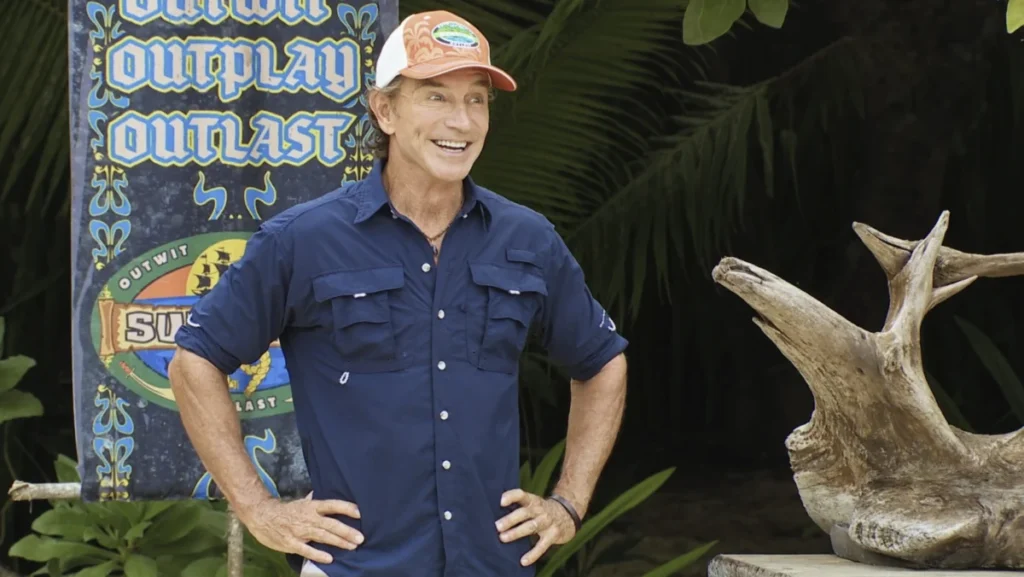

The landscape of modern television production is undergoing a profound and complex shift, caught between corporate restructuring, shifting political climates, and a renewed commitment to authentic storytelling. Amid broader industry trends where major media conglomerates are scaling back diversity, equity, and inclusion (DEI) initiatives, long-running CBS reality competition series Survivor remains steadfastly committed to its casting mandates. Longtime host, executive producer, and showrunner Jeff Probst recently confirmed that the foundational casting standards implemented in the wake of the 2020 social justice movements remain entirely intact, proving that representation on the hit series is no longer viewed as a temporary corporate checkbox, but rather as an essential narrative engine.
The Origins of the 50 Percent Diversity Mandate
To understand the current casting philosophy of Survivor, one must look back to the summer of 2020, a watershed moment for American media and culture. Following widespread protests sparked by the murder of Black Lives Matter movement catalysts, media companies faced intense internal and external scrutiny regarding systemic lack of representation across both scripted and unscripted programming. In response to these calls for systemic reform, CBS instituted a groundbreaking corporate initiative in November 2020.
Under the leadership of network executives, CBS formally mandated that for all unscripted reality television shows moving forward, at least 50 percent of the cast must consist of people of color (POC). This policy directly affected flagship programs such as Survivor, Big Brother, and The Amazing Race. Historically, these programs had faced criticism from fans and former contestants for predominantly featuring homogeneous casts, which often limited the cultural perspectives and life experiences showcased on screen.
When the mandate was first announced, industry analysts debated whether the quota would lead to tokenism or fundamentally alter the gameplay. However, Survivor embraced the change aggressively. Led by casting director Jesse Tannenbaum, the production team expanded its outreach efforts, tapping into communities and demographics that had previously been overlooked by traditional reality television casting scouts. The result was an immediate revitalization of the show’s narrative dynamics, introducing viewers to multifaceted contestants whose ethnic backgrounds, socioeconomic statuses, and worldview perspectives enriched the psychological complexity of the social experiment.
Navigating Corporate Rollbacks and the Political Climate
The steadfastness of the Survivor team stands in stark contrast to recent corporate maneuvers across the broader entertainment ecosystem. Following the return of Donald Trump to the White House and a concerted legislative and public relations push against diversity initiatives nationwide, major Hollywood studios began quietly dismantling or watering down their corporate DEI departments.
Last year, reporting by major trade publications revealed that Paramount Global—the parent company of CBS—was among the legacy media companies rolling back explicit DEI policies to mitigate political scrutiny and align with changing regulatory expectations. Furthermore, when David Ellison’s Skydance Media pursued its landmark merger with Paramount, the acquiring group explicitly committed to eliminating corporate DEI programs to secure vital regulatory approvals from the Federal Communications Commission (FCC) and avoid protracted legal challenges from conservative advocacy groups.
Despite these sweeping corporate adaptations, Probst has maintained that Survivor operates in a unique creative space where diversity is not dictated by administrative pressure, but by narrative necessity. In a recent extensive interview with cultural critics, Probst addressed the political and corporate headwinds directly. He asserted that he feels zero pressure from network executives to alter the racial or cultural makeup of the islands. According to Probst, the decision to maintain the 50 percent threshold is entirely driven by the casting department under Tannenbaum, who views the diverse pool of applicants as vital to the show’s ongoing survival and creative relevance.
The Narrative Power of Lived Experience
From a structural standpoint, Survivor relies entirely on human interaction, paranoia, trust, and strategic betrayal. Contestants from radically different walks of life are dropped onto remote islands with minimal resources and forced to form alliances while simultaneously plotting each other’s eliminations. Probst argues that uniformity of cast leads to repetitive gameplay, whereas deep diversity creates a richer tapestry of interpersonal conflict and cooperation.
"If you watch our show, you know that we’re so diverse — and it’s not just skin color or ethnicity. It goes much deeper than that," Probst explained during his media tour. "It’s one of the biggest positive changes ever. Our stories are so much more interesting now because we have people from completely different walks of life."
The showrunner elaborated on how demographic variety changes the psychological stakes of the game. When individuals from urban centers, rural farming communities, immigrant backgrounds, LGBTQ+ communities, and varying socioeconomic brackets intersect, their initial implicit biases, cultural misunderstandings, and ultimate bonds generate compelling television. Probst noted that the casting team does not look at numbers out of compliance, but rather out of a creative understanding that distinct viewpoints naturally elevate the storytelling. "All those differences matter in the story when you throw people together and force them to rely on each other while conspiring against each other. The more diverse, the more interesting," he noted.
Entering the Open Era: Season 51 and Beyond
The steadfast commitment to inclusive casting comes at a critical juncture for Survivor as the franchise transitions past its monumental 50th season. Reaching a milestone of 50 seasons places Survivor in an elite tier of television history, joining long-running soap operas and nightly news programs as a permanent fixture of American broadcasting.
However, crossing that threshold also presented a unique psychological hurdle for the production team. Speaking with reporters ahead of the season 51 premiere, Probst admitted that he and his creative team felt "enormous pressure" heading into the current production cycle. The looming shadow of the 50th season forced producers to brainstorm aggressively about how to reinvent the format without losing the core elements that fans have cherished for over two decades.
This pressure ultimately birthed what the production team has termed the "Open Era"—a conceptual framework designed to propel the reality juggernaut through its next decade on the air. By stripping away some of the repetitive safety nets of the "New Era" seasons (which were filmed primarily in Fiji with recurring structural twists) and leaning heavily into unpredictable social dynamics driven by diverse casts, Survivor aims to keep both casual viewers and die-hard fans guessing.
Broader Implications for the Television Industry
The decision by the Survivor production team to preserve its diversity standards despite broader corporate retreats carries significant implications for the unscripted television landscape. It demonstrates that when a creative team successfully integrates diverse casting into the DNA of a show, it ceases to be viewed as a compliance burden and becomes an artistic asset.
While legal and political pressures continue to force executive suites to rebrand or dismantle formal DEI corporate structures, creative autonomies within established franchises may carve out resilient pathways for representation. In the case of Survivor, the proof is visible in the ratings, critical acclaim, and cultural conversation. By proving that inclusive casting yields superior dramatic television, Probst and his team have insulated their casting philosophy against shifting political winds.
As Survivor continues to air its 51st season on Wednesday nights on CBS and stream concurrently on Paramount+, it stands as a fascinating case study in how entertainment franchises can navigate polarizing cultural shifts. By focusing on the human narrative rather than corporate compliance, the show ensures that its island society remains a mirror of the real world—complex, varied, and perpetually compelling.