
The 2026 MTV Video Music Awards delivered a night of high-octane spectacle, cultural milestones, and emotional retrospectives as the ceremony returned to Los Angeles for the first time since 2017. Broadcast live from the Peacock Theater across CBS, MTV, and Paramount+, the event brought together generations of music royalty, from enduring pop icons to contemporary global trailblazers. Hosted with effortless charisma by Snoop Dogg, the evening balanced nostalgia with forward-looking artistic statements, highlighted by record-shattering victories, dazzling debut performances, and profound tributes to departed legends.
Main Facts of the 2026 VMAs
The 2026 VMAs cemented their place in television and music history through a combination of fierce competition and awe-inspiring live staging. Taylor Swift dominated the evening’s narrative, capturing the coveted Video of the Year award for "The Fate of Ophelia" and extending her own historic record for the most victories in that category. Her triumph was accompanied by the surprise premiere of her gripping music video for "Patient Second," starring Dakota Johnson and Colin Farrell.
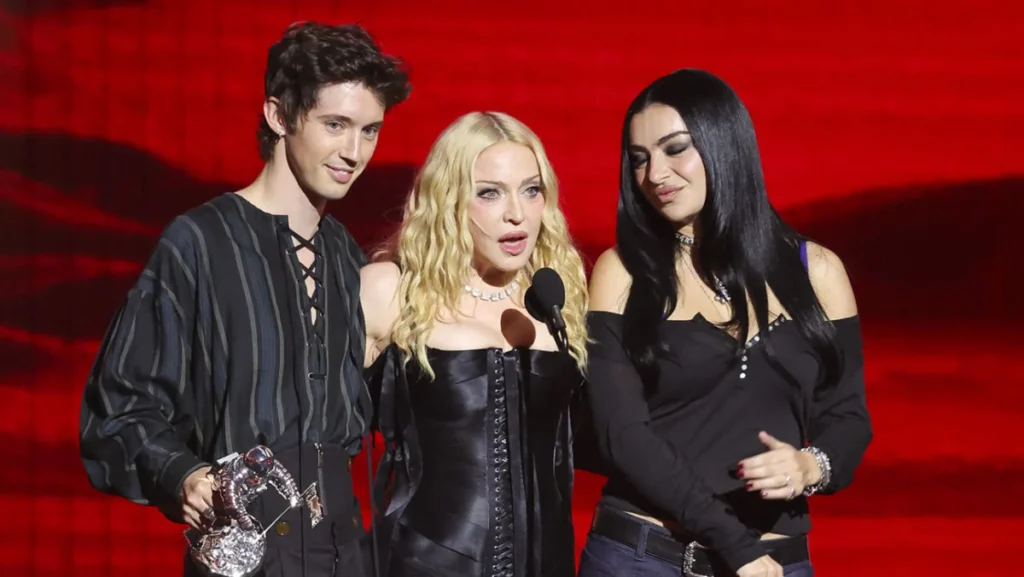
Meanwhile, the opening moments of the broadcast set a breathless pace. Madonna made a triumphant return to the VMA stage for the first time since her iconic 2003 performance, linking up with contemporary powerhouses Sabrina Carpenter and Charli XCX for a high-concept medley. The evening also honored the indelible legacy of rock royalty, presenting Nirvana with the prestigious Video Vanguard Award, while paying homage to cultural icons Dolly Parton and George Michael through elaborate, star-studded tribute segments. From K-pop sensation Lisa’s thunderous debut of "SaWaDiKa" to Raye’s red-hot rendition of "Where Is My Husband!", the ceremony proved to be a masterclass in modern live entertainment production.
A Chronological Walkthrough of the Evening
The festivities commenced with Snoop Dogg taking the stage for his opening monologue. Celebrating the VMAs’ long-awaited return to Los Angeles, the rapper did not shy away from humor, delivering a playful nod to Madonna’s legendary career and welcoming the industry’s elite to his hometown.
Madonna wasted no time in capturing the global spotlight. Emerging spread-eagle atop a black grand piano alongside Sabrina Carpenter, the Queen of Pop launched into a medley of "Bring Your Love" and "Danceteria Afterhours." Utilizing a moving platform, a choir dressed in veiled white nun habits, and a recreation of the legendary New York nightclub’s restroom set featuring Charli XCX, the performance directly evoked the cultural shockwaves of Madonna’s historic 2003 kiss with Britney Spears and Christina Aguilera.
Minutes later, Lisa of Blackpink claimed the Best Pop award for "Dream" featuring Kentaro Sakaguchi, setting the stage for a later performance of her upcoming single "SaWaDiKa." Raye kept the momentum surging with her VMAs performance debut, bringing her viral social media sensation "Where Is My Husband!" to life in a fiery red staging that mirrored its official music video.
As the evening progressed, the tone shifted into deep reverence. Public Enemy frontman Chuck D stepped up to present Nirvana with the Video Vanguard Award. Surviving members Dave Grohl, Krist Novoselic, and Pat Smear accepted the honor, reflecting on the enduring vision of the late Kurt Cobain. The emotional weight continued with Kacey Musgraves’ televised tribute to Dolly Parton, who passed away in August 2026 at the age of 80. Musgraves delivered a stirring rendition of Parton’s timeless anthem "I Will Always Love You," echoing memorials held across the country.
The latter half of the ceremony accelerated into cinematic spectacles. Taylor Swift debuted her narrative-driven music video for "Patient Zero" following an introduction by Dakota Johnson, before later taking the stage to accept Video of the Year for "The Fate of Ophelia." A comprehensive George Michael tribute followed, featuring Sombr wearing Michael’s original Faith era leather jacket, Raye delivering a soulful duet rendition, Teddy Swims commanding the stage with "Careless Whisper," and a surprise appearance by Adam Lambert to close out the segment with "Freedom ’90." The night concluded with a striking, viral-inspired recreation of "Storm" by Gener8ion and Yung Lean, leaving the Peacock Theater audience on their feet.
Supporting Data and Awards Landscape
The 2026 ceremony highlighted a diverse geographical and genre-spanning commercial landscape. Taylor Swift’s victory for "The Fate of Ophelia" added to a legacy that already includes wins for "Bad Blood," "You Need to Calm Down," "All Too Well: The Short Film," "Anti-Hero," and "Fortnight," cementing her status as the most decorated artist in the history of the Video of the Year category.
On the international front, Lisa’s win for Best Pop underscored the continued global dominance of K-pop and cross-continental collaborations. Her track "Dream" beat out a competitive field, while her upcoming EP Press Play, slated for an October release, received massive pre-show visibility through her live debut of "SaWaDiKa." Furthermore, the tributes to George Michael coincided with a broader commercial resurgence for the artist, tied to the upcoming release of a live Faith tour album and a feature-length documentary film.
Official Responses and Industry Reactions
The artistic choices made throughout the evening drew immediate praise across industry circles and social media platforms. Chuck D’s speech regarding Nirvana resonated deeply with music critics, who noted the importance of honoring alternative rock’s foundational architects in an era dominated by hyper-processed pop and algorithm-driven hits.
"Nirvana never bent to the will of the mainstream; they always stayed true to their vision," Chuck D told the audience, a sentiment that was widely echoed by peer artists backstage. Similarly, the estate-approved George Michael tribute received acclaim from contemporaries for looking beyond the artist’s most commercially ubiquitous records to honor his deeper catalog.
Madonna’s return was lauded as a masterclass in generational passing-of-the-torch, mirroring the cultural discussions sparked by her 2003 appearance while seamlessly integrating Gen-Z and millennial superstars like Sabrina Carpenter and Charli XCX. Meanwhile, Snoop Dogg’s opening remarks emphasized the unifying power of Los Angeles as the entertainment capital of the world, framing the event not just as an awards ceremony, but as a celebratory homecoming for the music community.
Broader Impact and Industry Implications
The 2026 MTV Video Music Awards served as a vital barometer for the current state of the music industry. By bridging the gap between legacy acts—such as Nirvana, Madonna, and posthumous celebrations of Dolly Parton and George Michael—and modern streaming powerhouses like Taylor Swift, Lisa, and Raye, the telecast demonstrated how contemporary music marketing relies heavily on cross-generational appeal and cinematic storytelling.
The integration of narrative-heavy music video debuts, such as Swift’s "Patient Zero," highlights how major labels continue to utilize live television broadcasts as launchpads for high-concept visual art. As music consumption becomes increasingly digital and decentralized, tentpole events like the VMAs retain their unique value by creating shared, synchronized cultural moments. The success of the 2026 ceremony in Los Angeles signals that live music television remains a potent, irreplaceable medium for driving both commercial success and enduring artistic legacy.