
The capital of the United Kingdom played host to a dazzling convergence of classic literature and contemporary haute couture as the cast of Focus Features and Working Title’s upcoming cinematic adaptation of Sense and Sensibility stepped out for the film’s high-profile London premiere. Set against a backdrop of mounting anticipation for the studio’s fresh interpretation of Jane Austen’s timeless 1811 novel, the red carpet transformed into a high-stakes fashion exhibition. Cast members and industry elite alike leaned heavily into romantic aesthetics, reinterpreting historical design cues through edgy, modern lenses that commanded the attention of fashion critics and cinema enthusiasts worldwide.

Directed by Georgia Oakley from a screenplay penned by Diana Reid, the new adaptation promises to inject a witty, relatable, and contemporary energy into the beloved story of the Dashwood sisters. As the October 16 theatrical release date approaches, the London premiere served as the official opening salvo for the film’s promotional rollout. The event underscored not only the enduring cultural footprint of Austen’s literary canon but also the powerful symbiotic relationship between prestige cinema and luxury fashion houses on the international red carpet circuit.
A Cinematic Reimagining of a Literary Masterpiece
The journey toward this autumn’s major cinematic event has been closely tracked by industry analysts and Austen aficionados since production was first announced under the joint banner of Focus Features and Working Title. Bringing together a powerhouse creative team, the production boasts veteran backing from producers Tim Bevan, Eric Fellner, India Flint, and Jo Wallett, alongside executive producers Thea Paulett and Angela Moneke.

At the heart of the narrative are rising stars Daisy Edgar-Jones and Esmée Creed-Miles, who step into the iconic roles of the Dashwood sisters, embodying the contrasting forces of prudent reason and passionate emotion. They are joined by a stellar supporting ensemble that includes Caitríona Balfe, Frank Dillane, George MacKay, and veteran screen icon Fiona Shaw. This blend of seasoned dramatic heavyweights and dynamic young talent has positioned the film as one of the most anticipated releases of the fall box office season.
Industry observers note that period adaptations, particularly those tackling Jane Austen, face the dual challenge of honoring source material that has been adapted dozens of times while carving out a distinct visual and thematic identity. Oakley’s directorial vision, paired with Reid’s sharp screenplay, aims to bridge the gap between Regency-era social constraints and the emotional landscapes of modern audiences. This thematic duality was precisely what the film’s ensemble sought to project as they made their grand entrance on the London red carpet.

Red Carpet Rundown: High Fashion Meets Regency Romance
The fashion choices displayed at the premiere reflected an ambitious attempt to translate the romance of the 19th century into modern red-carpet idioms. However, the stylistic translation yielded mixed results among critical observers, sparking lively debates across digital platforms and style columns regarding the boundaries of avant-garde tailoring and period-inspired eveningwear.
Daisy Edgar-Jones arrived wearing a striking creation by Vivienne Westwood. The garment incorporated classic elements of romantic design—draping silhouettes, soft fabrics, and ethereal movement—yet arranged them in a subversive, unconventional manner characteristic of the storied British fashion house. Critics noted that while the piece successfully captured an elevated sense of theatricality, its complex architecture pushed the envelope of traditional red-carpet elegance, drawing comparisons to a surrealist interpretation of historical costume design.

Esmée Creed-Miles opted for a bold look courtesy of Thom Browne, pairing a whimsical, voluminous patterned skirt with a sharply structured matching bolero jacket. While the individual components earned praise for their standalone craftsmanship and playful aesthetic, style analysts pointed out a slight dissonance in the coordination between the structured upper garment and the flowing, dramatic lower half, creating a juxtaposition that challenged conventional styling rules.
Young actor Bodhi Rae Breathnach graced the carpet in a delicate creation by Dior. The ensemble leaned heavily into traditional, highly feminine aesthetics, featuring intricate detailing and soft color palettes. While the garments themselves were widely admired for their exquisite craftsmanship, fashion commentators suggested that the overall look bordered on the overly twee, missing an opportunity to infuse the youthful ensemble with a sharper, more contemporary edge.

Additional cast members brought their own distinct sartorial signatures to the evening. Ceara Coveney appeared in an intricate lace creation that featured avant-garde design elements, though certain trim details drew minor critiques from style purists. Chloe Pirrie’s bold fashion choice divided immediate consensus among onlookers, while Eliot Sumner commanded attention in a sophisticated suit by Kris Van Assche. Sumner’s ensemble was widely lauded for its sleek tailoring, though it reignited industry-wide debates over the polarizing trend of flipped-cuff shirt styling on masculine red-carpet attire.
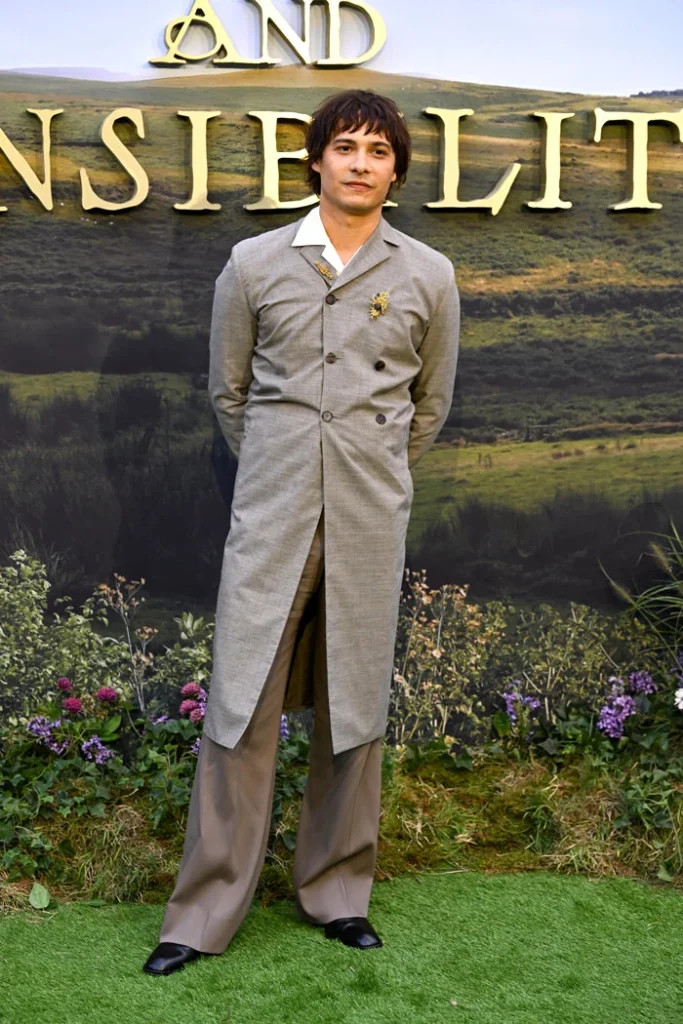
Fiona Shaw offered a masterclass in understated elegance, wearing a sophisticated ensemble anchored by a dramatic fabric sash, though style commentators noted that a more precise execution in the tie’s draping could have elevated the look further. On the menswear front, Frank Dillane appeared in an ambitious coat-forward look that suffered slightly from structural fit issues, leading experts to surmise that the outerwear piece was likely intended to be worn unbuttoned for structural fluidity. Meanwhile, George MacKay cut a sharp figure in a thoughtfully tailored jacket and tie combination, though his choice of contrasting black trousers divided opinions regarding color theory and formalwear cohesion.

Background Context and Promotional Strategy
The timing of the London premiere reflects a meticulously orchestrated marketing strategy by Focus Features. Fall release slates are historically critical battlegrounds for prestige dramas aiming to position themselves for both commercial success and critical acclaim ahead of the major awards season cycle. By leveraging a high-fashion red carpet event in a global style capital like London, the studio successfully amplified public awareness, securing extensive media coverage across both entertainment and lifestyle verticals.
The intersection of period drama premieres and high-fashion red carpets has evolved into a multi-million-dollar promotional engine. Studios increasingly rely on red-carpet moments not just to showcase the talent, but to establish a cultural aesthetic associated with the film months before it hits theaters. For Sense and Sensibility, aligning the cast with avant-garde and heritage luxury houses like Vivienne Westwood, Dior, and Thom Browne reinforces the film’s positioning as a modern, high-art revision of a classic text rather than a dusty, traditional period piece.

Broader Implications for the Fall Box Office
As Sense and Sensibility prepares for its wide theatrical rollout on October 16, the film enters a crowded marketplace dominated by sequels, franchise extensions, and high-octane blockbusters. Analysts suggest that the success of Austen adaptations in the modern era hinges heavily on their ability to appeal to younger demographics while retaining the core loyalty of traditional literary audiences.
The casting choices—highlighted by Edgar-Jones and Creed-Miles—signal a deliberate pivot toward younger, highly engaged fanbases who consume media across digital platforms. The extensive social media engagement generated by the London premiere’s fashion moments indicates that this demographic strategy is already yielding tangible results in terms of online visibility and organic buzz.

Furthermore, the involvement of creative forces like Georgia Oakley and Diana Reid signals a broader industry trend toward elevating female voices in the retelling of classic narratives. By filtering the themes of sisterhood, economic precariousness, and emotional autonomy through a contemporary lens, the film positions itself to resonate deeply with modern social dialogues surrounding agency and relationships.
As the countdown to October 16 continues, the fashion missteps and triumphs witnessed on the London red carpet will likely fade into the background, superseded by the critical and commercial reception of the film itself. However, the event has firmly established that the cultural conversation surrounding Sense and Sensibility is vibrant, modern, and unafraid to challenge convention—traits that Jane Austen herself would undoubtedly have appreciated.