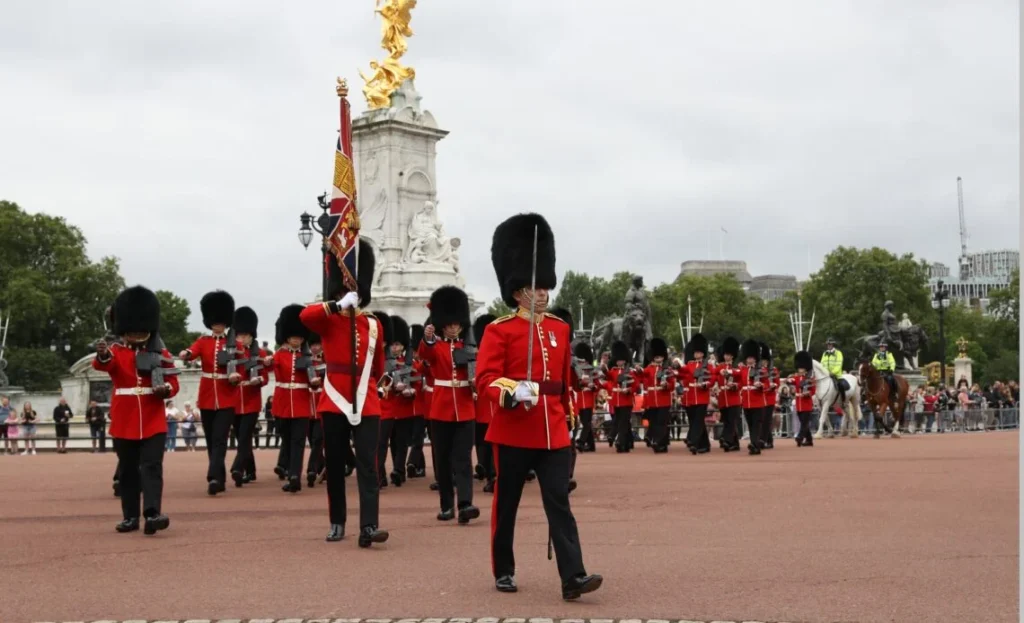

The iconic Changing of the Guard ceremonies at Buckingham Palace and Windsor Castle have been temporarily suspended for several days this week, a measure implemented by the Household Division to safeguard soldiers, military working horses, and the public from the anticipated extreme heat. The decision comes as the United Kingdom braces for a significant heatwave, with the Met Office issuing a red warning for extreme heat, a stark indicator of the potential dangers posed by soaring temperatures.
The traditional pageantry, a cornerstone of London’s tourist experience and a symbol of British military tradition, will see significant alterations. In a statement released in the week commencing June 22nd, the Household Division outlined the necessary adjustments to daily ceremonial operations. The expected excessive temperatures prompted a decision to halt the full ceremonial guard changes in both London and Windsor on Tuesday, Wednesday, and Thursday. Furthermore, a crucial adjustment will be made to the King’s Life Guard at Horse Guards Parade. On Wednesday, this vital guard change will proceed without the usual ceremony, taking place at an early hour, 8 am, specifically to mitigate the risk of heat stress to the highly-trained military working horses. This proactive approach underscores the commitment to the welfare of both the personnel and the animals involved in these demanding public duties.
The Household Division emphasized that the welfare of its personnel and animals remains its paramount concern. This decision is in direct alignment with the advice disseminated by the Met Office and other governmental agencies, which have strongly recommended a reduction in outdoor activities during periods of peak heat. While the full ceremonial spectacle may be curtailed, visitors can still expect to see guards on duty. However, standard operating procedures during extreme heat conditions dictate that soldiers will be strategically positioned in shaded areas and their duty rotations will be more frequent. The Army has been clear that these are established protocols designed to protect those undertaking these public-facing roles.
A spokesperson for the Household Division conveyed understanding regarding the potential disappointment for visitors, acknowledging that this period is typically a busy time for those wishing to witness the ceremonial operations. "We understand this is a busy time of year for visitors to watch the Ceremonial Operations at each of the various locations," the statement read. "Whilst it may be disappointing not to experience the Ceremonial Operations in full, it is important the wellbeing of the public, our soldiers and military working horses is maintained at all times.” This statement highlights the delicate balance between maintaining tradition and ensuring the safety and well-being of all involved.
The Significance of the Changing of the Guard
The Changing of the Guard is one of the United Kingdom’s most recognizable and enduring ceremonies. It is a public demonstration of the State Opening of Parliament, the sovereign’s official residence, and the nation’s military readiness. The tradition dates back centuries, evolving from the need to ensure the security of royal residences and demonstrate the sovereign’s authority.
At Buckingham Palace, the ceremony typically involves detachments of the Household Division, which comprises six regiments of the British Army: the Grenadier Guards, Coldstream Guards, Scots Guards, Irish Guards, and Welsh Guards (collectively known as the Foot Guards), and the Life Guards and the Blues and Royals (collectively known as the Household Cavalry). The guards, resplendent in their distinctive uniforms, march to music played by military bands, showcasing precision and discipline. The actual handover of duties involves a formal inspection of the guards and the ceremonial exchange of keys to the Palace.
Windsor Castle, the oldest and largest inhabited castle in the world, also hosts a version of the Changing of the Guard, reflecting its historical importance as a royal residence. The ceremony here, while perhaps less frequently witnessed by international tourists than its London counterpart, holds equal significance in its connection to the monarch and the military.
Chronology of the Heatwave’s Impact
The forecast for the week commencing June 22nd indicated a substantial rise in temperatures across the UK. The Met Office’s red warning for extreme heat, issued for the middle of the week, signaled a level of danger that necessitated widespread public advisement and precautionary measures.
- Pre-Week Announcement: The Household Division issued a statement ahead of the week, informing the public of potential alterations to ceremonial duties due to the anticipated heatwave.
- Tuesday, June 22nd: No ceremonial guard changes were scheduled or took place at Buckingham Palace or Windsor Castle.
- Wednesday, June 23rd: The King’s Life Guard at Horse Guards Parade changed guard at 8 am without ceremony. No ceremonial guard changes occurred at Buckingham Palace or Windsor Castle.
- Thursday, June 24th: No ceremonial guard changes were scheduled or took place at Buckingham Palace or Windsor Castle.
- Friday, June 25th: The original schedule indicated Number 7 Company Coldstream Guards were due to take over the guard at Buckingham Palace. However, given the ongoing heat advisories, it is highly probable that similar precautionary measures would have been in place, potentially affecting the full ceremonial aspect of the duty. The original article states the guards were "scheduled to take over on Friday," implying the ceremony might have proceeded with modifications or was subject to last-minute review.
- Saturday, June 26th: Ceremonial duties were scheduled to resume at Windsor Castle with the 1st Battalion Grenadier Guards, accompanied by the Corps of Drums of the battalion. This suggests a planned return to full ceremony, likely contingent on a decrease in the extreme temperatures.
Supporting Data and Context
The decision to suspend or alter the Changing of the Guard ceremonies is rooted in established protocols for managing the risks associated with extreme heat, particularly for individuals engaged in strenuous activities and for animals.
- Heat Stress in Soldiers: Soldiers participating in the Changing of the Guard are often required to stand at attention for extended periods in heavy uniforms, including bearskin caps, which can significantly exacerbate the effects of high temperatures. Symptoms of heat stress can range from heat exhaustion to the more severe heatstroke, a life-threatening condition. Military guidance on heat stress management includes hydration, shade, and reduced physical exertion.
- Welfare of Military Working Horses: The Royal Mews, which houses the horses of the Household Cavalry, has detailed procedures for managing the welfare of these animals during hot weather. Horses are susceptible to dehydration and heat exhaustion. The weight of their ceremonial tack and the need for them to remain calm and attentive during public duties can make them particularly vulnerable. Early morning changes, as implemented at Horse Guards Parade, are a common strategy to minimize exposure to the hottest parts of the day.
- Met Office Red Warning: A red warning for extreme heat, as issued by the Met Office, signifies a high probability of widespread impacts on people and infrastructure. This level of warning typically denotes temperatures that pose a risk to life, with potential for severe health impacts across the population, especially among the vulnerable. For the week in question, temperatures were forecast to reach well into the 30s and potentially exceed 40 degrees Celsius in some areas.
- Visitor Impact: The Changing of the Guard is a significant draw for tourists. Buckingham Palace alone receives millions of visitors annually, with the ceremony being a highlight for many. The suspension of these events during peak summer season, when visitor numbers are highest, inevitably leads to a degree of disappointment and a loss of a quintessential tourist experience.
Official Responses and Broader Implications
The statement from the Household Division, while brief, conveyed a clear message of prioritization: the safety and well-being of personnel and animals supersede the continuation of full ceremonial activities. This aligns with the broader governmental approach to the heatwave, which included public health advice to stay hydrated, avoid strenuous activity, and check on vulnerable individuals.
The temporary suspension of the Changing of the Guard serves as a tangible illustration of how climate change and extreme weather events are increasingly impacting traditional practices and public life. It underscores the need for adaptive strategies in various sectors, from public ceremonies to infrastructure and event management.
Implications for Tourism: While a temporary disruption, the repeated need to alter or suspend such iconic events due to weather could, in the long term, influence how tourists plan their visits. It highlights the increasing unpredictability of weather patterns and the need for flexibility in travel arrangements. However, for most, the allure of the British monarchy and its associated traditions remains strong.
Military Readiness and Tradition: The careful calibration of these decisions by the Household Division demonstrates a commitment to preserving tradition while upholding modern standards of welfare and safety. The fact that guards remain on duty, albeit with modified routines, ensures that security and ceremonial continuity are maintained to the greatest extent possible. The ability to adapt these ceremonies reflects the professionalism and resilience of the British Army.
Public Awareness: The suspension also serves as a public reminder of the seriousness of extreme heat and the importance of heeding official advice. By visibly altering well-known events, authorities can reinforce the message about the dangers of heatwaves and encourage responsible behavior.
The decision to alter the Changing of the Guard ceremonies is a prudent and necessary measure, reflecting a responsible approach to safeguarding the health and well-being of those involved in these historic traditions. As the United Kingdom, and indeed the world, grapples with the increasing frequency and intensity of extreme weather events, such adaptations are likely to become a more common feature of public life, demonstrating the evolving relationship between tradition, environment, and human safety. The enduring appeal of these ceremonies means they will undoubtedly return in their full glory once the immediate threat of the heatwave has passed, offering a symbol of resilience and continuity.