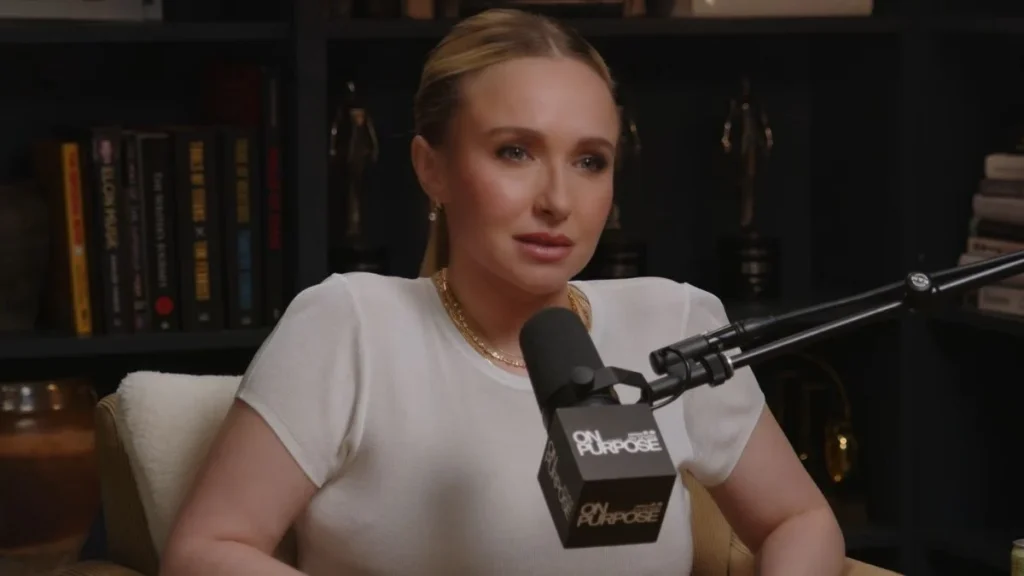

The public discourse surrounding the personal life of actress Hayden Panettiere has reached a significant turning point following her recent appearance on the "On Purpose" podcast, hosted by Jay Shetty. During the wide-ranging and deeply personal conversation, the "Nashville" and "Heroes" star addressed long-standing rumors and public misconceptions regarding her relationship with her nine-year-old daughter, Kaya. Panettiere used the platform to categorically deny claims that she "abandoned" her child, providing a nuanced perspective on the 2018 decision to relinquish primary custody to her ex-fiancé, former heavyweight boxing champion Wladimir Klitschko.
The interview serves as a rare, first-hand account of the complexities involving celebrity motherhood, mental health struggles, and the difficult choices parents face when navigating recovery. Panettiere, now 34, described the narrative of her being an absent mother as not only factually incorrect but emotionally devastating. She emphasized that her decisions were rooted in a desire to provide her daughter with the stability she could not offer at the time, framing herself as a "mother lion" who made the ultimate sacrifice for her child’s well-being.
A Chronology of Personal and Professional Challenges
To understand the context of Panettiere’s recent statements, one must look back at the timeline of her career and personal life over the last decade. Panettiere rose to international stardom as a teenager, but the pressures of early fame were compounded by significant health hurdles following the birth of Kaya in December 2014.
Shortly after Kaya’s birth, Panettiere became one of the most prominent voices in Hollywood to speak openly about postpartum depression (PPD). In 2015, she voluntarily checked into a treatment facility to seek help for the condition, a move that was widely praised for its transparency. However, as she revealed in later years, her struggles extended beyond PPD into substance abuse, specifically involving alcohol and opioids.
The year 2018 marked a pivotal shift. Following her separation from Wladimir Klitschko, with whom she had been in an on-and-off relationship since 2009, Panettiere made the choice to allow Kaya to live in Europe with her father. At the time, Panettiere was grappling with the height of her addiction. The decision was met with intense tabloid scrutiny, with many outlets characterizing the move as a total abandonment of her maternal duties.
Challenging the Abandonment Narrative
On the "On Purpose" podcast, Panettiere addressed these specific characterizations with visible emotion. She told Jay Shetty that the idea of her "giving away" her child was a painful distortion of reality. "The idea that anybody would think that I would just give away my child and be okay with it is heartbreaking," she stated.
Panettiere clarified that the arrangement was born out of a realization that she needed to get healthy before she could be the parent Kaya deserved. She noted that while she was the one who initially "sought out" the change in custody to ensure Kaya’s safety and stability, the process was "incredibly difficult." She described the internal conflict of wanting to be with her child while simultaneously recognizing that her personal environment at the time—marked by health struggles and an eventually publicized abusive relationship with a subsequent partner—was not conducive to raising a toddler.
The actress further explained that once she achieved sobriety and moved toward a healthier lifestyle, she had to face the difficult reality of Kaya’s new life in Europe. She expressed that it would have been "unfair and selfish" to uproot the child from the stable environment she had built with her father and his family just to satisfy her own maternal desires. This "selfless" approach, she argues, is the antithesis of abandonment.
The Role of Wladimir Klitschko and Co-parenting Dynamics
While Wladimir Klitschko has remained largely private regarding the custody arrangement, Panettiere’s account suggests a complex but functional co-parenting dynamic centered on their daughter’s interests. Klitschko, a legendary athlete and a prominent figure in Ukrainian public life, has raised Kaya primarily in Europe.
The situation was further complicated by geopolitical events. In 2022, following the Russian invasion of Ukraine, concerns for Kaya’s safety became a matter of international interest. Panettiere confirmed at the time that Kaya was safe and not in Ukraine during the initial onset of the conflict. This period of global instability highlighted the unique challenges the family faces, balancing international living arrangements with the need for safety and parental presence.
In her interview with Shetty, Panettiere praised her daughter’s resilience and intelligence, noting that Kaya has "two parents that love her." She asserted that she has worked tirelessly to ensure that Kaya never feels abandoned, maintaining a constant presence in her life through travel and digital communication. "She in no way feels abandoned—and that’s something that I’ve made sure to stay on top of and be very aware of," Panettiere added.
Supporting Data: The Stigma of Maternal Mental Health and Addiction
Panettiere’s experience reflects broader societal trends regarding how mothers are judged in comparison to fathers when dealing with health crises. According to data from the Postpartum Support International (PSI), approximately 1 in 7 women experience postpartum depression, yet the stigma surrounding "unfit" motherhood often prevents women from seeking the very help Panettiere sought.
Furthermore, statistics from the Substance Abuse and Mental Health Services Administration (SAMHSA) indicate that mothers struggling with substance use disorders face significantly higher levels of social "shaming" than fathers in similar positions. This societal pressure often fuels the "abandonment" narrative that Panettiere is now fighting to dismantle. By speaking out, Panettiere joins a small but growing number of public figures who are reframing the conversation around parental recovery, emphasizing that admitting a need for help is a sign of responsible parenting rather than a failure of it.
Broader Impact and Industry Implications
The fallout from Panettiere’s personal struggles had a visible impact on her professional trajectory. After the conclusion of "Nashville" in 2018, she took a significant hiatus from acting, a period that coincided with her most intense years of recovery and the custody transition. Her return to the screen in 2023’s "Scream VI," reprising her fan-favorite role as Kirby Reed, was seen by many as a "comeback" and a signal of her stabilized personal life.
The entertainment industry’s reaction to Panettiere’s transparency has been largely supportive, reflecting a shift in how Hollywood handles the mental health of its stars. However, the actress’s latest comments highlight the lingering damage caused by tabloid culture. Her decision to address these rumors on a platform like "On Purpose," which focuses on mindfulness and mental health, suggests a strategic move to reclaim her narrative from sensationalist media.
Fact-Based Analysis: The Complexity of International Custody
From a legal and logistical standpoint, Panettiere’s situation is exceptionally rare. International custody arrangements involving a child living on a different continent require high levels of cooperation between parents. Legal experts note that "signing over" custody is often a misnomer in the media; rather, it usually involves a formal agreement on primary residency.
Panettiere’s admission that she felt it would be "selfish" to move Kaya back to the U.S. points to a "best interests of the child" standard that courts typically use. By prioritizing Kaya’s continuity of care and educational stability in Europe over her own proximity to the child, Panettiere’s actions align with psychological recommendations for minimizing trauma in children of divorced or separated parents.
Conclusion and Future Outlook
Hayden Panettiere’s recent disclosures provide a necessary correction to a narrative that has followed her for over half a decade. By detailing the emotional toll of the "abandonment" label and explaining the rationale behind her 2018 custody decision, she has shed light on the difficult intersections of fame, mental health, and motherhood.
As she continues her career and her journey in recovery, Panettiere’s story stands as a testament to the idea that parenting does not always look like the traditional model. Her focus remains on her "incredible relationship" with Kaya and maintaining a united front with Klitschko. For Panettiere, being a "mother lion" meant making the hardest choice possible—letting go so that her daughter could thrive—and then doing the hard work to ensure she was healthy enough to return to her daughter’s side as a stable, present force.
The actress’s transparency may serve as a blueprint for others in the public eye, shifting the focus from judgment to an understanding of the complexities of modern, international co-parenting under the shadow of health challenges. As Kaya continues to grow up between two worlds, she does so with the vocal and public support of a mother who is no longer willing to let misconceptions define their bond.