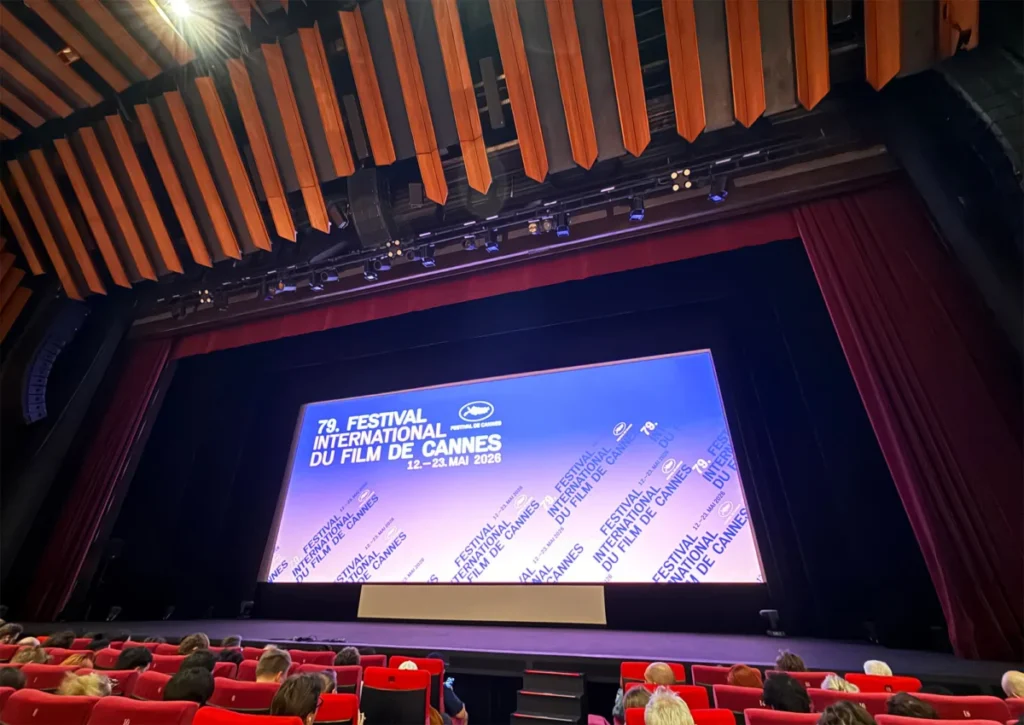

The 2026 Cannes Film Festival, a venerable institution marking its 79th year, has once again concluded, leaving a distinct imprint on the global cinematic landscape. While the festival gears up for its landmark 80th anniversary in 2027, this year’s iteration has sparked a familiar debate: has Cannes lost its discerning eye for groundbreaking cinema, or does it merely reflect a broader malaise within the industry? The prevailing sentiment among some observers, particularly those not on the ground in the French Riviera, suggests a muted festival, devoid of significant breakout hits and lacking the electrifying buzz of previous years. However, a closer examination, coupled with an understanding of the industry’s current trajectory, reveals a more nuanced reality. Cannes, despite its challenges, continues to serve as the undisputed king of film festivals, a crucial nexus for cinematic premieres and historical moments, even as the broader filmmaking ecosystem grapples with stagnation.
The Cannes Conundrum: Relevance in a Shifting Landscape
In an era saturated with film festivals, from the established circuits of Sundance, Berlinale, and SXSW to the autumn showcases like Telluride, TIFF, and Venice, the question of their enduring relevance is a persistent one. Cannes, however, occupies a unique position. Its annual May gathering is not just a market or a showcase; it’s a cultural barometer, a proving ground for artistic ambition, and a launchpad for international cinema. This year, as is often the case, two central questions echoed through the Croisette: Has Cannes strayed from its curatorial mission, and is its reliance on major Hollywood productions essential for its continued prestige?
The assertion that Cannes needs big Hollywood movies to maintain its relevance is a notion that warrants immediate dismissal. Prestige and star power, while undeniably present, are secondary to the core tenet of the festival: the celebration of exceptional filmmaking. The true currency of Cannes lies in its commitment to showcasing compelling cinematic narratives, regardless of their origin, budget, or the celebrity wattage attached. While the premiere of a high-profile Hollywood project can certainly generate headlines and draw crowds, its absence does not diminish the festival’s intrinsic value. The anxieties expressed by some in the media regarding a potential lack of blockbuster presence at Cannes 2026 appear, in retrospect, to be misplaced. The festival’s programming aims for impartiality, though a discernible bias towards French cinema and established auteurs is often observed. Ultimately, the strength of the 2026 selection rested on its inherent cinematic merit, not on the presence or absence of a major studio tentpole. While this year’s festival may not have delivered a surfeit of genre-defining masterpieces, the films presented were, by and large, of a commendable quality, distinguishing it as a year of "good" rather than "great" cinema.
The Broader Industry Context: A Reflection of Stagnation
The discourse surrounding Cannes 2026—criticisms of its perceived lack of impact, suggestions of directorial missteps by its Artistic Director Thierry Frémaux, and pronouncements of irrelevance—often overlooks a more profound issue: the state of cinema itself. As articulated in a widely shared social media thread during the festival, the perceived shortcomings of Cannes are, in many respects, a mirror reflecting the current challenges facing the global film industry. While the festival undoubtedly presents outstanding and genuinely phenomenal films each year, the relative scarcity of truly paradigm-shifting works is symptomatic of a broader creative and financial malaise.
The industry is currently navigating a complex web of issues, including financing difficulties, a climate of creative caution, evolving audience tastes, and a general sense of societal ennui. The past two decades have witnessed distinct cinematic eras. The 2010s, for instance, are often regarded as a golden age for the Sundance Film Festival, a period of robust innovation and discovery that has proven challenging to recapture post-pandemic. Cannes, too, finds itself in a similar, albeit less pronounced, period of adjustment. This is not to indict the festival’s programming team but rather to acknowledge that the entire artistic ecosystem, from the conceptualization of ideas to their financing and execution, is experiencing a collective rut. The heightened risks associated with creative expression, coupled with the increasing sensitivity of audiences, contribute to an environment where groundbreaking work can be perceived as more difficult to produce and disseminate. Consequently, the emergence of a truly exceptional film at any festival, including Cannes, is an event to be savored, a testament to the enduring power of individual artistic vision amidst systemic pressures.
Notable Films and the Struggle for Distinction
Despite the overarching sentiment that Cannes 2026 offered a selection of "good" rather than "great" films, the festival still presented a curated list of works that stand out as potential contenders for the year’s best. The subjective nature of film appreciation notwithstanding, several titles garnered significant attention and critical acclaim, suggesting that moments of brilliance were indeed present amidst the broader collection.

Among the highly regarded films were Ryusuke Hamaguchi’s All of a Sudden (also known as Soudain), a deeply personal work that has been hailed as an instant classic by many. Andrey Zvyagintsev’s Minotaur, though it did not clinch the Palme d’Or, was widely considered a strong contender for the festival’s top prize. Other notable entries included Jordan Firstman’s Club Kid, Sandra Wollner’s Everytime, Abinash Bikram Shah’s Elephants in the Fog, Marine Atlan’s La Gradiva, Jing Zou’s A Girl Unknown, Pierre Le Gall’s Flesh and Fuel, Lukas Dhont’s Coward, Javier Calvo and Javier Ambrossi’s The Black Ball (or La Bola Negra), Ira Sachs’ The Man I Love, James Gray’s Paper Tiger (which, despite some critical detractors, showcased the director’s distinctive style), Paweł Pawlikowski’s Fatherland, and Leah Nelson’s Tangles. These films, among others, underscore that even in a year perceived as less spectacular, Cannes consistently delivers a significant number of high-quality cinematic experiences.
It is important to note that the perceived "duds" or misfires at the festival do not solely reflect a failure in programming. Many films may not have been ready for submission by the deadline, or perhaps they were never submitted at all. Furthermore, the festival’s calendar is often influenced by the anticipated release of major works. Rumors persist that prominent directors such as Terrence Malick and Ruben Östlund may be holding their latest projects for the 80th Cannes Film Festival in 2027, suggesting a strategic approach to festival premieres.
Analyzing the Industry’s Ill Health
The challenges facing the global film industry in 2026 are multifaceted and deeply concerning. While it is tempting for critics and audiences to find solace in individual exceptional films and declare the art form healthy, such an assessment overlooks the systemic crises at play. The industry is demonstrably unwell, grappling with a confluence of issues that include chronic financing woes, disruptive corporate mergers, labor disputes and strikes, a significant contraction in Los Angeles production, declining box office performance, a noticeable deterioration in audience behavior, and widespread layoffs. Each of these factors, in turn, exerts a palpable influence on the quality and nature of the films being produced.
This period has seen a number of highly anticipated films from established, respected directors fall short of expectations at Cannes. Notable disappointments included Pedro Almodóvar’s Bitter Christmas, Hirokazu Kore-eda’s Sheep in the Box, and Asghar Farhadi’s Parallel Tales. While these films might have possessed moments of artistic merit, they failed to resonate as powerfully as their predecessors’ work. The broader lineup, while featuring some enjoyable films, largely lacked the transformative power to redefine cinematic discourse. The aspiration for a festival lineup where every single new film is a resounding success remains a distant one, and a significant period of recalibration will likely be necessary to steer the industry back toward a path of sustained creativity and robust health.
Cannes Endures: A Beacon in a Turbulent Sea
In conclusion, has Cannes lost its touch? The evidence suggests otherwise. Does it still possess its undeniable prestige? Absolutely. While the nostalgic glow of past eras, marked by landmark premieres like The Tree of Life, Amour, and Drive, may have softened, the festival has entered a new, albeit more challenging, phase. The 2026 edition, despite its perceived limitations, still provided fertile ground for genuine cinematic discoveries.
The Cannes Film Festival remains the most influential player in the global festival circuit, a discerning curator that identifies and champions exceptional international cinema. Even in the absence of major Hollywood blockbusters and in the face of disappointing offerings from otherwise esteemed directors, the festival continues to be a magical venue where cinema is celebrated, scrutinized, and amplified under the iconic glare of its red carpet. In an era where true masterpieces may be infrequent, the opportunity to witness even one, such as Hamaguchi’s All of a Sudden, is a profound affirmation of cinema’s enduring power. The author, like many, anticipates a return to Cannes in 2027, eager to see what Artistic Director Thierry Frémaux and his team will present to the world.
Read more posts in: Cannes 26, Discuss, Editorial, Foreign Films, Indies