

The Catalyst: Dissecting the June 1 Statistical Shift
The controversy began when "Pop Stats," a prominent account dedicated to tracking music industry data, shared a report detailing the most-streamed K-pop albums on Spotify for the period ending June 1, 2026. While daily fluctuations are common in the music industry, the scale of the decrease reported for specific artists was categorized by many observers as anomalous.
According to the data, BTS—a group that has consistently dominated global charts for nearly a decade—experienced a sharp decline in their daily stream counts. Reports indicated that one specific album saw a drop of approximately 14 million streams, while a hit single, previously celebrated as a "Song of the Summer" and a major contender at the American Music Awards (AMAs), saw over 7 million streams removed from its daily tally. Similarly, the girl group aespa, who have seen a meteoric rise in global popularity with their recent experimental releases, also faced a significant downward adjustment in their streaming metrics.
In the world of digital music, these "drops" usually occur when a streaming platform’s internal algorithm identifies and removes plays that it deems "invalid." This can include streams generated by automated bots, repetitive looping by a single user account, or streams coming from Virtual Private Networks (VPNs) intended to bypass regional chart restrictions.
Global Fan Reaction: Accusations of Botting and Fraud
The reaction from the international K-pop community was swift and polarized. On X (formerly Twitter), hashtags related to "streaming fraud" and "botted streams" began to trend as critics of the impacted groups used the data to question the legitimacy of their global achievements. One viral post characterized the groups as "inorganic" and "fake," suggesting that their chart dominance was a result of artificial manipulation rather than genuine public interest.

The skepticism was not limited to anonymous users; several prominent music commentators pointed to the lack of transparency in how award shows and chart aggregators handle filtered data. A common sentiment among critics was that the massive discrepancies between "raw" streams and "filtered" streams—the latter being the number that actually counts toward charts—undermine the integrity of the music industry. The argument posits that if a significant percentage of a group’s numbers can be wiped away by a platform’s security measures, then the perceived "global demand" for that artist may be inflated.
The Defense: Technical Glitches and Fandom Advocacy
Conversely, dedicated fanbases, such as BTS’s ARMY and aespa’s MYs, were quick to offer counter-arguments. Many fans pointed out that Spotify’s filtering system is notoriously aggressive and can sometimes misidentify legitimate fan behavior as botting. In the K-pop world, "streaming parties" are a common community event where fans listen to a specific playlist simultaneously. While these are human-led efforts, the repetitive nature of the listening patterns can sometimes trigger the platform’s anti-spam filters.
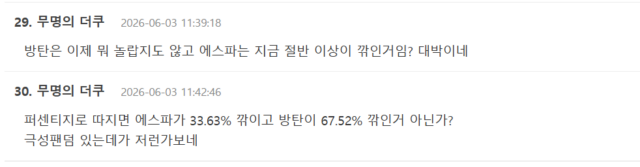
Korean netizens on community portals like Theqoo displayed a more nuanced and divided reaction. While some expressed genuine surprise at the magnitude of the drop, others cautioned against jumping to conclusions. "We cannot assume this is all due to bots," one user noted. "There could be technical updates on Spotify’s end, or it could be the natural tapering off of a massive comeback period."
Other users suggested that the data might be skewed by the way Spotify reports its "Daily Top Songs" versus its total cumulative streams. They argued that a drop in daily rankings does not necessarily equate to "fraud," but rather a recalibration of how the platform weighs different types of accounts (Premium vs. Free) and listening behaviors.
Historical Context: The Precedent of Stream Filtering
This is not the first time high-profile K-pop idols have faced significant "stream deletions." In previous years, solo projects from BTS members, such as Jimin, reportedly saw hundreds of millions of streams filtered out over several months. At the time, industry analysts explained that Spotify had tightened its "anti-manipulation" protocols to ensure that its "Global Top 50" charts reflected genuine listener trends.

The concept of "Sajaegi"—a Korean term for chart manipulation—has been a sensitive topic in the South Korean music industry for years. Traditionally, it referred to labels buying back their own physical albums or hiring "click farms" to boost domestic digital charts. As K-pop transitioned into a global phenomenon, the scrutiny shifted to international platforms like Spotify, Apple Music, and YouTube.
The pressure on fandoms to deliver record-breaking numbers is immense. For many fans, streaming is viewed as a form of "digital labor" or advocacy to ensure their favorite artists receive recognition, awards, and radio play. However, this culture of "mass streaming" often walks a fine line between passionate support and the technical definitions of "inorganic streaming" used by tech companies.
Analysis of Industry Implications
The "fraud" allegations and the subsequent drop in numbers carry significant implications for the artists, their labels (HYBE and SM Entertainment), and the award shows that rely on these metrics.
1. The Validity of Award Shows
As noted by several critics during the June 2026 controversy, major awards like the AMAs, Billboard Music Awards, and the MAMA Awards rely heavily on streaming data. If millions of streams are being invalidated by the platforms themselves, it raises questions about the criteria used to determine winners. Transparency remains a primary concern; fans and industry insiders alike are calling for clearer guidelines on what constitutes a "valid stream" to avoid the "gag" of sudden, massive number drops.
2. Brand Reputation and Commercial Viability
For groups like BTS and aespa, their brand value is tied to their "record-breaking" status. Consistent allegations of inorganic growth can, over time, affect their standing with global brands and advertisers. If the perception shifts from "the world’s most popular group" to "the world’s most-botted group," it could impact their long-term commercial influence, regardless of the actual size of their legitimate fanbase.
3. Platform-Fandom Warfare
The incident highlights an escalating "arms race" between streaming platforms and organized fandoms. As fans find new ways to maximize stream counts (using multiple devices, specific playlist lengths, etc.), platforms like Spotify respond with more sophisticated AI filters. This cycle often results in "collateral damage," where legitimate fans who simply enjoy listening to a song on repeat find their streams discounted.
The Path Forward: Seeking Transparency in the Digital Age
The June 2026 streaming drop serves as a reminder of the complexities of the digital music economy. While the numbers for BTS and aespa saw a drastic decline on paper, the groups continue to sell out stadiums and move significant amounts of physical merchandise—metrics that are much harder to "bot" than digital streams.
Industry experts suggest that the solution lies in a more diversified approach to measuring success. Relying solely on one platform’s daily charts can provide a skewed view of an artist’s true reach. Moving forward, a combination of unique listeners, physical sales, concert attendance, and radio airplay may provide a more stable and "fraud-proof" picture of global popularity.
As of now, neither HYBE nor SM Entertainment has issued a formal statement regarding the June 1 data shift. Spotify, maintaining its standard policy, does not comment on specific artist metrics but continues to emphasize its commitment to "protecting the integrity of the charts."
For the K-pop industry, the lesson of this controversy is clear: in an era where data is king, the battle for authenticity is just as important as the battle for the top spot. Whether the drops were the result of a necessary purge of bot accounts or an overzealous algorithm remains a point of contention, but the impact on the public discourse surrounding K-pop’s global dominance is undeniable. The divided reactions reflect a wider struggle within the music world to define what "success" looks like in a world governed by algorithms.