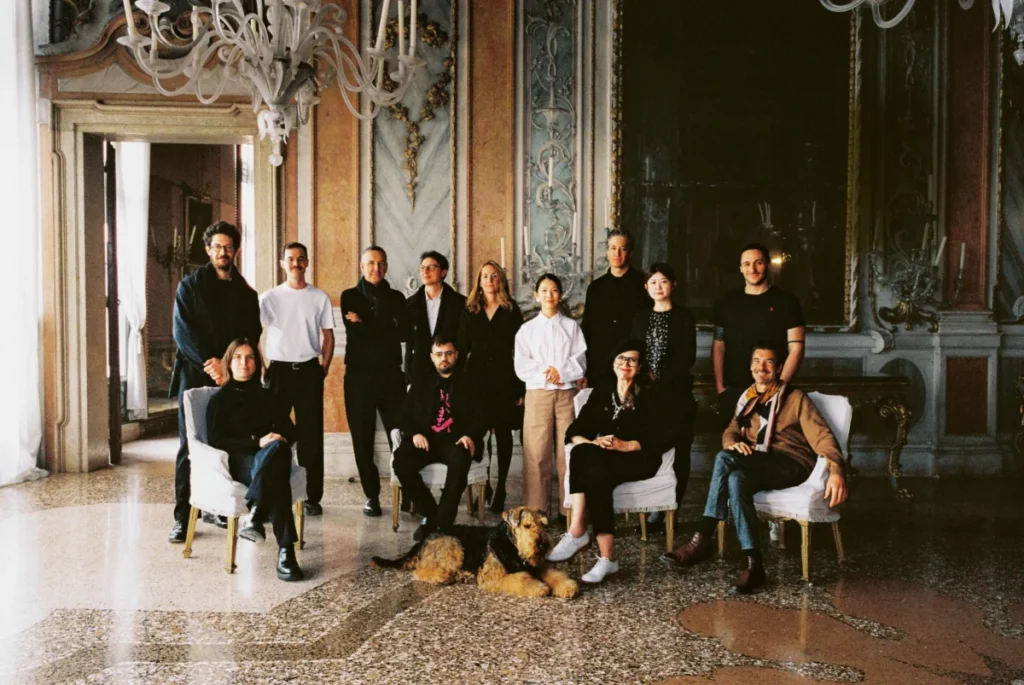

The inauguration of the Fondazione Dries Van Noten on April 25 marks a significant cultural milestone for Venice and a profound evolution for one of fashion’s most cerebral figures. Situated within the storied walls of the Palazzo Pisani Moretta, a 15th-century masterpiece of Venetian Gothic architecture, the foundation represents a transition from the ephemeral cycles of the runway to the enduring preservation of human craftsmanship. This initiative, spearheaded by Belgian designer Dries Van Noten and his long-term partner in both life and business, Patrick Vangheluwe, seeks to create a permanent sanctuary for the "human hand," celebrating the intricate intersections of art, fashion, jewelry, and artisanal objects.
The opening of the foundation comes nearly two years after Van Noten announced his decision to step away from the creative directorship of his namesake brand, a move that sent ripples through the international fashion community. For a designer whose career has been defined by a deep reverence for textiles, horticulture, and the historical weight of beauty, the establishment of a foundation in Venice—a city that embodies the pinnacle of artisanal history—is a logical, albeit ambitious, progression. The mission of the institution is clear: to foster a dialogue between contemporary creativity and traditional craft, ensuring that the skills required to manipulate metal, ceramic, glass, and fabric are not lost to the digital age.
The Architectural Heritage of Palazzo Pisani Moretta
The choice of the Palazzo Pisani Moretta as the foundation’s headquarters is a statement of intent. Located on the banks of the Grand Canal in the San Polo district, the 43,000-square-foot palazzo is one of the most celebrated examples of the Venetian Gothic style. Built in the mid-15th century by the Bembo family and later acquired by the Pisani Moretta family, the building has undergone various renovations, most notably in the 18th century, which added lavish Baroque and Neoclassical interiors.
Van Noten’s acquisition of the property reflects a commitment to architectural stewardship. Upon taking possession of the site, Van Noten and Vangheluwe spent significant time immersing themselves in the building’s physical history, famously laying on the floors of the music room to study the intricate ceiling details. This intimate engagement with the space has informed the curatorial strategy, where the contemporary works on display are not merely placed in the rooms but are engaged in a silent conversation with the frescoes of Tiepolo and the ornate stucco work of the 1700s.
The palazzo’s layout, featuring a grand staircase and a series of "piani nobili" (noble floors), provides a dramatic backdrop for the foundation’s rotating exhibitions. The preservation of the palazzo’s former chapel and storage rooms—now transformed into exhibition galleries—highlights the designer’s desire to maintain the soul of the building while repurposing it for a modern cultural mission.
Inaugural Exhibition: The Only True Protest Is Beauty
The foundation’s debut exhibition, titled "The Only True Protest Is Beauty," is a comprehensive exploration of the artisanal spirit. Curated by Dries Van Noten in collaboration with Geert Bruloot—the influential Belgian retailer and curator who was instrumental in the early success of the "Antwerp Six"—the show features the work of over 50 artists and collaborators. The title is drawn from a quote by the American folk singer and activist Phil Ochs, reflecting a philosophy that views the creation and appreciation of beauty as a radical act in a world often dominated by utility and mass production.
The exhibition is designed to be an immersive experience, guiding visitors through the palazzo’s labyrinthine rooms. Each space is curated to highlight a specific medium or artistic tension. In the former chapel, for instance, the artist Ann Carrington has installed contemporary sacred heart assemblages. These works, crafted from upcycled silver cutlery, bridge the gap between domestic utility and religious iconography, echoing the historical sanctity of the space.
In another wing, a former storage room lined with golden jacquard serves as the setting for Wendy Andreu’s work. Andreu, a French designer known for her innovative material research, presents a woven interpretation of an Empire chair, blending historical furniture silhouettes with modern textile engineering. The juxtaposition of the rich, historic fabric of the room with Andreu’s structural experimentation exemplifies the foundation’s goal of placing the past and present in a continuous loop of inspiration.
Innovation in Traditional Media: Murano Glass and Ceramics
Central to the foundation’s mission is the support of local Venetian crafts, most notably the world-renowned glassmaking traditions of Murano. For the exhibition’s grand salon, Van Noten commissioned the local atelier Wave Murano Glass to produce a monumental glass table. The challenge presented to the artisans was significant: the table was to be constructed entirely of glass, with no wood or metal internal structure. This project pushed the boundaries of the material, forcing the glassmakers to reconsider the structural capabilities of glass beyond its decorative functions.

The inclusion of ceramicist Kaori Kurihara further emphasizes the foundation’s international scope. Based in Paris, Kurihara is known for her fantastical, organic ceramic forms that mimic the textures of exotic fruits and botanical specimens. During the lead-up to the opening, Kurihara was surprised to learn that her work would be showcased on 18th-century wall pedestals within one of the palazzo’s most extravagant rooms. The reaction of the artists—many of whom were seeing their work in the context of the palazzo for the first time—underscored the transformative power of the setting.
Chronology of a Career: From the Antwerp Six to Venice
To understand the significance of the Fondazione Dries Van Noten, one must look at the designer’s broader impact on the fashion industry. Van Noten emerged in the mid-1980s as part of the "Antwerp Six," a group of designers who graduated from the Royal Academy of Fine Arts in Antwerp and revolutionized the fashion world with their avant-garde, intellectual approach to design.
Throughout his four-decade career, Van Noten remained independent for much longer than many of his peers, only selling a majority stake in his company to the Spanish conglomerate Puig in 2018. His aesthetic—characterized by a masterly use of color, intricate prints, and a deep knowledge of ethnic textiles—has always been more aligned with the decorative arts than with the fast-paced trends of commercial fashion.
The timeline of the foundation’s establishment reflects a carefully planned transition:
- 2018: Sale of the Dries Van Noten brand to Puig, with Van Noten remaining as Creative Director and Chairman.
- 2022: Initial discussions regarding the acquisition of a permanent cultural space in Venice.
- March 2024: Van Noten officially announces his retirement from his namesake brand, effective after the Spring/Summer 2025 men’s show.
- April 25, 2024: Official opening of the Fondazione Dries Van Noten at Palazzo Pisani Moretta.
This transition allows Van Noten to shift his focus from the relentless schedule of producing four to six collections a year to a more contemplative role as a patron and curator.
Venice as a Global Hub for Private Foundations
The Fondazione Dries Van Noten joins a prestigious list of private institutions that have transformed Venice into a year-round destination for contemporary art, separate from the Venice Biennale. In recent decades, the city has seen the arrival of the Pinault Collection at Palazzo Grassi and Punta della Dogana, the Fondazione Prada at Ca’ Corner della Regina, and the Louis Vuitton Espace.
However, Van Noten’s foundation distinguishes itself by its specific focus on craft and the "human hand." While other foundations often focus on blue-chip contemporary art, the Fondazione Dries Van Noten is more focused on the process of making. This focus aligns with the historical identity of Venice as a city of guilds and master artisans. By occupying a palazzo that was once a residence and a center of social life, the foundation restores a sense of lived-in creativity to the Grand Canal.
Implications for the Future of Craft and Fashion
The establishment of the foundation carries broader implications for the fashion and art industries. It suggests a growing desire among high-level creatives to find "second acts" that contribute to cultural heritage rather than mere commercial expansion. As the fashion industry faces increasing scrutiny over sustainability and the loss of traditional skills, Van Noten’s emphasis on the "protest of beauty" serves as a reminder of the value of slow, deliberate creation.
Furthermore, the foundation provides a vital platform for emerging artists and artisans. By placing their work alongside historical treasures and within a high-profile institution, Van Noten is providing these creators with a level of visibility and institutional validation that is often difficult to achieve in the traditional gallery system.
As the Fondazione Dries Van Noten begins its journey, it stands as a testament to the idea that fashion is not merely about clothing, but about a broader aesthetic world-building. For Van Noten, the palazzo is not just a museum; it is a living laboratory where the past is honored, and the future of craftsmanship is actively forged. In the quiet rooms of Palazzo Pisani Moretta, the "human hand" continues its work, proving that beauty, indeed, remains a powerful form of protest.