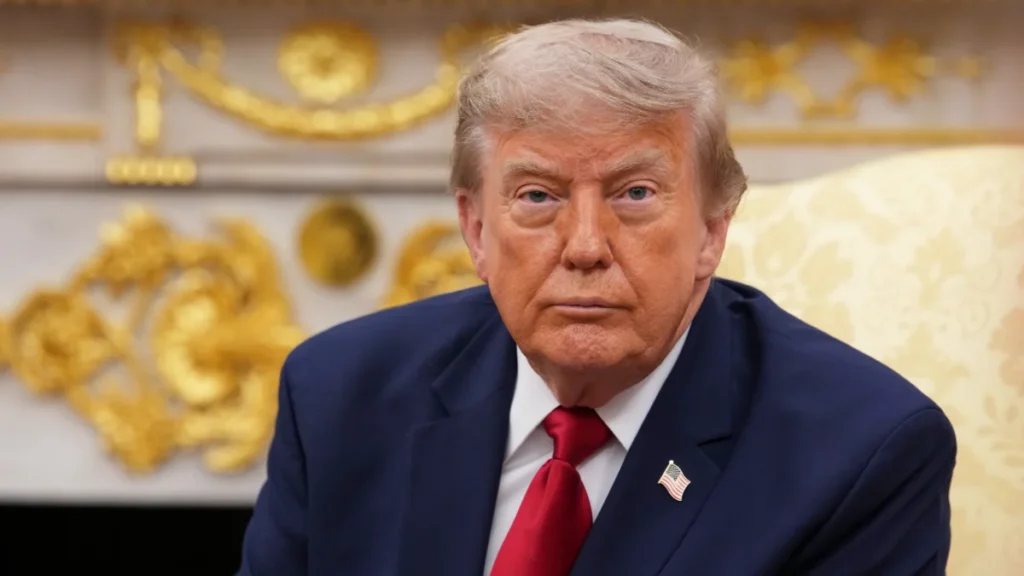

A federal judge in Miami has permanently dismissed a staggering $10 billion defamation lawsuit filed by Donald Trump against The Wall Street Journal and media mogul Rupert Murdoch. U.S. District Judge Darrin Gayles issued a decisive ruling on Saturday, characterizing the legal action as "grasping at straws" and ruling that the lawsuit attempted to "manufacture" flaws in the publication’s meticulous investigative journalism.
The dismissal was handed down "with prejudice," a legal designation meaning the lawsuit cannot be refiled in its current form, effectively bringing a definitive end to the high-stakes legal battle. The decision deals a substantial blow to the president’s ongoing legal strategies regarding media organizations, underscoring the formidable constitutional protections safeguarding press freedom in the United States, specifically the rigorous legal standard of "actual malice" established by the landmark 1964 Supreme Court ruling New York Times Co. v. Sullivan.
Chronology of the Legal Battle
The origins of the legal conflict trace back to investigative reporting published last year by The Wall Street Journal. The contested article detailed the contents of a 2003 birthday album compiled for convicted sex offender Jeffrey Epstein’s 50th birthday. According to the newspaper, the album—which was reportedly collected by disgraced British socialite Ghislaine Maxwell years before Epstein’s initial 2006 arrest and his subsequent estrangement from Trump—contained a sexually suggestive letter and drawing that bore Trump’s name.
The document in question featured text framed by the outline of a hand-drawn naked woman, concluding with the phrase, "Happy Birthday — and may every day be another wonderful secret." Trump swiftly and vehemently denied authoring the note, denouncing the story as false, malicious, and defamatory.
Following the publication, Trump’s legal team filed the $10 billion lawsuit in a federal court in Miami, alleging that the newspaper, Murdoch, and the involved reporters had knowingly and recklessly published false and disparaging statements, causing severe financial and reputational harm to the president.
The legal proceedings moved through several distinct phases:
- April: Judge Gayles initially dismissed the lawsuit, ruling that Trump had failed to sufficiently plead facts demonstrating actual malice. However, the judge granted the plaintiff leave to file an amended complaint.
- May: Trump’s legal team filed an amended complaint in an effort to address the deficiencies identified by the court and bolster claims of malicious intent.
- September (Mid-Month): Tensions between the Trump administration and the press escalated on a broader scale, leading to the banishment of several major news organizations—including CNN, MS NOW, and Politico—from the White House, prompting a separate federal lawsuit by those outlets for restored press access.
- Saturday: Judge Gayles issued the final ruling dismissing the amended complaint with prejudice, noting that the new filings still fell drastically short of legal standards.
Legal Analysis and the Actual Malice Standard
In his Saturday ruling, Judge Gayles dissected the amended complaint, finding that its allegations regarding malice were "conclusions, vague, sometimes inconsistent with the Article, and often irrelevant to whether Defendants knew or should have known that the statements in the Article were purportedly false."
Under the framework of New York Times Co. v. Sullivan, a public figure prosecuting a libel suit must prove by clear and convincing evidence that the publisher knew the information was false or acted with reckless disregard for whether it was true or false. Gayles pointed out that The Wall Street Journal had prominently featured Trump’s denial within its reporting, ensuring that readers were fully aware the president decried the letter as a fake. By fairly presenting both sides of the account, the newspaper demonstrated adherence to standard journalistic practices rather than a reckless disregard for the truth.
Legal analysts note that hitting the threshold of actual malice remains exceptionally difficult for public figures in American courts. The high bar is intentionally designed by constitutional jurisprudence to protect investigative journalism and robust public debate from the chilling effect of retaliatory litigation.
Broader Implications for Media Relations and Second-Term Dynamics
The dismissal of the Wall Street Journal suit unfolds against a backdrop of an increasingly adversarial relationship between the Trump administration and major news organizations during his second term. Trump has long maintained an antagonistic posture toward outlets that publish critical coverage, frequently dismissing them as "fake news" and utilizing personal insults directed at journalists.
Beyond the litigation involving The Wall Street Journal and Rupert Murdoch, Trump’s legal docket features numerous ongoing conflicts with domestic and international media entities. These include disputes involving the BBC, The Associated Press, and the coalition of outlets currently suing the administration over White House access restrictions.
Media freedom advocates and legal scholars view Saturday’s ruling as a significant reaffirmation of established First Amendment principles. By rejecting arguments that sought to penalize a publication for reporting on historical documents connected to the heavily scrutinized Epstein circle, the federal court reinforced the principle that vigorous investigative journalism—even when concerning powerful public figures—retains robust legal protection under U.S. law.
As the legal fallout settles, the ruling stands as a potent reminder of the judiciary’s strict enforcement of the actual malice standard, effectively closing the door on one of the most financially ambitious defamation suits brought against modern media executives.