
The landscape of British independent cinema is set to welcome a powerful new entry with the release of the official UK trailer and promotional poster for Animol. The feature-length prison drama marks the feature directorial debut of acclaimed British actor and filmmaker Ashley Walters, widely recognized for his extensive work in front of the camera, including standout performances in Top Boy and Bulletproof. Distributed in the United Kingdom by Sky TV, the film promises an uncompromising and deeply human exploration of the British juvenile detention system, focusing on themes of survival, adolescent identity, structural vulnerability, and the complex pathways toward personal redemption.
Scheduled to hit UK cinemas and digital platforms on October 30, 2026, Animol arrives on the heels of a successful international festival run. The project has already generated significant critical momentum, having celebrated its world premiere earlier this year at the prestigious Berlin International Film Festival (Berlinale) before traveling to other notable events, including the Karlovy Vary International Film Festival (KVIFF). Early critical responses have highlighted the film’s gritty realism, emotional resonance, and standout lead performances, positioning it as a major addition to the lineage of contemporary British social-realist cinema.
Main Facts and Narrative Premise
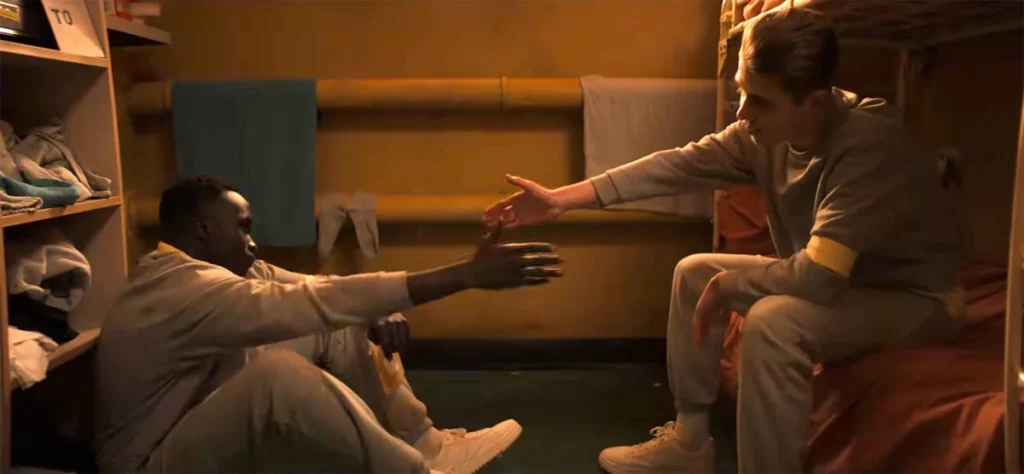
At the narrative center of Animol is Troy, a young man thrust into the harsh and volatile environment of a British juvenile detention center. The film’s official logline sets a stark tone: “A story of survival, connection, and belonging.” Upon entering the institution, Troy is immediately confronted with the brutal realities of incarceration, where institutional rigidity clashes with informal hierarchies governed by gang dynamics, loyalty tests, and pervasive physical violence.
Daily existence within the detention center is a relentless power struggle. Troy is forced to navigate constant threats, aggressive cellmates, and the psychological toll of isolation. However, the narrative finds its emotional core in an unexpected place: an unspoken, deepening bond with a fellow inmate, played by Vladyslav Baliuk. While this relationship offers a vital source of solace and psychological survival within an oppressive ecosystem, it simultaneously introduces a dangerous vulnerability, raising the stakes in an environment where emotional attachment can easily be leveraged as a weakness.

The central role of Troy is brought to life by rising talent Tut Nyuot, whose previous credits include The Long Walk. Industry insiders and early reviewers have singled out Nyuot’s performance as exceptional, praising his ability to convey profound internal conflict and quiet resilience. Alongside Nyuot and Baliuk, the film boasts a high-caliber supporting cast that includes veteran British actor Stephen Graham in the role of a dedicated welfare officer trying to support the young offenders, and Sharon Duncan-Brewster as Troy’s mother, grounding the institutional narrative in the broader tragedy of familial separation and societal fallout.
Chronology and Production Background
The journey of Animol from conception to screen reflects the collaborative nature of modern British public-service broadcasting and independent film financing. The project was developed and produced with backing from major institutions committed to fostering domestic talent. Film4 spearheaded the production in collaboration with Sky and the British Film Institute (BFI), ensuring the film had the institutional support necessary to maintain its uncompromising aesthetic and thematic vision.
Behind the scenes, the production brought together a formidable team of creatives. The screenplay was penned by seasoned screenwriter Nick Love, whose previous credits—such as The Football Factory and A Town Called Malice—demonstrated an affinity for exploring raw, hyper-masculine spaces, social friction, and subcultural dynamics. Production duties were handled by experienced producers Joy Gharoro-Akpojotor and Tom Hawkins, who worked closely with first-time feature director Ashley Walters to translate the script’s dense emotional and physical geography onto celluloid.
Walters’ transition to feature filmmaking is a natural progression of a multi-decade career in the entertainment industry. Prior to tackling Animol, Walters gained invaluable directorial experience behind the camera helming episodes of television series such as Ackley Bridge and the historical crime drama A Thousand Blows. This television work allowed him to hone his visual style and narrative pacing, preparing him for the intense spatial and psychological demands of a feature-length prison drama.
The film’s festival timeline established its reputation well ahead of its commercial release. Following its selection for the Berlinale earlier in the year, Animol traveled the international circuit, garnering attention for its empathetic yet unflinching portrayal of incarcerated youth. The subsequent acquisition by Sky TV for UK distribution ensures that the film will reach a wide domestic audience, setting the stage for its late-October theatrical and streaming rollout.

Supporting Data and Contextual Framework
Animol enters a crowded and critically fertile sub-genre of British cinema dedicated to examining the punitive systems of the UK. In recent years, filmmakers have increasingly turned their lenses toward the realities of institutional confinement, seeking to humanize populations often marginalized or sensationalized in mainstream media.
The film shares thematic and stylistic DNA with several notable recent releases. Critics and industry analysts have drawn immediate comparisons to Sebastian Meise’s acclaimed international drama Great Freedom, which similarly explores human connection within the confines of the penal system. Furthermore, Animol follows closely on the heels of other notable UK prison-centric dramas, such as the feature Wasteman, which screened last year and starred David Jonsson and Tom Blyth.
By contextualizing Animol within this broader cinematic movement, industry observers note a growing appetite for stories that interrogate the efficacy and humanity of juvenile and adult detention facilities. These films often serve as cultural lightning rods, sparking discussions about restorative justice, the cycle of institutionalization, and the systemic failures that funnel vulnerable youth into the carceral system.
Institutional Collaboration and Official Responses
The backing of Film4, Sky, and the BFI underscores the cultural importance placed on stories like Animol within the UK media landscape. Public and private funding bodies have increasingly prioritized projects that offer authentic representations of marginalized communities and under-examined social institutions.
While formal statements from the primary cast and crew emphasize the emotional toll and collaborative spirit of the shoot, the overarching sentiment from producers and distributors points to the urgent need for narratives that challenge audiences to rethink how society handles youth justice. The involvement of heavyweight actors like Stephen Graham and Sharon Duncan-Brewster also speaks to the industry-wide respect for Walters’ vision, signaling to audiences that Animol is a project of considerable dramatic weight rather than a standard genre exercise.

Broader Impact and Industry Implications
The commercial and critical reception of Animol will carry significant implications for several key stakeholders in the British film industry. For Ashley Walters, the film represents a crucial test of his commercial and artistic viability as a feature film director. Having established a stellar reputation as an actor capable of carrying complex dramas—most notably in his definitive work on Top Boy—a successful transition to directing could cement his status as a multi-hyphenate creative force capable of shaping the future of UK television and film.
For rising stars Tut Nyuot and Vladyslav Baliuk, the film serves as a high-profile platform that could radically accelerate their careers. Nyuot’s performance, already heavily praised in festival dispatches, is expected to position him as one of the most promising young actors of his generation, opening doors to major international productions.
Furthermore, Sky TV’s continued investment in prestige British independent cinema highlights the broadcaster’s strategic shift toward acquiring and distributing high-end, socially conscious content. By securing the UK rights and scheduling a late-October theatrical release, Sky is positioning Animol not merely as streaming filler, but as a culturally significant event film capable of capturing both box office attention and awards season consideration.
As the release date of October 30, 2026, approaches, anticipation among cinephiles and industry analysts continues to build. By blending raw performances, an evocative visual style, and a script that refuses to offer easy answers to complex systemic problems, Animol stands poised to leave a lasting impression on the British cinematic landscape, challenging viewers to confront the difficult realities of institutional life and the enduring human capacity for empathy under duress.