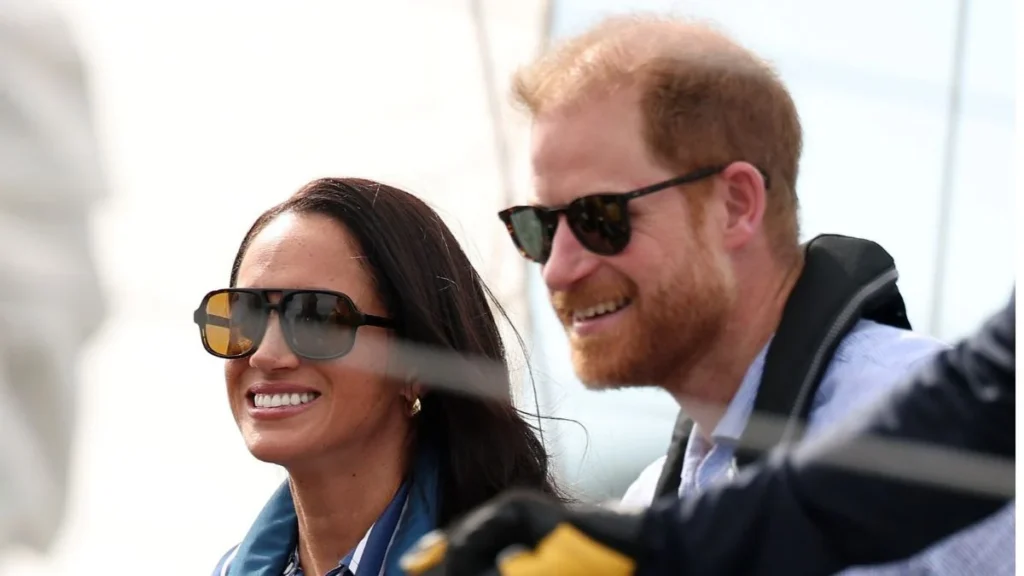

Prince Harry and Meghan Markle are facing one of the most significant transitional phases of their family life since stepping back from their senior royal roles in 2020, having recently relocated from their long-term residence in Montecito, California, to the British countryside. As the Duke and Duchess of Sussex adapt to life in the Cotswolds alongside their young children, Prince Archie and Princess Lilibet, relationship and family dynamics experts have stepped forward to offer strategic advice. Central to this guidance is the recommendation to prioritize transparent communication, emotional resilience, and the establishment of rigid, reassuring daily routines to help mitigate the disruptions inherent in international relocations and shifting educational environments.
The family’s high-profile return to the United Kingdom has naturally generated intense public interest, amplified by the logistical complexities of reintegrating young royals into British society. While the move represents a monumental homecoming for Prince Harry and a fresh chapter for the family unit as a whole, it also introduces a myriad of challenges, ranging from security protocols and media scrutiny to educational adjustments for Archie and Lilibet. As the Sussexes continue to manage these multifaceted pressures, behavioral and relationship specialists have highlighted the psychological frameworks necessary for maintaining family stability and spousal unity amidst public scrutiny.
Strategic Parenting and Family Stabilization Amidst Relocation
Relocating across continents is universally recognized by child psychologists and family counselors as one of the most stressful life events a family can experience. For young children like Prince Archie, who spent the formative years of his childhood in the sun-drenched coastal enclave of California, and Princess Lilibet, who was born in the United States, the transition to the British climate, culture, and social landscape requires careful navigation.
Weighing in on the family’s adjustment, prominent relationship expert Georgina Vass offered critical insights during an interview with regional media, emphasizing that parental modeling is the cornerstone of successful childhood adaptation. According to Vass, the Duke and Duchess can significantly ease their children’s psychological transition by actively modeling adaptation through honest communication. This involves openly discussing the hurdles, complicated feelings, and exciting opportunities that come with moving to a new country, rather than attempting to shield them entirely from the realities of change.
Furthermore, Vass underscored the clinical importance of establishing predictable, consistent routines. For children experiencing the upheaval of an international move, familiar structures surrounding school days, family meals, structured bedtimes, and weekend activities act as psychological anchors. These routines are proven to reduce feelings of disruption and anxiety, providing a safe and stable framework from which children can explore their new surroundings and build confidence in their new environment.
Beyond the immediate needs of their children, Vass’s advisory framework addressed the internal dynamics of Prince Harry and Meghan Markle’s marriage. Navigating high-pressure environments, public scrutiny, and major logistical overhauls places an immense strain on any partnership. The expert noted that staying emotionally connected during disagreements and openly sharing disappointments allows couples to cultivate deeper trust and mutual support. Relationships that successfully weather external adversity often develop heightened resilience, greater honesty, and an enhanced collective confidence in their ability to overcome systemic challenges as an integrated team.
The Chronology of the Sussex Relocation: From California to the Cotswolds
To fully understand the gravity of the Sussexes’ current transition, it is necessary to examine the timeline of events that has defined their family trajectory over the past half-decade. The journey began in January 2020, when Prince Harry and Meghan Markle announced their decision to step back as senior working members of the British royal family. Following a brief transitional period in Canada, the family permanently relocated to Southern California, settling in an expansive estate in Montecito, Santa Barbara County.
During their tenure in California, the couple expanded their professional footprint significantly, launching Archewell Productions and Archewell Audio, signing high-profile content creation deals with streaming giants such as Netflix and Spotify, and dedicating their time to philanthropic initiatives focused on mental health, digital equity, and veteran advocacy. It was also during this period that their family life expanded; Princess Lilibet was born in June 2021, joining her elder brother Archie, who was born in May 2019 at Portland Hospital in London.
The decision to return to the United Kingdom, specifically to the picturesque and historically private Cotswolds region, marks a dramatic pivot in the family’s lifestyle strategy. While the move brings the family geographically closer to Prince Harry’s roots and longstanding support networks in the UK, it simultaneously re-engages them with the intricate security apparatus and media spotlight that prompted their initial departure. The relocation process has involved complex logistical planning, particularly concerning the children’s daily schedules and educational placements.
Educational Hurdles and Logistical Complexities in the UK
One of the most immediate and challenging aspects of the Sussex family’s return to Britain has involved the education of Prince Archie and Princess Lilibet. Education specialists and royal commentators note that schooling transitions for high-profile children invariably require extraordinary security measures and logistical foresight, elements that have proven particularly difficult to balance within the UK’s dense urban infrastructure.
Reports indicate that upon their return in September, the Sussex children were initially registered at a prominent British school. However, within a relatively short timeframe, the family elected to switch the children to an alternative educational institution. The catalyst for this change was rooted in a combination of heightened security concerns and severe logistical bottlenecks along the daily transit route.
For security reasons, the specific identities and locations of both the initial and subsequent schools have been strictly withheld from the public domain by safeguarding teams. Nevertheless, insider reports revealed that peak-hour traffic congestion significantly inflated the journey time between the family’s residence and the school. In the context of Prince Harry’s ongoing, highly publicized legal battles regarding state-funded security provision for his family in the UK, any escalation in journey-time vulnerability is treated with the utmost seriousness by private protection officers.
The successful transition to a new, undisclosed educational facility has since alleviated some of these logistical pressures, allowing Archie and Lilibet to settle more comfortably into their academic routines. Nonetheless, the episode underscores the perpetual tension between the family’s desire for a normal domestic life and the inescapable security apparatus required to protect them.
Contextualizing the Security Landscape and Public Scrutiny
The logistics of security remain a central pillar of the narrative surrounding Prince Harry and Meghan Markle’s intermittent returns to the United Kingdom. Since relinquishing their taxpayer-funded Met Police security detail upon their departure in 2020, the Sussexes have relied on a mix of private security personnel and bespoke protection arrangements evaluated on a case-by-case basis.
Prince Harry has been vocal in his legal challenges against the Home Office and the Executive Committee for the Protection of Royalty and Public Figures (RAVEC), arguing that his family cannot safely visit the UK without specialized police protection. While these legal proceedings have played out in the High Court in London, the practical reality on the ground has forced the couple to adopt highly guarded, flexible lifestyles during their British residencies.
The choice of the Cotswolds as a primary UK base offers a strategic advantage in this regard. Known for its rolling hills, discreet country estates, and distance from the intense paparazzi culture of central London, the region provides a natural buffer against intrusive media attention. It is an area historically favored by celebrities, politicians, and members of the wider royal family seeking privacy and a tranquil environment for raising children. By embedding themselves in this discreet rural setting, Harry and Meghan have attempted to insulate Archie and Lilibet from the relentless media cycle that defined much of their early lives in the public eye.
Broader Implications and Future Outlook for the Sussex Family
As Prince Harry and Meghan Markle continue to establish their footing in the UK, the broader implications of their lifestyle adjustments extend across personal, public, and institutional dimensions. From a personal standpoint, the move reflects a concerted effort to balance the children’s connection to British culture and heritage with the privacy and security standards the parents deem essential.
Industry analysts tracking the public perception of the Duke and Duchess note that geographic flexibility has become a defining characteristic of the post-royal era. By maintaining a foot in both the United Kingdom and the United States, the couple is attempting to synthesize two vastly different worlds: the philanthropic and entertainment-driven landscape of California and the historic, familial roots of the British aristocracy.
However, this dual-continent strategy is not without its systemic challenges. Managing international travel, multi-jurisdictional security protocols, and the public relations fallout of every logistical adjustment requires immense administrative bandwidth. The advice offered by relationship experts like Georgina Vass highlights that beneath the glittering veneer of royal lineage and global celebrity status, the Sussexes face fundamentally human challenges—communication, partnership endurance, and the foundational desire to provide a stable, loving environment for their children.
Looking forward, the success of the family’s UK integration will likely depend on their ability to maintain boundaries while engaging constructively with the communities in which they live. As Archie and Lilibet grow accustomed to British schooling, seasonal changes, and the rhythms of country life, the Duke and Duchess of Sussex will continue to refine their approach to parenting in the spotlight. Through deliberate communication, unwavering spousal solidarity, and carefully managed routines, the family aims to forge a resilient path forward, proving that even amidst extraordinary public scrutiny, foundational family values remain the ultimate stabilizing force.