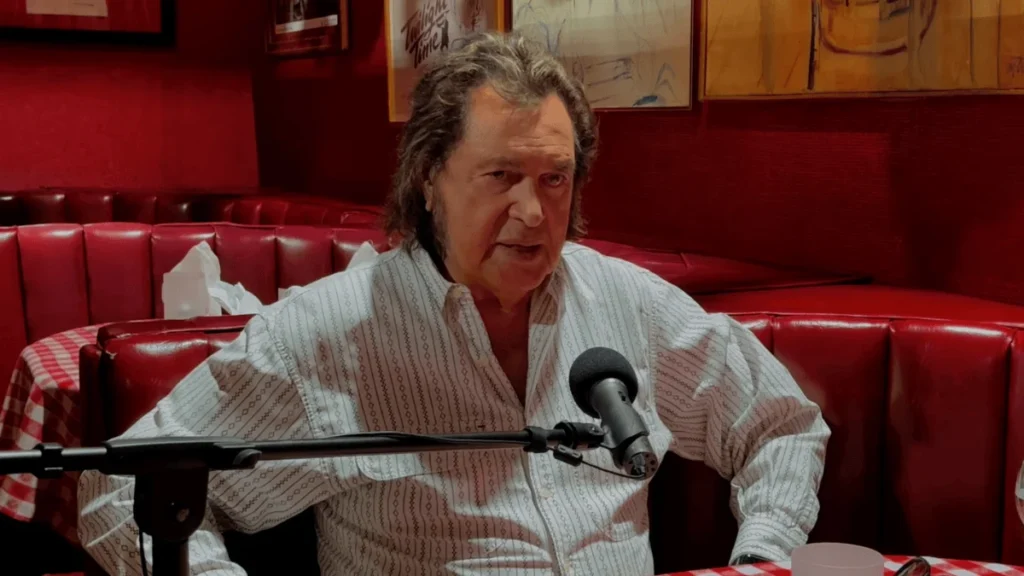

Legendary British vocalist Engelbert Humperdinck has recently shed light on the darker, predatory underbelly of the mid-20th-century entertainment industry, detailing a grueling early career marked by persistent harassment and exploitation. Speaking candidly on his self-titled television program, The Engelbert Humperdinck Show—specifically during the third episode of its inaugural season, titled The Hungry Years—the iconic crooner opened up about the immense personal and professional hurdles he faced while attempting to establish himself as a serious recording artist in post-war Britain.
Decades after scaling the heights of global stardom with timeless hits such as Release Me and The Last Waltz, the veteran performer reflected on an era when breaking into the music business often demanded compromising personal integrity. According to accounts highlighted by industry publications, the then-aspiring singer endured what he bluntly described as "hell" while navigating a pervasive culture of coercion, proving that the exploitative dynamics frequently associated with modern entertainment are far from contemporary phenomena.
The Early Struggles and the Journey to London
The narrative of Humperdinck’s arduous ascent begins in the late 1950s, far from the glittering recording studios of London, in the provincial city of Leicester, England. Born Gerry Dorsey, the young musician possessed a raw, resonant baritone and burning ambitions, yet he lacked the financial foundation required to break into a heavily centralized and fiercely competitive entertainment market.
At the time, the British music industry was heavily concentrated in the capital, requiring aspiring talent to travel, audition in person, and network relentlessly with power brokers who held absolute authority over career trajectories. For Humperdinck, this meant undertaking frequent, costly trips from Leicester to London—expenditures that placed an immense financial strain on his working-class family. In his recent disclosures, the singer recalled how his older sister made significant sacrifices to support his dreams, scraping together barely enough money to fund modest, single-night hotel stays so he could attend critical meetings with talent agents and producers.
These overnight trips, intended to be stepping stones toward a professional contract, frequently transformed into harrowing trials of endurance. Rather than evaluating his vocal capabilities or performance potential, numerous industry gatekeepers viewed the young artist through a predatory lens, leveraging their professional authority to extract personal favors.
Navigating the Pre-MeToo Casting Couch Culture
Long before the global reckoning of the #MeToo movement brought systemic workplace harassment and the abuse of power into the public consciousness, performers like Humperdinck were forced to navigate similar predatory dynamics in isolation. The singer detailed how difficult it was to secure legitimate representation during an era when the industry lacked institutional safeguards, human resources departments, or protective oversight bodies.
"In those days, you know, a lot of the agencies were… the men that fancied men," Humperdinck recounted during the broadcast, addressing the specific vulnerabilities he faced as a young, conventionally attractive male hopeful in a heavily male-dominated agency circuit. "I had to go through a lot because I got chased a lot by agents."
Rather than capitulating to the demands of powerful intermediaries, the singer maintained strict personal boundaries, a decision that severely delayed his professional breakthrough. "I was true to myself then," he reflected, noting that he consistently avoided participating in the informal quid pro quo systems prevalent at the time. "And I avoided all that, but I went through hell with that sort of thing."
Humperdinck explicitly linked these recurring encounters to a pervasive industry phenomenon, drawing a parallel to the infamous concept of the casting couch—traditionally associated with theatrical and cinematic auditions, but manifested here within the hierarchy of talent agencies. "Casting couch, it’s called the casting couch, right?" he noted, before drawing a distinction regarding its application in his specific sphere: "Not in a Hollywood way, but in an agent’s way, you know." He emphasized the ubiquity of the experience, stating matter-of-factly, "Every agent I went to was the same thing."
The Turning Point: Sydney Myers and the Path to Recognition
Despite facing a seemingly impenetrable wall of exploitation and rejected advances, Humperdinck’s fortunes shifted when he crossed paths with Sydney Myers, a prominent industry figure who offered a stark contrast to the predatory agents the singer had previously encountered.
Myers, a married man of established reputation within the British talent ecosystem, recognized Humperdinck’s latent potential and chose to support his career strictly on professional merits. In a gesture of remarkable hospitality and professional sponsorship, Myers invited the young artist to stay at his home for a six-month period, providing stable lodging and meals while introducing him to key industry executives, producers, and media figures. Furthermore, Myers absorbed a portion of the singer’s living expenses during this critical window, while Myers’ wife fostered a welcoming and supportive domestic environment that allowed the stressed performer to regain his equilibrium.
Describing his benefactor with visible fondness, Humperdinck remarked, "And he was a meticulous man. I liked him very much."
This stabilizing mentorship proved to be the catalyst Humperdinck desperately needed. Through Myers’ guidance, network connections, and industry clout, the young singer successfully secured a major career breakthrough: a grueling yet prestigious 42-week commitment performing on the popular British music variety television series Song Parade.
The Chronology of a Transformation: From Gerry Dorsey to Engelbert Humperdinck
The platform provided by Song Parade allowed the aspiring vocalist to showcase his vocal range to a nationwide television audience, establishing his footprint in the British entertainment landscape. During this foundational phase of his career, he performed under his birth name, Gerry Dorsey, building a loyal following through weekly television appearances.
However, recognizing the need for a more memorable, distinctive persona that would stand out in an increasingly crowded pop music market, management later engineered a dramatic rebrand. Inspired by the 19th-century German composer responsible for the opera Hansel und Gretel, the moniker Engelbert Humperdinck was officially adopted in 1965. This theatrical, slightly eccentric name change, combined with his signature sideburns and powerful vocal delivery, transformed him into an international superstar just two years later with the monumental success of Release Me, which famously blocked The Beatles’ Penny Lane from the top of the UK charts.
Broader Industry Implications and Historical Context
Humperdinck’s retrospective revelations offer valuable historical context regarding the structural vulnerabilities faced by young artists entering the entertainment sphere during the mid-20th century. While historical narratives of the golden age of pop and variety television frequently emphasize glamour, charm, and overnight success stories, testimonies from veterans of the era paint a far more precarious picture.
In the 1950s and 1960s, the talent agency system operated largely as an unregulated oligopoly. Independent agents held immense discretionary power over casting, recording contracts, and broadcast appearances. For young performers originating from working-class backgrounds—such as Leicester-born Humperdinck—the absence of formalized legal representation, robust union protections, or independent oversight meant that aspiring stars were frequently left entirely at the mercy of individual power brokers.
Sociologists and media historians studying the evolution of workplace culture in the arts note that the structural power imbalances described by Humperdinck were normalized across multiple tiers of the entertainment industry. The reliance on informal networking, coupled with the high stakes of commercial rejection, created an environment where predatory behavior could flourish with near-total impunity. Victims of harassment rarely had recourse to public platforms or legal remedies without risking immediate professional blacklisting, making Humperdinck’s refusal to yield—and his subsequent survival through the mentorship of figures like Sydney Myers—all the more remarkable.
Conclusion and Ongoing Legacy
Today, as Engelbert Humperdinck looks back on a career spanning more than six decades, his willingness to address the darker chapters of his early life provides a sobering counterweight to the nostalgia surrounding mid-century pop culture. By contextualizing his initial hardships within the framework of systemic exploitation, the nonagenarian singer underscores the resilience required to achieve lasting success in an unforgiving industry.
As contemporary entertainment continues to grapple with issues of workplace safety, ethical talent management, and the protection of vulnerable newcomers, the testimonies of industry veterans serve as an essential reminder of how far the business has evolved—and how critical it remains to dismantle the residual remnants of the casting couch culture in all its historical and modern manifestations.