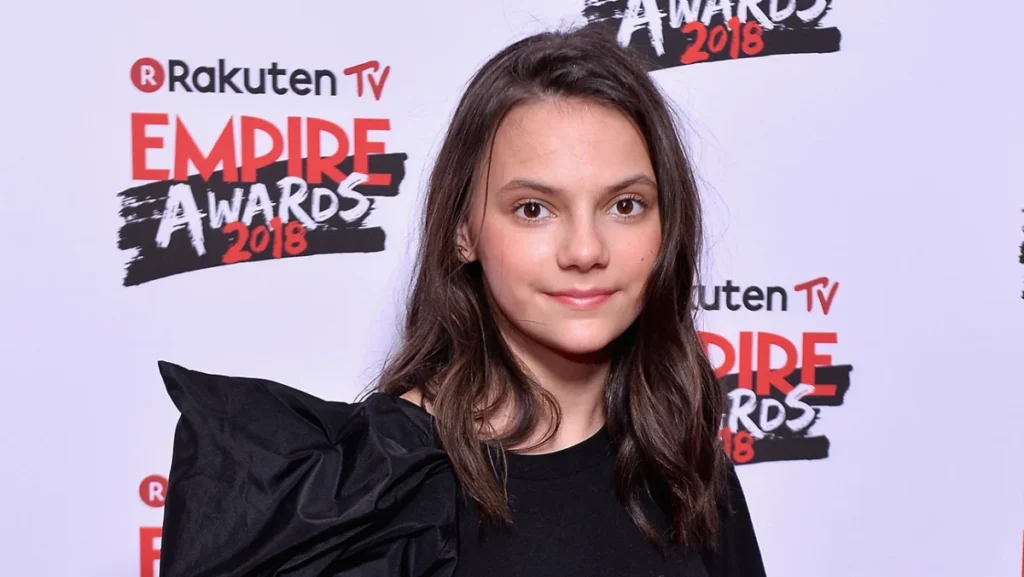

The complexities, pressures, and hidden perils of growing up in the spotlight have once again taken center stage following candid revelations from actor Dafne Keen. During a recent appearance on the Inside of You podcast hosted by Michael Rosenbaum, the 19-year-old star opened up about her formative years in the entertainment industry. Best known for her breakout role as Laura, the mutant clone and biological daughter of Wolverine in the 2017 blockbuster Logan, Keen shared startling anecdotes regarding the premature exposure to adult environments she faced as a child actor.
Her remarks have reignited a broader conversation within Hollywood regarding the systemic protection of minors on film sets, the boundaries of wrap parties, and the pervasive culture of substance access that young performers sometimes encounter. While Keen successfully navigated these early hazards through strong personal boundaries and a self-described "control freak" aversion to intoxication, her testimony highlights ongoing concerns within the entertainment sector regarding child labor practices, environmental safety, and the psychological toll exacted on performers who transition from childhood stardom into adulthood.
Early Exposure to Industry Excess and Substance Pressures
During her discussion with Rosenbaum on the Tuesday episode, the conversation naturally gravitated toward the topic of alcohol and substance consumption. Keen, who recently reprised her role as X-23 in Marvel’s record-shattering Deadpool & Wolverine, revealed that she has maintained a steadfast commitment to sobriety throughout her life. She noted that she has never experienced the effects of alcohol heavily enough to suffer a hangover, attributing this caution to her childhood observations.
"I don’t think I’ve ever been drunk enough to even have a hangover. I’m such a control freak with that. Because also I think as a child actor I witnessed so much of that as a child that I just had no interest," Keen explained during the podcast.
When pressed by Rosenbaum about the specifics of what she witnessed, Keen delivered a startling revelation regarding the nature of the industry events she attended. "I was getting offered coke at wrap parties," she recalled. Asked by the host how old she was when these illicit substances were first offered to her, Keen clarified that she was remarkably young. "Like, tiny. Like 11, 12, 13. So I saw what that was, so I was like, ‘I don’t really have any interest in that…’ I was saying no, fortunately."
Despite these early and inappropriate exposures, Keen emphasized that she still enjoys participating in social nightlife environments simply for the atmosphere, music, and dancing, preferring to experience them completely sober. To avoid unwanted peer pressure during her teenage years, she resorted to creative defensive tactics. She admitted to fabricating stories about already being under the influence to deter persistent peers. "I did used to lie as a teenager so that I wouldn’t get peer pressured," she said. "I’d be like, ‘Nah, I’m good. I don’t wanna drink. I already took something.’ Dead sober. Like, the goodest goody-two-shoes ever."
A Timeline of Stardom: From Logan to Deadpool & Wolverine
To understand the trajectory of Keen’s career and the environments she navigated, it is essential to examine her professional chronology. Born in Spain in 2005 to British actor Will Keen and Spanish actor, director, and writer María Fernández Ache, Keen was immersed in the arts from an early age. Her professional acting debut came in 2014 when she starred alongside her father in the television series The Refugees.
However, her life changed dramatically in 2015 when she was cast at the age of 11 to star alongside Hugh Jackman in James Mangold’s gritty, R-rated superhero drama Logan. Released in March 2017, the film was a critical and commercial triumph, grossing over $619 million worldwide. Keen’s intense, largely non-verbal performance as Laura/X-23 earned widespread critical acclaim and established her as a formidable young talent in Hollywood.
Following Logan, Keen took on leading roles in major television and film projects, including headlining the BBC/HBO fantasy television series His Dark Materials as Lyra Belacqua, which ran from 2019 to 2022 across three seasons. Her career reached another milestone in 2024 when she reprised her iconic role as Laura in Marvel Studios’ Deadpool & Wolverine, further cementing her status within the modern superhero cinematic landscape. Throughout this rapid ascent, Keen was forced to balance the rigorous demands of multi-million-dollar productions with the typical milestones of adolescence.
The Role of Mentorship and On-Set Protection
While wrap parties and industry social events presented challenges, Keen’s experiences working on major film sets were significantly shaped by protective adult figures who shielded her from the harsher realities of the business. During her conversation on Inside of You, Keen spoke warmly of her time working with Hugh Jackman on the set of Logan, painting a picture of a supportive and nurturing environment orchestrated largely by the film’s lead actor.
"He gave me a lot of really positive reinforcement and a lot of really good advice. And he was always so lovely," Keen said of Jackman. "He’s the best number one you could ever wish for, and he’s the best on-screen dad. Like, he genuinely felt like a sort of parental figure."
Keen detailed specific actions taken by Jackman to ensure her physical and psychological well-being during the arduous, physically demanding shoot. "He made sure that no one was abusing my hours, that I was having fun on set, that I wasn’t aware of any tensions that would’ve been happening behind the scenes. He was so incredibly protective and amazing," she added.
This level of advocacy is frequently cited by industry veterans as crucial for minors working in film and television. Child actors occupy a uniquely vulnerable position in the entertainment ecosystem, where power dynamics heavily favor adult producers, directors, and crew members. The presence of a leading actor who actively monitors the working conditions and emotional safety of a child co-star serves as an invaluable safeguard against exploitation and burnout.
Broader Industry Implications and the Protection of Child Actors
Keen’s revelations arrive amid a broader, ongoing re-examination of how Hollywood treats its youngest stars. Over the past decade, a growing body of memoirs, documentaries, and journalistic exposes have detailed the systemic pitfalls of child stardom, including financial exploitation, lack of educational continuity, psychological distress, and exposure to adult vices and substances.
Historically, child actors have relied on state labor laws—such as California’s Coogan Act, initially passed in 1939 and subsequently updated—to protect their earnings and mandate schooling on set. However, these regulations primarily govern financial and educational matters during official working hours. They rarely extend to the informal social environments surrounding film productions, such as wrap parties, junkets, and promotional tours, where boundaries frequently blur and industry norms often supersede standard child protection practices.
The occurrence of an 11- or 12-year-old child being offered illicit substances like cocaine at a wrap party—even if hosted in professional contexts—underscores a persistent failure of supervision among adults responsible for maintaining safe environments. While Keen’s strong personal resolve and the protective measures taken by individuals like Hugh Jackman ensured she avoided negative outcomes, industry analysts and advocacy groups argue that the safety of minors should never depend solely on luck or individual mentorship.
Systemic Reforms and Future Outlook
In response to historic abuses and changing cultural expectations, major studios, guilds, and streaming platforms have increasingly implemented stricter compliance protocols. The inclusion of on-set welfare coordinators, mental health professionals, and independent monitors has become more common on productions featuring substantial minor casts. Furthermore, guilds such as SAG-AFTRA continue to advocate for enhanced safety guidelines that cover off-camera environments and promotional events associated with studio releases.
Despite the challenges she witnessed during her upbringing in the industry, Keen remains passionate about her craft and optimistic about her future. Her ability to navigate the pitfalls of early fame without succumbing to substance abuse reflects a high degree of emotional maturity. As she continues to transition into adult roles, Keen’s transparent reflections serve as both a cautionary tale regarding the hidden underbelly of Hollywood and a testament to the importance of strong boundaries, protective mentorship, and personal accountability.
The conversation sparked by her podcast appearance is expected to fuel ongoing dialogues among industry stakeholders regarding the ethical obligations studios hold toward minor performers. As Hollywood grapples with its historical shortcomings, the testimonies of actors like Dafne Keen provide essential insights that drive institutional accountability and reforms aimed at ensuring future generations of young talent can pursue their passions free from premature exposure to harm.