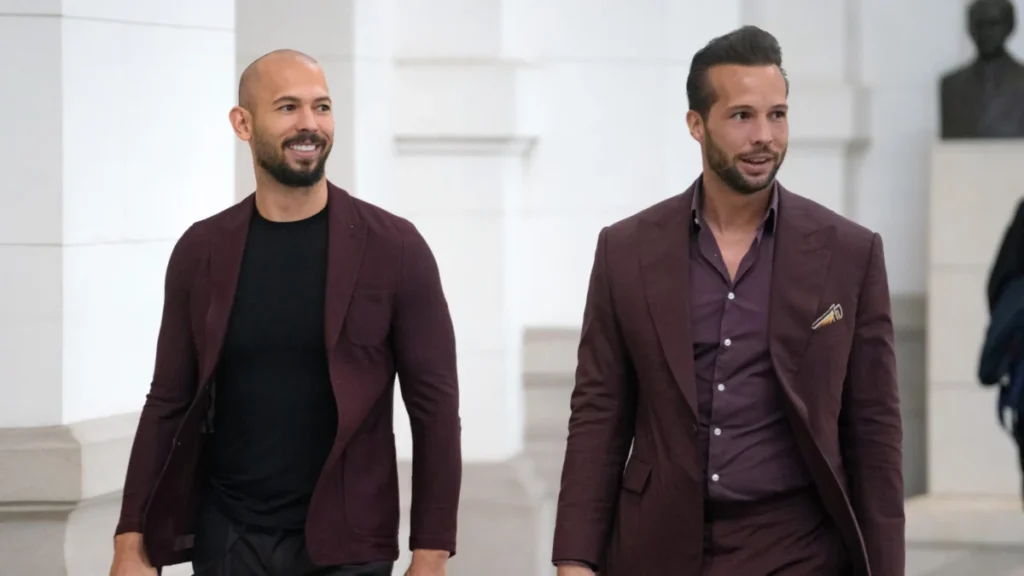

The prominent social media personalities, Andrew and Tristan Tate, were apprehended on Saturday in Miami, Florida, acting on an extradition request from British authorities. The Associated Press reported that the arrests are linked to allegations of rape and sex trafficking originating in the United Kingdom, marking a significant escalation in the ongoing legal challenges faced by the brothers across multiple international jurisdictions. The specific details of the charges were not immediately released to the public, with U.S. Marshals Service spokesperson Brady McCarron confirming that the Tate brothers were taken into custody pursuant to a sealed warrant. This development signals a complex international legal battle as the UK seeks to bring the brothers to trial for serious criminal offenses.
Following the arrests, the Crown Prosecution Service (CPS) in the UK issued a statement on Saturday, affirming their intent to pursue the extradition of Andrew and Tristan Tate. The CPS statement indicated a decision by prosecutors to bring further charges against the brothers, specifically mentioning "in relation to four additional victims." This expands upon existing accusations, with the CPS clarifying, "Following their arrest in the U.S., the CPS will be seeking their extradition in relation to the original 21 charges they face, as well as the further charges which we have decided to prosecute." This suggests an extensive and multifaceted prosecution effort involving a growing number of alleged victims and charges.
The Rise of a Controversial Online Empire
Andrew Tate, a former kickboxer, first garnered public attention in 2016 through his appearance on the UK version of the reality television show Big Brother. His stint on the show was short-lived, as he was removed after just six days when a video surfaced online purportedly showing him attacking a woman. Following this initial public exposure, Tate pivoted to cultivate a substantial online presence, building a brand around what critics describe as extreme misogyny, "toxic masculinity," and a lavish lifestyle. His content, often featuring luxury cars, private jets, and boasts of immense wealth, resonated with a vast audience, primarily young men, across platforms like TikTok, Instagram, YouTube, and X (formerly Twitter).
Tate’s online persona became synonymous with controversial and often inflammatory rhetoric. He frequently expressed anti-feminist views, promoted a self-proclaimed "alpha male" ideology, and offered advice on wealth acquisition through various online ventures, including "Hustler’s University." This platform, along with his extensive social media engagement, allowed him to amass millions of followers globally, turning him into one of the most talked-about, and divisive, figures on the internet. His rapid ascent led to widespread concern from educators, parents, and anti-misogyny groups, who warned about the potential negative influence of his content on impressionable audiences. Major social media platforms, including TikTok, Facebook, and Instagram, eventually banned Tate for violating their policies on hate speech and harmful content. However, he maintained a significant presence on other platforms and was later reinstated on X, further solidifying his controversial status.
A Chronology of International Legal Challenges
The Miami arrest is the latest in a series of significant legal encounters for the Tate brothers, which have spanned multiple continents and involved a range of serious accusations.
- December 2022, Romania Arrest: Andrew and Tristan Tate were first arrested in Romania in December 2022 as part of an investigation into organized crime, human trafficking, and rape. Romanian prosecutors alleged that the brothers, along with two Romanian women, had formed an organized crime group to sexually exploit women. The allegations included luring victims under false pretenses of a relationship ("loverboy" method) to then force them into producing pornographic content for online platforms, which was then sold for profit. Following their arrest, they were initially held for 30 days, a period that was subsequently extended multiple times.
- January-August 2023, Romanian Detention: The brothers spent several months in pre-trial detention, first in police custody and later under house arrest, as Romanian authorities continued their investigation. During this period, their legal team consistently denied all allegations, asserting their innocence and challenging the evidence presented by the prosecution.
- August 2023, Release from House Arrest: In August 2023, Andrew and Tristan Tate were released from house arrest in Romania but remained under judicial control, a less restrictive form of pre-trial supervision. This allowed them greater freedom of movement within Romania but prohibited them from leaving the country without court permission and required them to report to the police regularly.
- March 2024, Romanian Indictment: In March 2024, Romanian prosecutors formally indicted the Tate brothers, along with two alleged accomplices, on charges of human trafficking, rape, and forming an organized crime group. The indictment detailed seven alleged victims, all Romanian women, who were reportedly lured to properties in Ilfov county and subjected to physical violence and sexual exploitation. The brothers vehemently denied these charges, preparing for a trial in Romania that is expected to be lengthy and complex.
- May 2024, UK Charges Confirmed: Separate from the Romanian case, British authorities, specifically the Crown Prosecution Service, confirmed in May 2024 that the Tate brothers faced 21 charges in the UK. These charges included rape, actual bodily harm, and human trafficking. According to reports from the BBC, Andrew Tate faces 10 charges related to three alleged victims, encompassing rape, actual bodily harm, human trafficking, and controlling prostitution for gain. Tristan Tate faces 11 charges connected to one alleged victim, including rape, actual bodily harm, and human trafficking. These UK-specific charges form the basis of the current extradition request.
- June 2024, Miami Arrest: The recent arrest in Miami marks the culmination of the UK’s formal request for their extradition to face these charges.
The Extradition Process: A Complex Legal Framework
The extradition of individuals between sovereign states is governed by international treaties and domestic laws, representing a formal process that can be protracted and legally intricate. When a country, such as the United Kingdom, seeks the extradition of an individual from another, like the United States, it typically involves several key stages.
Upon an arrest based on an extradition request, the individual is brought before a federal judge in the U.S. to determine if they are the person named in the warrant and to inform them of the charges they face in the requesting country. The U.S. Marshals Service plays a critical role in apprehending individuals wanted on international warrants and facilitating their appearance in court. The arrested party has the right to an extradition hearing, where they can contest the extradition on various legal grounds, such as asserting that the charges are politically motivated, that their human rights would be violated, or that the charges do not constitute a crime in both countries (dual criminality).
The Crown Prosecution Service, as the primary prosecuting authority in England and Wales, would have formally submitted the extradition request through diplomatic channels, providing evidence to support the charges and justify the need for the Tates’ presence in the UK for trial. The legal proceedings in the U.S. will focus on whether the UK’s request meets the legal requirements for extradition under existing treaties, primarily the extradition treaty between the United States and the United Kingdom. Given the high-profile nature of the Tate brothers and the serious allegations, their legal team is expected to mount a robust defense against extradition, potentially prolonging the process through appeals.
Broader Implications: Social Media Accountability and Victim Justice
The ongoing legal battles involving Andrew and Tristan Tate carry significant implications beyond the immediate cases. Their prominence has fueled discussions around the accountability of social media platforms for harmful content and the responsibility of online personalities for their influence. The "Tate effect" has been widely studied and critiqued by researchers and advocacy groups, highlighting the challenges of content moderation and the spread of misogynistic ideologies online. This case could set precedents for how international law enforcement collaborates to address crimes allegedly committed by individuals with a global digital footprint.
Furthermore, the focus on human trafficking and sexual exploitation charges underscores the critical need for justice for alleged victims. Organizations dedicated to combating human trafficking emphasize the courage required for victims to come forward and the importance of robust legal frameworks to ensure perpetrators are held accountable. The complexity of these cases, often involving vulnerable individuals and sophisticated exploitation schemes, demands sustained efforts from law enforcement and judicial systems. The potential outcomes of the UK and Romanian trials, as well as the extradition proceedings, will undoubtedly contribute to the broader discourse on online influence, gender-based violence, and international justice.
Looking Ahead: A Long Road to Resolution
As Andrew and Tristan Tate navigate the U.S. legal system regarding their extradition, the path forward is expected to be lengthy and fraught with legal challenges. Should their extradition to the UK be approved, they would then face trial in British courts for the rape and sex trafficking charges. Concurrently, the Romanian indictment for human trafficking, rape, and organized crime remains active, suggesting the brothers could face further legal proceedings in Romania regardless of the outcome of the UK extradition. The multi-jurisdictional nature of these allegations adds layers of complexity, requiring careful coordination between international legal authorities. The public and media scrutiny surrounding the Tate brothers ensures that every step of this legal journey will be closely watched, with the outcomes potentially influencing the landscape of online discourse and international criminal justice for years to come.