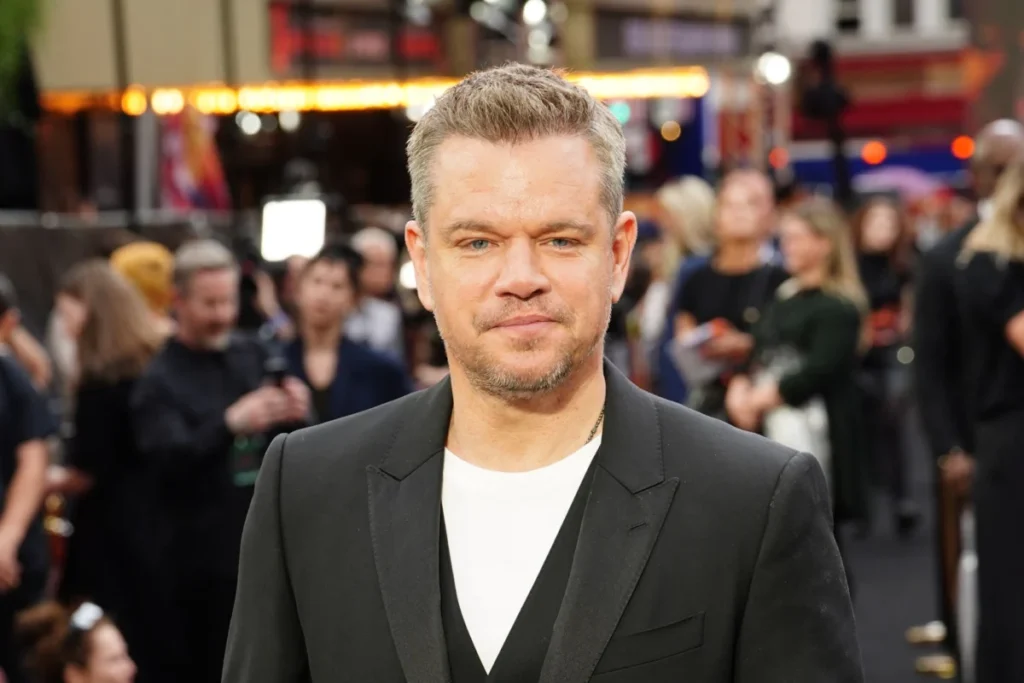

A new trailer for Sir Christopher Nolan’s highly anticipated cinematic adaptation of Homer’s epic poem, The Odyssey, has been released, offering audiences a first glimpse of US actor Matt Damon in the titular role of the resourceful Greek hero Odysseus. The footage showcases Damon battling formidable enemies and the relentless elements, setting the stage for what promises to be a visually stunning and psychologically complex retelling of one of Western literature’s foundational tales. This marks Nolan’s first directorial effort following his monumental success with 2023’s Oppenheimer, which garnered him his first Academy Awards for Best Director and Best Picture. The film is poised to be a major cinematic event, blending classical storytelling with Nolan’s signature epic scale and intricate narrative style.
The Trailer’s Revealing Glimpse into a Perilous Journey
The recently unveiled trailer opens with stark, powerful imagery that immediately establishes the perilous world Odysseus inhabits. Matt Damon, embodying the weary but determined King of Ithaca, delivers a poignant line that encapsulates the core motivation of his character: “We won a war, help me go home.” This declaration, delivered with a gravitas befitting a hero who has endured a decade of conflict and now faces an equally arduous journey, anchors the emotional arc of the narrative. The clip swiftly transitions through a montage of breathtaking sequences, hinting at the vast scope of Odysseus’s travels. Viewers are treated to shots of Damon at the helm of ancient sailing vessels, navigating treacherous seas, and leading an army, presumably his loyal Ithacan warriors, through unknown lands. The sheer scale of these scenes suggests a commitment to historical and mythological grandeur, a hallmark of Nolan’s previous large-canvas productions.
Crucially, the trailer provides tantalizing glimpses of the mythical beings that challenge Odysseus on his quest. While not explicitly detailed, monstrous figures loom in the shadows and across vast landscapes, strongly implying encounters with iconic creatures from the Homeric epic. These visual cues suggest a careful balance between the human struggle for survival and the fantastical elements inherent in the original text. The footage also offers a poignant look at Penelope, Odysseus’s steadfast wife, portrayed by Academy Award winner Anne Hathaway. Scenes depict a throng of suitors vying for Penelope’s hand in her husband’s prolonged absence, underscoring the domestic threat and the emotional stakes awaiting Odysseus upon his eventual return. Hathaway’s portrayal suggests a character imbued with both resilience and vulnerability, a crucial counterpoint to Odysseus’s external battles. The visual language of the trailer – characterized by sweeping vistas, intense close-ups, and a palpable sense of tension – aligns perfectly with Nolan’s reputation for crafting immersive, high-stakes cinematic experiences, often utilizing large-format cameras like IMAX to enhance the epic scope.
Unpacking Homer’s Enduring Epic: The Odyssey
At its heart, The Odyssey is an ancient Greek epic poem attributed to Homer, believed to have been composed around the 8th century BCE. It stands as one of the two major ancient Greek epic poems, the other being The Iliad, which recounts the Trojan War itself. The Odyssey picks up after the fall of Troy, focusing on the arduous ten-year journey of Odysseus, the cunning King of Ithaca, as he strives to return home to his island kingdom and his waiting family. His journey is fraught with divine wrath, monstrous encounters, and human treachery, making it a timeless narrative of perseverance, cunning, and the profound longing for home, known as "nostos" in Greek.
The narrative structure of The Odyssey is complex, often employing a non-linear approach, with Odysseus recounting parts of his journey in flashback to the Phaeacians, who eventually aid him in his final leg home. This narrative device, surprisingly modern for its time, allows for a rich tapestry of adventures. Among the most iconic challenges faced by Odysseus and his crew are:
- The Lotus-Eaters: An encounter with inhabitants who offer a narcotic fruit that causes forgetfulness and a desire to remain.
- The Cyclops Polyphemus: A terrifying confrontation with a one-eyed giant, son of Poseidon, whom Odysseus outwits by blinding him, incurring the wrath of the sea god.
- Circe: A powerful sorceress who transforms Odysseus’s men into swine, and with whom Odysseus spends a year.
- The Sirens: Alluring, dangerous creatures whose beautiful songs lure sailors to their deaths, overcome by Odysseus by having his men tie him to the mast and block their own ears.
- Scylla and Charybdis: A perilous passage between a six-headed monster and a deadly whirlpool.
- The Underworld (Nekuia): Odysseus’s descent into the realm of the dead to consult the prophet Tiresias, where he also encounters the shades of fallen heroes and his own mother.
- Calypso: A nymph who holds Odysseus captive on her island, Ogygia, for seven years, offering him immortality if he stays.
- The Suitors: Back in Ithaca, a horde of arrogant noblemen consumes Odysseus’s wealth and pressures Penelope to choose a new husband, while plotting to kill his son, Telemachus.
The poem explores profound themes of identity, the nature of heroism, the destructive power of war, the importance of family and loyalty, and the human capacity for both resilience and folly. It has profoundly influenced Western literature, art, and philosophy for millennia, cementing its place as a cornerstone of classical education and storytelling.
Christopher Nolan’s Distinctive Cinematic Vision
Sir Christopher Nolan, a director celebrated for his intellectual rigor and visual ambition, brings a unique sensibility to The Odyssey. His filmography is a testament to his mastery of complex narratives, often playing with chronology, perception, and the subjective nature of reality. His films are typically characterized by:
- Non-linear Storytelling: From the fragmented narrative of Memento (2000) to the interwoven timelines of Dunkirk (2017) and Oppenheimer (2023), Nolan frequently challenges conventional narrative structures, forcing audiences to actively engage with the unfolding plot.
- Practical Effects and IMAX: A staunch advocate for practical effects over CGI and a fervent proponent of large-format filmmaking, Nolan’s movies often boast a tangible realism and immense visual scale, making them ideal for the immersive experience of IMAX theaters. This approach is particularly well-suited for an epic like The Odyssey, promising breathtaking seascapes and tangible mythical creatures.
- Philosophical Depth: Beyond the spectacle, Nolan’s films consistently delve into profound philosophical questions – identity, memory, time, morality, and the nature of reality – themes that resonate strongly with the existential journey of Odysseus.
- Immersive Soundscapes: Collaborating frequently with composers like Hans Zimmer, Nolan creates distinctive and often overwhelming sound designs that are integral to the emotional and thematic impact of his films.
This new adaptation marks Nolan’s highly anticipated return since his Oscar-winning triumph with Oppenheimer. That film, a biographical drama chronicling the life of theoretical physicist J. Robert Oppenheimer and his pivotal role in developing the atomic bomb during World War II, solidified Nolan’s reputation as a director capable of transforming complex historical events into compelling, character-driven narratives on an epic scale. His previous successes include the critically acclaimed Dark Knight trilogy, which redefined the superhero genre; the mind-bending sci-fi epic Inception (2010); the space exploration saga Interstellar (2014); and the gripping war film Dunkirk (2017). The choice of The Odyssey for his next project is intriguing, as it allows him to explore themes of journey, time, and human resilience within a mythological framework, offering a fresh canvas for his distinctive storytelling techniques. One can anticipate that Nolan will not merely retell the story but interpret it through his unique lens, perhaps emphasizing Odysseus’s psychological toll, the distorting effects of his prolonged absence, or the philosophical implications of his encounters with gods and monsters.
A Star-Studded Ensemble Cast
Christopher Nolan is renowned for attracting top-tier talent, and The Odyssey is no exception, boasting an impressive ensemble cast that promises compelling performances across the board.
-
Matt Damon as Odysseus: Damon brings a formidable combination of heroic stature, dramatic intensity, and an everyman relatability to the role of Odysseus. Known for his versatility in films ranging from the action-packed Bourne series to the dramatic weight of Good Will Hunting and Saving Private Ryan, and the survivalist grit of The Martian, Damon possesses the gravitas and physical presence required for a character who is both a skilled warrior and a cunning strategist, enduring immense hardship while longing for home. His ability to convey both internal struggle and external strength makes him an ideal choice for the complex hero.

-
Anne Hathaway as Penelope: Reuniting with Nolan after her acclaimed performances in The Dark Knight Rises and Interstellar, Anne Hathaway is cast as Penelope. Hathaway’s career, marked by diverse roles from sophisticated comedies to intense dramas, positions her perfectly to portray Penelope’s unwavering loyalty, intelligence, and resilience in the face of relentless pressure from the suitors. Penelope’s character is crucial to the narrative, serving as the steadfast anchor for Odysseus’s journey and a symbol of what he fights to return to.
The supporting cast is equally illustrious, featuring a mix of established stars and rising talents:
-
Tom Holland: Known globally for his role as Spider-Man, Holland’s youthful energy and dramatic capabilities could lend themselves well to the character of Telemachus, Odysseus’s son, who embarks on his own journey of self-discovery and defends his mother’s honor in his father’s absence. While not confirmed, this would be a natural fit given Holland’s previous roles and appeal.
-
Robert Pattinson: A frequent Nolan collaborator (Tenet, The Dark Knight Rises), Pattinson’s ability to portray enigmatic and intense characters could see him in a variety of roles, perhaps as one of the more prominent suitors, a divine figure like Poseidon (Odysseus’s nemesis), or even a loyal companion.
-
Zendaya: With her commanding screen presence and range, Zendaya could embody a powerful mythological figure such as the sorceress Circe, the alluring nymph Calypso, or even a goddess like Athena, who frequently aids Odysseus.
-
Charlize Theron: An Academy Award winner celebrated for her powerful and transformative performances, Theron could bring formidable strength to a major divine character like Athena or Hera, or perhaps even a mortal queen encountered on Odysseus’s journey.
-
Lupita Nyong’o: Another Oscar winner known for her intense and emotionally resonant performances, Nyong’o’s versatility makes her a strong candidate for various roles, from a mythical being to a significant human character encountered during the epic voyage.
The sheer talent assembled for this production underscores the ambition behind Nolan’s The Odyssey, promising a dynamic interplay between characters that will bring the ancient epic to vibrant life.
A Legacy of Adaptations and Nolan’s Unique Contribution
The Odyssey has inspired countless adaptations across various media, a testament to its enduring power and universal themes. Previous notable cinematic and television interpretations include:
- Ulysses (1954): Starring Kirk Douglas, this Italian-American epic adventure film was one of the earliest major big-screen adaptations, focusing heavily on the action and adventure aspects of Odysseus’s journey.
- O Brother, Where Art Thou? (2000): The Coen Brothers famously transposed the narrative of The Odyssey to the American Deep South during the Great Depression, creating a critically acclaimed and highly original musical comedy-drama that cleverly reinterpreted the classical epic for a modern setting. George Clooney starred as Ulysses Everett McGill, the Odysseus figure.
- The Return (2024): A more recent independent film, signaling the continued fascination with Odysseus’s homecoming, often exploring the emotional and psychological dimensions of his return.
These diverse adaptations highlight the flexibility of Homer’s narrative and its capacity to resonate across different cultures and eras. The challenge for any new adaptation lies in finding a fresh perspective while honoring the source material. Christopher Nolan’s involvement immediately elevates the project, suggesting a version that will be visually spectacular, intellectually stimulating, and perhaps more psychologically nuanced than previous attempts. Given his track record, Nolan is likely to explore the themes of time, memory, and the subjective experience of a prolonged journey with his characteristic depth, offering a distinctive interpretation that aims to be both faithful to the spirit of Homer and groundbreaking in its cinematic execution. His emphasis on practical effects and immersive storytelling could deliver a tangible sense of ancient Greece and its mythological creatures that feels truly unprecedented.
Production Insights and Broader Implications
While specific production details regarding filming locations and precise timelines are often kept under wraps for Nolan’s projects, it is reasonable to infer certain aspects. Given the Mediterranean setting of The Odyssey, principal photography likely involved extensive location shooting in Greece or other Mediterranean countries, complemented by large-scale studio work for complex mythological sequences. Nolan’s preference for shooting on film, particularly large formats, would necessitate specialized crews and equipment, further contributing to the film’s grandeur. The meticulous planning and execution characteristic of Nolan’s productions suggest a significant budget, commensurate with the epic scale of the story and the caliber of the cast.
The release of Christopher Nolan’s The Odyssey carries significant implications across several fronts:
- Cultural Resurgence: A high-profile Nolan adaptation will undoubtedly spark a renewed interest in classical literature and mythology, potentially drawing new generations to read Homer’s original epic. This can have a positive impact on education and the humanities.
- Box Office Performance: Nolan’s films are consistently major box office draws, and The Odyssey, with its universal themes, star power, and epic scope, is positioned to be a global blockbuster. It represents a significant theatrical event in an era increasingly dominated by streaming.
- Awards Season Contender: Following his Oscar success with Oppenheimer, The Odyssey will immediately enter the awards conversation, particularly for its direction, cinematography, visual effects, and potentially its lead performances. The Academy has historically favored ambitious, well-crafted epics.
- Modern Relevance: The themes of war, displacement, the search for home, and the struggle against overwhelming odds remain profoundly relevant in the contemporary world. Nolan’s interpretation could offer a powerful commentary on these enduring human experiences, connecting an ancient story to modern anxieties and hopes.
As the world eagerly awaits more details and the film’s eventual release, Christopher Nolan’s The Odyssey stands as one of the most anticipated cinematic ventures. With a visionary director at the helm and a stellar cast bringing Homer’s timeless characters to life, this adaptation promises to be a landmark achievement, offering audiences a profound and unforgettable journey into one of humanity’s oldest and most resonant stories.