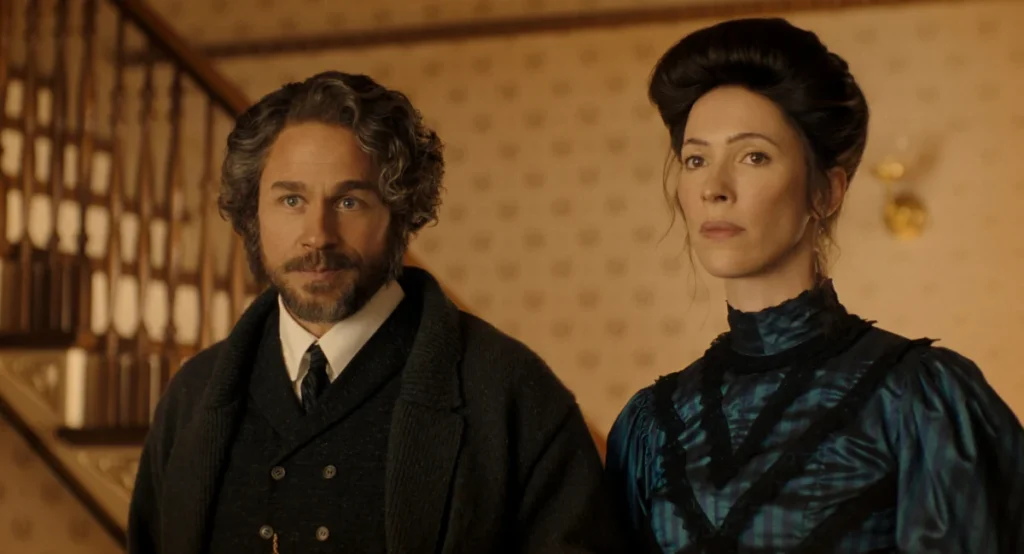

Charlie Hunnam is no stranger to portraying complex and deeply troubled figures within the realm of prestige television. While deeply entrenched in the physically and mentally grueling production of the third season of Ryan Murphy and Ian Brennan’s Netflix true-crime anthology series Monster, in which he stars as the infamous serial killer Ed Gein, Hunnam was approached with a completely different kind of monster. Showrunners Ryan Murphy and Ian Brennan pitched him the role of Andrew Borden for the fourth installment of the franchise, The Lizzie Borden Story.
Stepping into the grotesque shoes of Ed Gein proved to be an exhaustive yet profoundly rewarding process for the Sons of Anarchy alumnus. Despite the immense weight of that leading role, Hunnam did not hesitate when the opportunity arose to pivot into the historical and equally dark world of nineteenth-century New England. However, unlike his preparation for Gein—where an abundance of psych evaluations, court documents, and recorded interviews provided a rigid framework—researching Andrew Borden offered a starkly different challenge. Due to the sparse historical record surrounding Borden’s reclusive and anti-social nature, Hunnam found himself with a rare canvas that relied heavily on creative collaboration with the writing team rather than exhaustive archival documentation.
Unraveling the Enigma of Andrew Borden
The historical record regarding Andrew Borden paints a portrait of a wealthy, austere, and largely isolated patriarch living in Fall River, Massachusetts. Born in 1822, Borden amassed a significant fortune through manufacturing, property development, and banking, yet maintained notoriously frugal habits that often put him at odds with societal expectations of his wealth. When his first wife passed away, Borden plunged into a self-imposed prison of grief and resentment, a psychological state that ultimately defined his household dynamics.
Because so little tangible personal documentation survived detailing Borden’s inner life, Hunnam and the creative team utilized the historical ambiguity to construct a character profile tailored specifically to the narrative needs of the series. The goal was not merely to recreate a historical figure, but to analyze the oppressive household environment that allegedly drove Lizzie Borden to commit the unthinkable. While Lizzie Borden was officially put on trial and ultimately acquitted by a jury in 1893 for the brutal axe murders of her father and stepmother, Abby Borden, the cultural and historical consensus has frequently leaned toward her culpability. Hunnam notes that both Brennan and Murphy approached the narrative with the firm creative belief that Lizzie was indeed responsible, a perspective that heavily informed the dynamic between father and daughter on screen.
From Ed Gein to Fall River: The Production Challenge
Transitioning directly from the psychological weight of playing Ed Gein to portraying Andrew Borden required immense emotional resilience. The production schedule of the Monster anthology demanded intense focus, with Hunnam moving between distinct eras of historical depravity. While the premiere episodes immediately establish the gruesome tone by depicting the bloody aftermath of the August 4, 1892, double homicide, Hunnam reveals that the most demanding material arrived later in the season.

A specific mid-season episode takes a dedicated deep dive into Andrew Borden’s perspective, exploring his internal life, his historical business practices, and his profound domestic alienation across multiple timelines. For Hunnam, these emotionally raw sequences provided the most satisfying work of the shoot, pushing the actor to convey the quiet desperation and rigid tyranny of a man oblivious to the rising resentment within his own walls. The pivotal scene wherein Andrew erupts in fury after discovering the family’s pet doves slaughtered by Abby Borden—resulting in him violently throwing an axe dangerously close to Lizzie—serves as the catalyst for the household’s ultimate destruction.
Rising Stars and Collaborative Dynamics
A critical element of the series’ early success lies in the dynamic between Hunnam and his co-star Ella Beatty, who steps into the iconic and volatile role of Lizzie Borden. Beatty, carrying a heavy dramatic burden, has drawn widespread critical acclaim from the production team for her poise, discipline, and emotional precision. Hunnam has been vocal in his praise for the young actor, expressing admiration for her self-awareness and professional composure on set—qualities he admits he lacked during the early stages of his own career.
The collaborative atmosphere fostered by directors like Max Winkler and writers Ian Brennan allowed the cast to navigate the dark psychological landscape of the murders with creative freedom. The series does not shy away from exploring alternative theories and fringe suspects in later episodes, giving viewers a multi-faceted look at one of American history’s most enduring criminal mysteries, even while leaning heavily into the psychological plausibility of Lizzie’s guilt.
Broader Impact and Cultural Resonance of the Monster Franchise
The expansion of Netflix’s Monster anthology into historical true-crime narratives like The Lizzie Borden Story highlights a strategic evolution for the platform. By moving beyond twentieth-century serial killers into nineteenth-century folklore, the franchise continues to interrogate the socioeconomic and psychological roots of American violence. The case of Lizzie Borden has fascinated criminologists, legal historians, and pop-culture enthusiasts for over a century, serving as the subject of countless books, films, and theatrical productions.
By grounding the sensationalized mythos of the axe murders in intimate character studies—focusing on class friction, patriarchal control, and familial dysfunction—the series elevates true crime into psychological drama. For Charlie Hunnam, anchoring two consecutive seasons of this ambitious television enterprise cements his status as one of television’s most daring character actors, capable of translating historical shadows into compelling, visceral modern art. Monster: The Lizzie Borden Story is currently streaming all episodes on Netflix, inviting audiences worldwide to re-examine the dark corridors of the Borden household in Fall River.