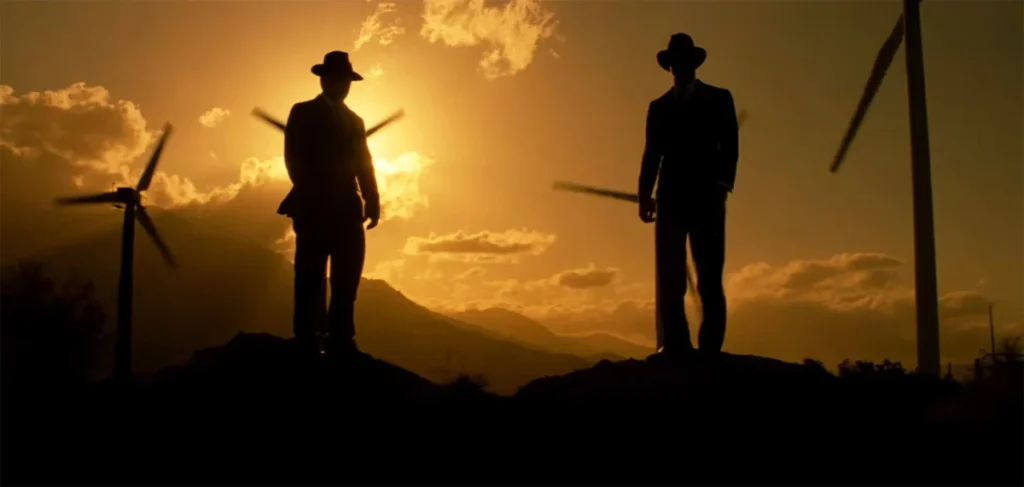

Cineverse has unveiled the official trailer for the independent film Chapter 51, the latest directorial effort from Tyler Shields, a filmmaker previously recognized for his stylish work on Final Girl and Outlaw. This intriguing neo-noir thriller, poised for a Video-On-Demand release on June 23, 2026, plunges viewers into the shadowy underbelly of Hollywood, exploring a chilling mystery that unfolds during the production of a colossal film. The trailer teases a narrative woven with ambition, obsession, and the perilous cost of maintaining the illusion of moviemaking when tragedy strikes.
The Hollywood Killer: A Production Becomes a Crime Scene
The narrative of Chapter 51 centers on a high-stakes film production, reportedly for a project titled "Dissident," which was set to be a monumental $500 million endeavor. However, the ambitious undertaking quickly devolves into a nightmare when an unidentified assailant, known only as the "Hollywood Killer," systematically murders three actresses involved in the film. The chilling acts of violence cast a pall of fear and suspicion over the entire film set, disrupting the creative process and forcing the production to continue under the guidance of a new director, a testament to the industry’s often relentless pursuit of completion.
Years after the initial murders, the case remains a haunting cold case within the annals of Hollywood lore. The film then pivots to the present day, where former FBI agent Thomas Scott, portrayed by Dylan Sprayberry, takes on the daunting task of reopening the investigation. His renewed efforts promise to unravel a complex tapestry of ambition, obsession, and the ethical compromises made in the relentless pursuit of cinematic success. The film is described as a "meta thriller," suggesting a layered examination of filmmaking itself, where the lines between fiction and reality blur, and the dark truths behind the glamorous facade are brought to light.

A Star-Studded Ensemble Cast Tackles a Deceptive Mystery
The ensemble cast of Chapter 51 is notably impressive, featuring a blend of established and rising talent. Abigail Breslin, who previously collaborated with Shields on Final Girl, returns to lend her acting prowess. She is joined by Colman Domingo, a critically acclaimed actor known for his powerful performances. Emily Alyn Lind, Charlotte Lawrence, Dylan Sprayberry, and Connor Paolo round out the principal cast, bringing a diverse range of acting styles to the unfolding mystery. The film’s production is further bolstered by the involvement of Giovanni Ribisi as a producer, adding another layer of industry pedigree to the project.
Tyler Shields, who not only directed but also served as the cinematographer, has emphasized a visually striking aesthetic for Chapter 51. Reports indicate that parts of the film were shot using IMAX film cameras, a choice that suggests a commitment to a cinematic grandeur and a tactile, filmic quality that is increasingly rare in modern productions. This technical decision underscores Shields’ dedication to crafting a visually immersive experience that complements the film’s dark and suspenseful themes.
Chronology of the Mystery and Investigation
The narrative arc of Chapter 51 spans several years, creating a historical context for the present-day investigation:
- Production Phase: The film opens during the chaotic and ultimately tragic production of the mega-budget movie "Dissident." The initial murder of three actresses marks the beginning of the "Hollywood Killer" phenomenon.
- Production Halt and Continuation: Fear grips the set, leading to a temporary halt in production. However, the industry’s drive for completion compels the crew to continue under new leadership, a decision that likely raises ethical questions within the narrative.
- Unresolved Case: The murders remain unsolved for years, becoming a lingering scar on Hollywood’s psyche and a persistent cold case for law enforcement.
- Reopening the Investigation: Decades later, former FBI agent Thomas Scott decides to revisit the case, driven by an unknown impetus, aiming to uncover the buried secrets and identify the perpetrator.
This chronological structure allows for a dual narrative: the unfolding events of the original murders and the meticulous, perhaps perilous, work of the modern-day investigator. The contrast between the two timelines is likely to be a key element in the film’s suspense and thematic depth.

Supporting Data and Industry Context
The film’s premise taps into a perennial fascination with the darker side of Hollywood – a world often perceived as glamorous but susceptible to extreme ambition, rivalry, and moral compromise. The concept of a serial killer targeting individuals within the industry adds a layer of sensationalism that resonates with public curiosity about celebrity culture and the hidden machinations behind the silver screen.
The reported $500 million budget for the fictional "Dissident" film within Chapter 51 is indicative of the immense financial stakes involved in major Hollywood productions. Such large-scale projects often attract intense scrutiny, demanding perfection and facing immense pressure to deliver box office success. This high-pressure environment can breed unconventional methods and ethical grey areas, making it fertile ground for a thriller narrative.
The use of IMAX film cameras, while expensive and less common today, points to a deliberate artistic choice. IMAX captures an expansive aspect ratio and exceptional image quality, often reserved for visually spectacular films. Shields’ decision to employ this technology for a neo-noir thriller suggests a desire to imbue the film with a sense of epic scale and visual intensity, perhaps to contrast the grandeur of the filmmaking process with the grim reality of the murders. This technical commitment aligns with a growing trend in independent cinema to push creative and technical boundaries.
Inferred Statements and Industry Reactions
While no direct statements from the film’s creators or cast regarding the film’s release have been provided in the initial announcement, one can infer the general sentiment surrounding the project. Tyler Shields, known for his provocative and visually distinct filmmaking, is likely aiming to deliver a film that is both artistically compelling and commercially accessible through its VOD release. The selection of a star-studded cast suggests confidence in the project’s appeal.

The film’s meta-narrative, which examines the filmmaking process itself, could be seen as a commentary on the industry’s ability to both create and conceal. Independent filmmakers often use their work to critique or reflect upon the systems they operate within, and Chapter 51 appears to be no exception. The film’s debut on VOD signifies a strategic move by Cineverse to reach a broad audience directly in their homes, bypassing traditional theatrical distribution for this particular release. This approach has become increasingly common for independent films seeking to maximize their reach and impact.
Broader Impact and Implications
Chapter 51‘s exploration of a serial killer within the Hollywood ecosystem has broader implications for how audiences perceive the industry. It taps into anxieties about the potential for darkness to lurk beneath polished exteriors and the ethical compromises that might be made in the pursuit of fame and fortune. The film’s meta-commentary could also provoke discussions about the nature of storytelling, the role of the filmmaker, and the audience’s complicity in consuming narratives that may be born from or inspired by real-world darkness.
The film’s direct-to-VOD release strategy highlights the evolving landscape of film distribution. While theatrical releases remain a significant benchmark, platforms like Cineverse are offering viable alternatives for filmmakers to connect with audiences, particularly for genre films that may not fit neatly into traditional studio molds. This accessibility can democratize filmmaking and broaden the range of stories that reach the public.
The success of Chapter 51 could further embolden independent filmmakers to tackle complex, genre-bending narratives and to experiment with both creative and distribution strategies. Tyler Shields’ established reputation for stylish and often provocative work, combined with the film’s intriguing premise and strong cast, positions Chapter 51 as a noteworthy addition to the 2026 cinematic landscape, promising a deep dive into the psychological and moral complexities of Hollywood. The film’s promise of unraveling "dark truths" and its stylish cinematography suggest an experience that will linger with viewers long after the credits roll, prompting reflection on the allure and the dangers inherent in the dream factory.