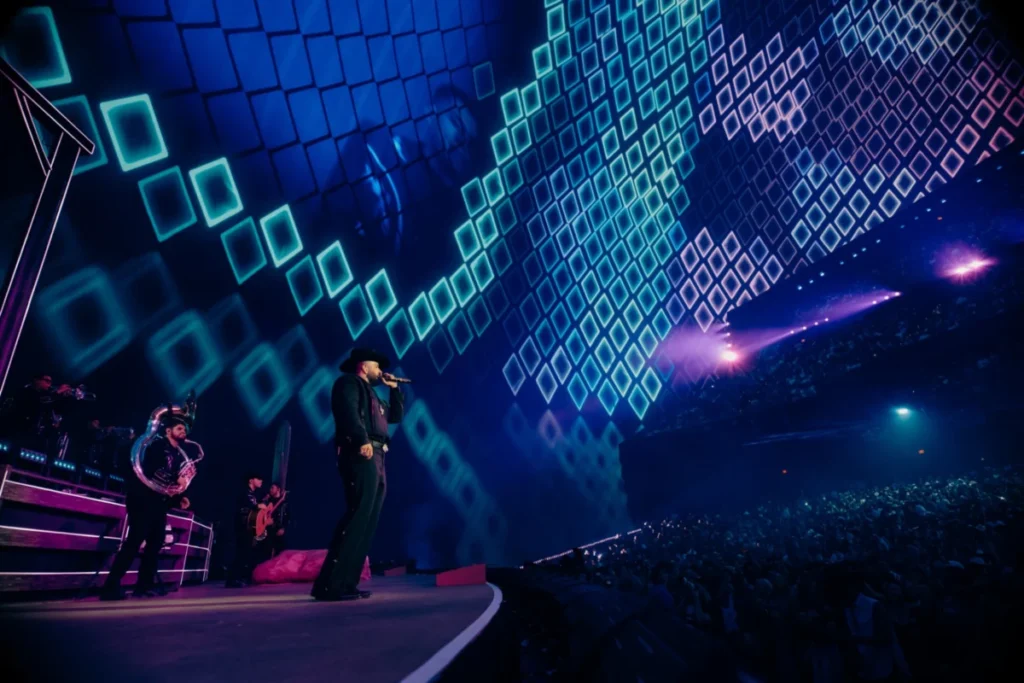

Carin León made history on Friday, September 11, 2026, stepping onto the awe-inspiring stage of the Las Vegas Sphere for the second weekend of his groundbreaking residency. The Mexican music sensation commanded an ecstatic audience of 20,000 fans, delivering an immersive performance that seamlessly blended cutting-edge visual technology with deeply traditional cultural expressions. This triumphant return followed a tumultuous 24 hours for the artist, who had been forced to cancel his scheduled performance the previous night due to unforeseen logistical and travel complications. Despite initial social media backlash stemming from the last-minute cancellation—which notably coincided with scheduling adjustments involving fellow artist Pepe Aguilar—León let his artistry speak for itself, ignoring the online controversy and focusing entirely on delivering a transcendent live experience.
The Main Facts of the Residency and the Historic Performance
Promptly at 8:30 p.m. local time, the 37-year-old artist emerged from the shadows to the roar of a packed house, removing his signature hat in a humble gesture of gratitude toward his supporters. Opening his set with the passionate exclamation, “¡Que viva México y que viva Hermosillo!” León established an atmosphere of national pride and regional identity that would anchor the entire evening. As the first Latino artist to headline a solo concert series at the architectural marvel that is the Las Vegas Sphere, León utilized the venue’s hyper-advanced 16K wrap-around LED screen and state-of-the-art spatial audio system to transport the audience directly into the Sonoran desert.
The production value was staggering. Throughout the night, hyper-realistic visuals towered over the crowd, projecting iconic imagery of the Hermosillo Cathedral, the historic Cerro de la Campana, native desert flora, and fauna such as coyotes howling into the night. Dressed impeccably in a tailored black suit paired with matching boots and his trademark hat, León created an intimate cultural oasis inside one of the world’s most modern technological venues. The performance successfully married traditional Mexican folkloric aesthetics with the frontier of digital concert production, cementing León’s status as a visionary global ambassador for regional Mexican music.
A Detailed Chronology of Events

The days leading up to León’s second weekend at the Sphere were marked by intense scheduling drama and public relations hurdles. Understanding the exact sequence of events provides vital context to the climate of the September 11 concert:
- September 4, 2026: Carin León officially kicks off his highly anticipated seven-show residency at the Las Vegas Sphere, drawing widespread critical acclaim for his innovative use of the venue’s next-generation immersive capabilities.
- September 10, 2026: Just hours after announcing upcoming 2027 Sphere dates produced by AEG for Mexico’s Independence Day celebrations (scheduled for September 16-18, 2027), León is forced to cancel his Thursday night Sphere performance due to sudden airplane and travel mishaps. The cancellation sparks widespread discussion across digital platforms and draws temporary scrutiny from disappointed ticket holders.
- September 11, 2026: León bounces back with zero public fanfare regarding the previous night’s cancellation, taking the stage at 8:30 p.m. for a masterclass in live performance. The evening features emotional tributes, a dedicated memorial segment, and surprise guest appearances by Pepe Aguilar and José Guadalupe Esparza.
- September 12-13, 2026: The remainder of the second residency weekend proceeds as planned, further solidifying the commercial and cultural viability of regional Mexican music within avant-garde performance spaces.
Supporting Data and Technological Integration
The partnership between Carin León and the Las Vegas Sphere represents a massive milestone for Latin music economics and production scale. The Sphere, which cost an estimated $2.3 billion to construct, features a 160,000-square-foot interior display plane that wraps up, over, and around the audience. For León’s residency, creative directors utilized this canvas to project custom-designed, high-definition cultural landscapes that honor the state of Sonora.
Furthermore, the economic implications of a Latino artist anchoring a multi-date residency at the venue are profound. Historically dominated by legacy rock acts, electronic dance music DJs, and pop superstars from the Anglo-American market, the Sphere’s embrace of Latin music pioneers like León signals a fundamental shift in touring demographics. With promoters like AEG heavily investing in extended residencies—including León’s newly announced 2027 Independence Day run—Latin music is proving capable of sustaining massive, high-tech destination events that rival any mainstream pop or rock production in Las Vegas.
Official Responses, Special Guests, and Emotional Highs
While León chose not to directly address the prior night’s travel cancellation from the stage, the warmth of the audience spoke volumes. Fans readily forgave the disruption as the artist navigated a deeply emotional setlist. One of the evening’s most poignant segments occurred during a portion of the show titled “La Caverna Sagrada” (The Sacred Cavern). As León performed his hit single “Cuando la vida sea trago,” the Sphere’s colossal screens transformed into an altar-like memorial adorned with flickering candles and photographs of deceased loved ones, creating a shared moment of collective remembrance and catharsis for the 20,000 attendees.

The emotional resonance of the evening was further elevated by two monumental surprise guest appearances that bridged generational divides within Mexican music. First, León welcomed legendary balladeer Pepe Aguilar to the stage, introducing him reverently as “one of my greatest inspirations in music.” The duo traded vocals on an emotional rendition of their collaborative track “Lamentablemente,” followed by Aguilar’s timeless classic “Por mujeres como tú.” The performance culminated in a warm, fraternal embrace, with León leaning into the microphone to exclaim, “¡Cómo te quiero, cabrón!”—a moment that sent waves of adoration through the crowd.
Moments later, the mood shifted to pure nostalgic celebration with the arrival of José Guadalupe Esparza, the iconic frontman of Grupo Bronco. León expressed his lifelong admiration for the Tejano and grupero pioneer, sharing a deeply personal anecdote with the audience: “My beautiful people, because at the same time I was learning to say ‘dad,’ I was also saying ‘Bronco.’ Long live Maestro Lupe Esparza, here with us tonight!” The pairing delivered a medley of beloved anthems, including “Si te vuelves a enamorar,” “Oro,” and “Libros tontos,” turning the high-tech arena into a massive, communal dance hall. Throughout these collaborations, León maintained a profound connection with his supporters, frequently pausing to sign hats and albums, collect and proudly wave a fan-handed Mexican flag, and record personal videos for his global digital community.
Broader Industry Impact and Strategic Implications
Carin León’s successful execution of his Las Vegas residency highlights a broader, irreversible evolution in the global music industry. Regional Mexican music—encompassing genres like norteño, banda, sierreño, and mariachi—has transitioned over the past half-decade from a niche or strictly regional market into a dominant force on international charts. Artists like León, Peso Pluma, and Grupo Frontera have systematically dismantled language and cultural barriers, proving that Spanish-language traditional music can command the world’s most prestigious and technologically advanced stages.
The decision by AEG and Sphere Entertainment to invest heavily in Latin residencies underscores the undeniable purchasing power and dedicated engagement of Latin music consumers. Destination concerts in Las Vegas have traditionally served as major economic drivers, particularly around Mexican Independence Day celebrations in mid-September. By securing dates through 2027, León and his production team are not merely booking a concert series; they are establishing a permanent cultural institution on the Las Vegas Strip, ensuring that Mexican heritage, folklore, and modern artistic innovation occupy a premier space on the global entertainment calendar for years to come.