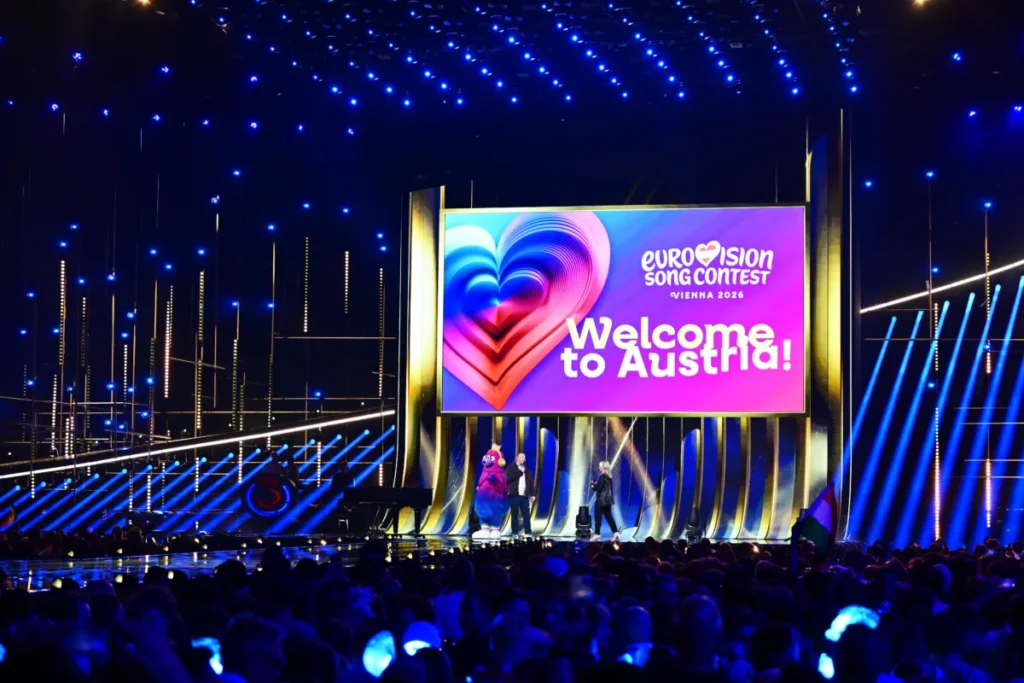

Vienna, Austria – In a night that blended electrifying musical performances with palpable geopolitical tension, Bulgaria secured its first-ever Eurovision Song Contest title on Saturday, culminating in a dramatic final showdown with Israel. The victory, spearheaded by pop sensation Dara and her infectious dance-hall anthem "Bangaranga," defied pre-contest odds and captivated an estimated 160 million viewers worldwide, marking a significant milestone for the Balkan nation. The 67th edition of the iconic pan-European music competition, hosted in Vienna’s Wiener Stadthalle, was less a mere celebration of song and more a complex tapestry woven with threads of artistic expression, national pride, and contentious international relations.
The Unlikely Champion: Bulgaria’s Historic Ascent
Dara, whose full name is Darina Yotova, delivered a vibrant and captivating performance of "Bangaranga," a track that resonated deeply with both professional juries and the televoting public. Sitting outside the top five favorites according to oddsmakers leading into the final, Bulgaria’s triumph was a testament to the song’s universal appeal and Dara’s compelling stage presence. The enigmatic title "Bangaranga," as Dara explained during the show, encapsulates "the feeling that everybody gets in themselves the moment you choose to lead through love and not fear." This message of unity and positivity, delivered through a pulsating rhythm and dynamic choreography, clearly struck a chord, propelling Bulgaria to a dual victory in both the overall jury vote and the popular vote among the 25 finalists.
For Bulgaria, a nation that first joined Eurovision in 2005, this win represents a culmination of years of participation, often marked by struggles to advance past the semi-final stages. Prior to this year, the country had only qualified for the grand final five times. The victory not only elevates Dara’s international profile but also shines a global spotlight on Bulgarian music and culture, promising significant cultural and economic benefits as the nation prepares to host the prestigious event next year. The sheer jubilation from the Bulgarian delegation and fans was a powerful counterpoint to the underlying tensions that had permeated much of the contest week, underscoring the contest’s primary mission as a unifying cultural platform.
A Geopolitical Nailbiter: Israel’s Contentious Journey
While Bulgaria celebrated its historic win, the narrative of the evening was undeniably shaped by the contentious participation of Israel. In a year marked by widespread boycotts and heckling over the country’s involvement, Israel’s representative, Noam Bettan, and his rousing toxic-love story anthem "Michelle," became a focal point of both support and protest. The song itself, co-written by Nova Massacre survivor Yuval Raphael (who also secured a large public vote section in the previous year’s contest), was interpreted by some as a metaphor for the fractious relationship between Jews and Europe, adding layers of complexity to its reception.
The drama reached its zenith during the popular vote reveal. After finishing eighth in the jury vote, Israel surged dramatically into the lead midway through the televoting segment, holding that precarious position until the very last moment. The split-screen image of Noam Bettan alongside Bulgaria’s Dara, as the final national tallies were announced, intensified the already high stakes. The backdrop was a cacophony of contrasting sounds: boos from segments of the audience juxtaposed with fervent Jewish-solidarity calls of "Am Yisrael Chai" ("The people of Israel live"). This moment encapsulated the entire contest’s unique blend of musical competition and stark geopolitical realities, as millions held their breath awaiting the ultimate victor. Israel, a long-standing participant since 1973 and a nation seeking its fifth Eurovision title, ultimately finished a respectable second, a testament to the public appeal of Bettan’s performance despite the surrounding controversy.
The Grand Spectacle in Vienna: Hosting Under Scrutiny
The decision to host the 67th Eurovision Song Contest in Vienna, Austria, came with its own set of logistical and security challenges, particularly given the heightened geopolitical climate. The Wiener Stadthalle transformed into a dazzling arena for the grand final, welcoming representatives from 25 countries. However, the path to the final was not without turbulence; five countries notably boycotted the event in protest of Israel’s participation, reflecting broader international sentiments.
In anticipation of potential disruptions and security threats, Vienna deployed an unprecedented security apparatus. This included a force of 500 private security personnel, the installation of 180 new surveillance cameras, the deployment of counter-drone technology, and sniffer dogs. Furthermore, in a rare international collaboration for a cultural event, the city teamed up with an FBI task force in New York to proactively monitor and mitigate cyber threats. These extensive measures underscored the seriousness with which Austrian authorities and the European Broadcasting Union (EBU) approached the event, ensuring the safety of participants, attendees, and the smooth running of the broadcast. The robust security presence, while necessary, also served as a stark reminder of the global tensions that now frequently intersect with major international events, even those primarily dedicated to cultural exchange.
Behind the Scenes: The Eurovision Phenomenon
The Eurovision Song Contest, first held in 1956, was conceived as a technological experiment in cross-border television broadcasting and a means to unite war-torn Europe through music. Over the decades, it has evolved into one of the world’s longest-running and largest annual televised music events, celebrated for its flamboyant performances, diverse musical styles, and often unpredictable results. Governed by the European Broadcasting Union (EBU), the contest mandates that participating countries submit an original song to be performed live on television and radio. The voting system, a hybrid of national juries and public televoting, often leads to dramatic shifts in fortunes, as evidenced by this year’s final moments.
Eurovision’s massive viewership, consistently reaching hundreds of millions globally, underscores its profound cultural impact. It serves as a unique platform where nations, regardless of their political alignments, come together in a spirit of friendly competition. However, this very platform also makes it susceptible to becoming a stage for political expression and protest. The EBU consistently attempts to uphold its non-political stance, but the nature of national representation in such a high-profile international event inevitably invites scrutiny and can reflect prevailing geopolitical currents, as was strikingly clear in Vienna.
Other Contenders and Notable Performances
While Bulgaria and Israel dominated the headlines, other nations also left their mark on the contest. Romania, represented by the goth-attired physics graduate student Alexandra Căpitănescu, secured a commendable third place with her provocatively titled, yet artistically delivered, track "Choke Me." Despite the suggestive title, Căpitănescu’s performance was lauded for its unique blend of dark aesthetics and powerful vocals, defying easy categorization as a mere "sex song."
Meanwhile, several pre-final favorites, including Finland, Australia, and Greece, unexpectedly finished outside the top three. Finland, often a strong contender with innovative entries, and Australia, a guest participant since 2015 that has consistently impressed, found themselves unable to capture the widespread support needed to climb the leaderboard. Greece, another nation with a strong Eurovision track record, also fell short of expectations. This outcome further highlighted the unpredictable nature of Eurovision, where public sentiment and jury preferences can swing dramatically, often favoring underdogs or unexpected musical styles.
Implications and The Road Ahead
Bulgaria’s triumph not only grants the nation its first Eurovision trophy but also confers upon it the immense honor and significant logistical challenge of hosting the next contest. Preparing for Eurovision 2025 will involve substantial investment in infrastructure, tourism, and event management, presenting a unique opportunity for Bulgaria to showcase its culture, hospitality, and burgeoning creative industries on a global stage. This could lead to a significant boost in tourism, foreign investment, and national pride, echoing the transformative impact hosting has had on previous winners.
For Dara, the victory is a career-defining moment, propelling her from a national pop star to an international sensation. Her song "Bangaranga" is poised to become a global hit, carrying its message of "love over fear" to an even wider audience.
The 67th Eurovision Song Contest also serves as a poignant reminder of the delicate balance the EBU must strike between celebrating music and navigating the complex landscape of international politics. The controversies surrounding Israel’s participation will undoubtedly prompt further discussions within the EBU regarding future participation criteria and how to manage geopolitical sensitivities without compromising the contest’s core values of unity and cultural exchange. As the dust settles in Vienna, the memory of a truly historic and tumultuous Eurovision edition will endure, setting a high bar for the excitement and challenges that await in Bulgaria next year. The event once again proved its enduring power to entertain, provoke, and unite millions across the continent and beyond.