
Diplomatic Context and the Significance of the Hague Reception
The reception in The Hague occurs at a time of deepened cooperation between the Netherlands and Germany. As the two largest economies in the North Sea region, the nations share critical interests in renewable energy transition, European security, and cross-border infrastructure. President Frank-Walter Steinmeier’s visit to the Netherlands is part of a broader effort to reinforce the "Benelux-German" axis within the European Union.
The Hague, known as the international city of peace and justice, provides the backdrop for these high-level exchanges. The German Ambassador’s residence frequently serves as a neutral yet prestigious ground for "soft diplomacy," where heads of state can interact outside the rigid confines of parliamentary sessions. The presence of King Willem-Alexander and Queen Máxima underscores the importance the Dutch House of Orange-Nassau places on maintaining a seamless relationship with the German presidency, a role that, while largely ceremonial in Germany, carries immense moral and symbolic weight.
Chronology of the State Engagement
The reception followed a series of official meetings earlier in the day, during which President Steinmeier and King Willem-Alexander discussed regional stability and the ongoing integration of Dutch and German military units—a unique level of defense cooperation within NATO.
- Morning Arrival: President Steinmeier and First Lady Büdenbender arrived in The Hague, receiving an official welcome that emphasized the "special relationship" between the two countries.
- Bilateral Talks: The afternoon was dedicated to discussions regarding the "Green Hydrogen" corridor, a joint venture aimed at transporting sustainable energy from Dutch ports to German industrial centers.
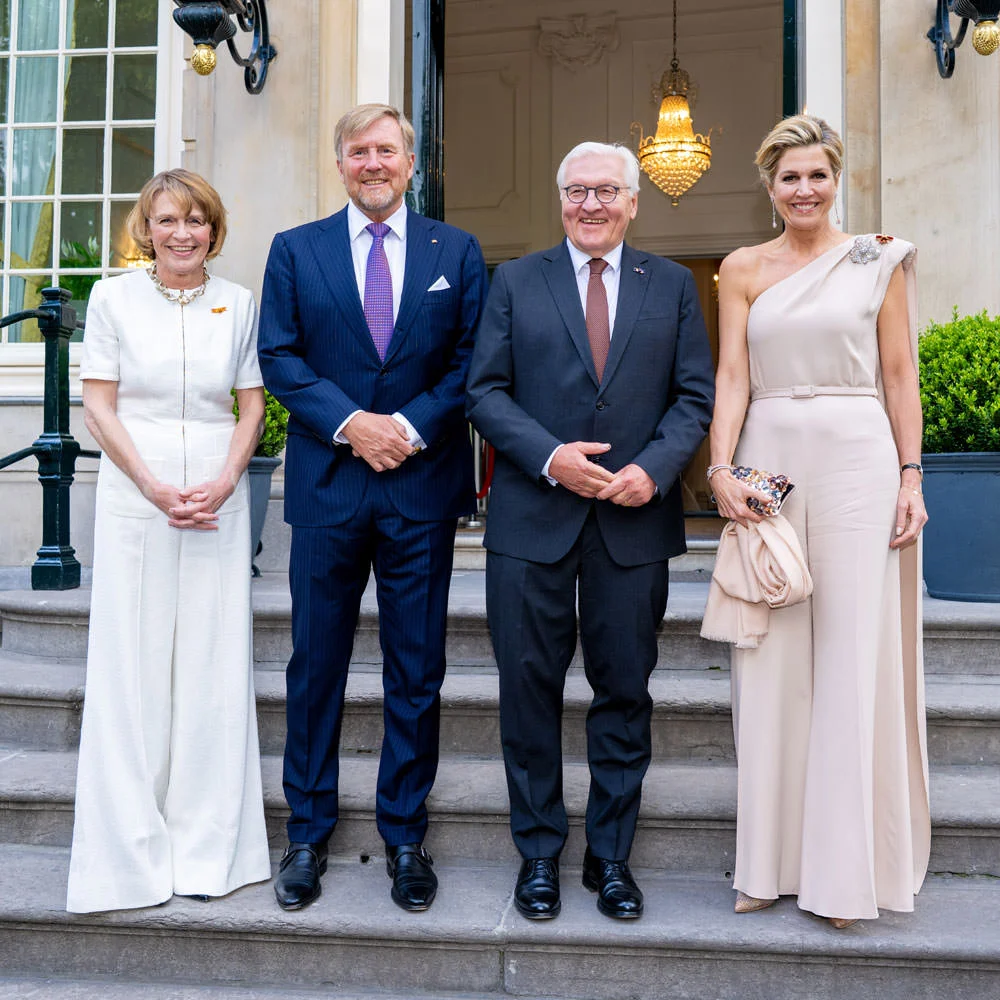
- The Evening Reception: The event at the Ambassador’s residence commenced in the early evening. It was designed as a social "return" event, a traditional gesture where the visiting head of state hosts the local monarchs to express gratitude for their hospitality.
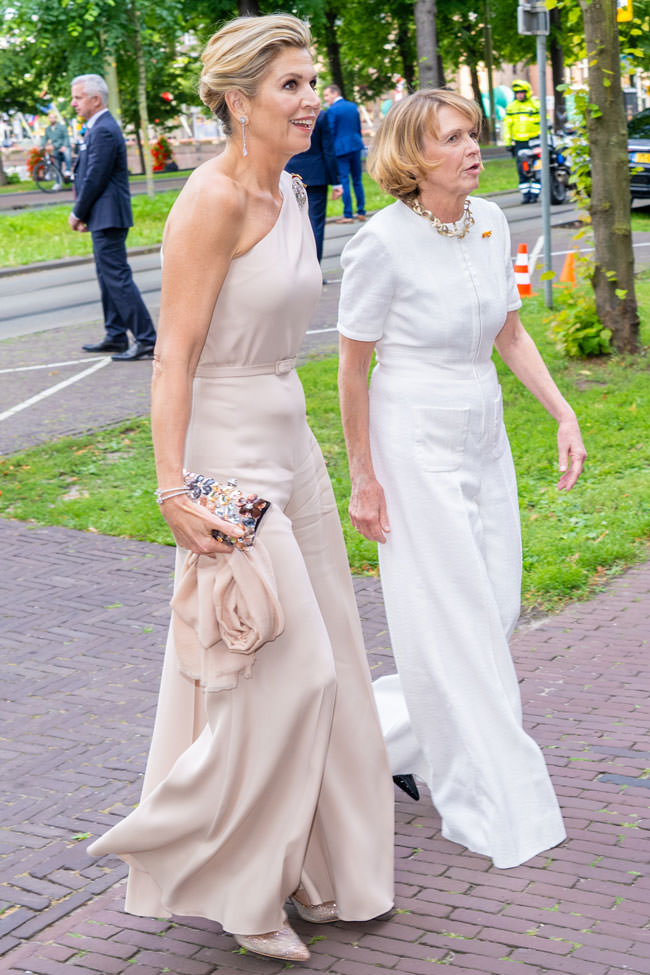
- Fashion as Communication: It was during this evening event that the notable shift in attire was observed. Queen Máxima arrived in a bespoke Natan Couture ensemble, while First Lady Büdenbender chose a minimalist white jumpsuit, signaling a shared aesthetic of modern professionalism.
Analysis of Royal and Diplomatic Attire
The choice of jumpsuits by two of Europe’s most prominent public figures is more than a fashion statement; it reflects a broader trend toward the modernization of the monarchy and the professionalization of the role of the First Lady. In previous decades, royal protocol strictly dictated the use of day dresses or evening gowns for such receptions.
Queen Máxima’s Natan Couture Ensemble
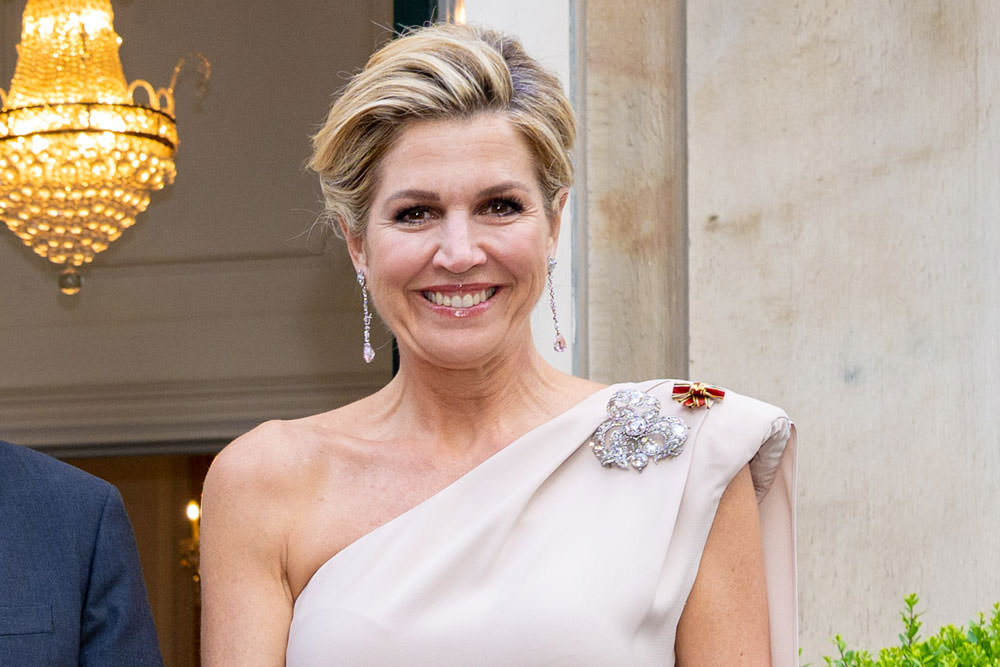
Queen Máxima, known for her support of Benelux designers, wore the "Ocelia" jumpsuit from the Spring 2024 collection of Natan Couture. Designed by Edouard Vermeulen, the piece is crafted from silk crepe and features an asymmetrical neckline with an integrated train. The structural elements of the garment, including the pronounced shoulder padding and a high-waisted belt, project an image of strength and contemporary elegance.
To complement the avant-garde silhouette, the Queen styled the look with:
- Anna Cecere Embellished Satin Clutch: A choice that added a touch of intricate texture to the solid-colored silk.
- Gianvito Rossi Pumps: A staple in royal wardrobes, chosen for their classic profile.
- Historical Jewelry: The Queen incorporated a diamond brooch from the royal vaults, a practice used to bridge the gap between modern fashion and the historical continuity of the House of Orange.
First Lady Elke Büdenbender’s Professional Aesthetic
First Lady Elke Büdenbender, a career judge who has maintained her professional identity alongside her ceremonial duties, opted for a white jumpsuit featuring bell-bottom trousers. This choice aligned with her established public image of pragmatic elegance. By matching the Queen’s choice of a jumpsuit, the First Lady contributed to a visual narrative of parity and mutual understanding between the Dutch and German delegations.
Supporting Data: The Dutch-German Economic Powerhouse
The symbolism of the meeting is backed by substantial economic data. Germany is the Netherlands’ most important trading partner, with bilateral trade exceeding €200 billion annually.
- Export/Import Dynamics: Approximately 20% of all Dutch exports are destined for Germany, primarily in the sectors of machinery, chemicals, and food products.
- Energy Cooperation: The two nations are currently developing the "Delta Rhine Corridor," a massive infrastructure project involving pipelines for hydrogen and CO2, which is central to the European Green Deal.
- Investment: German companies are among the largest employers in the Netherlands, particularly in the logistics and manufacturing sectors located in the border provinces and the Port of Rotterdam.
The reception at the Ambassador’s residence provides the social glue that facilitates these complex economic negotiations. By fostering personal rapport between the heads of state and their spouses, both nations ensure that the diplomatic channels remain open and cordial.
Official Responses and Inferred Implications
While official statements from the Royal House and the German Presidency focused on "shared values" and "European unity," analysts suggest the informal nature of the reception—evidenced by the relaxed yet chic dress code—points to a high level of comfort between the two administrations.
A spokesperson for the Dutch Ministry of Foreign Affairs noted that "the warmth of the reception at the German residence reflects the seamless nature of our current bilateral relations. When the heads of state can meet in such an atmosphere, it trickles down to more effective cooperation at the ministerial level."
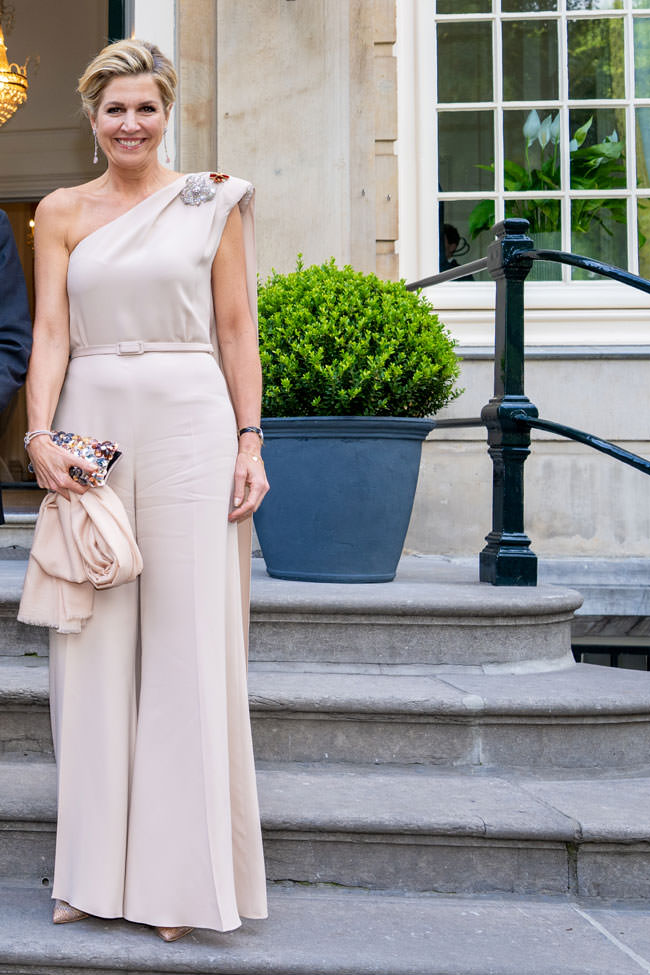
Furthermore, the "jumpsuit diplomacy" observed has been interpreted by cultural historians as a deliberate move to make the monarchy appear more accessible and aligned with contemporary professional life. Queen Máxima, in particular, has frequently used her platform to promote economic empowerment and financial inclusion, and her choice of a powerful, modern silhouette reinforces this mission.
Broader Impact on International Protocol
This event is likely to influence future diplomatic gatherings across Europe. As royal houses in the UK, Spain, and Scandinavia look to balance tradition with 21st-century relevance, the successful execution of a "jumpsuit reception" in The Hague sets a precedent. It demonstrates that formal respect and diplomatic gravity can be maintained without adhering to mid-20th-century fashion constraints.
The interaction between Queen Máxima and First Lady Büdenbender also highlights the evolving role of the "consort" or "spouse" in international relations. No longer relegated to the background, these figures are increasingly seen as active participants in the branding of their nations. Through their choice of designers and the subversion of traditional styles, they communicate messages of innovation, sustainability, and regional solidarity.
Conclusion of the Visit
As President Steinmeier and First Lady Büdenbender conclude their engagement in the Netherlands, the images from the German Ambassador’s residence remain the defining visual of the trip. The meeting underscored that while the machinery of government operates on treaties and trade agreements, the spirit of diplomacy is often carried by the symbolic gestures of those at the very top. The reception in The Hague was a testament to the fact that the relationship between the Netherlands and Germany remains one of the most stable and forward-looking partnerships in the modern global landscape.