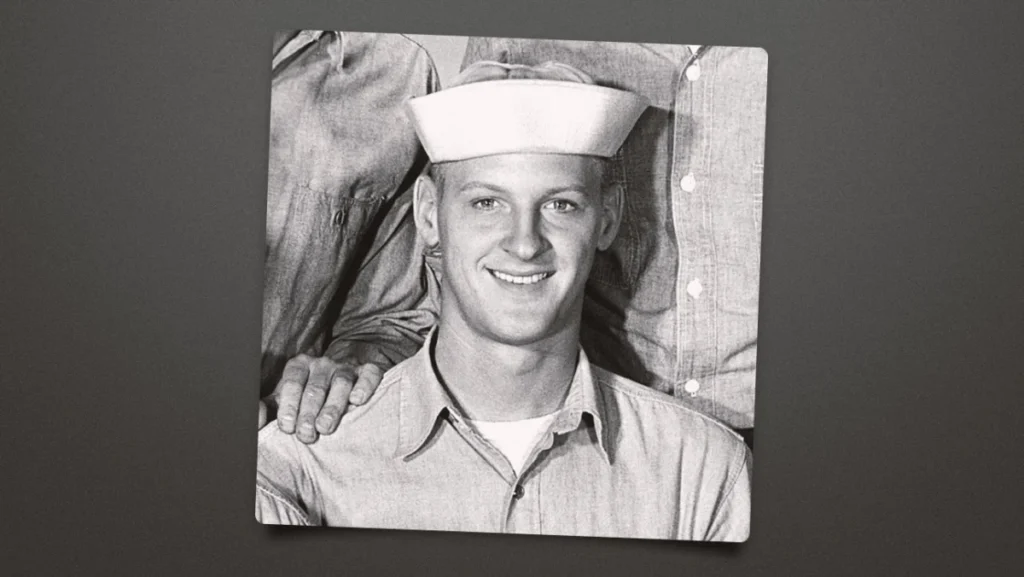

John Robert Wright Jr., widely known by his professional moniker Bobby Wright—the multi-talented entertainer who seamlessly bridged the worlds of classic television sitcoms and traditional country music—has passed away at the age of 84. His family formally announced that Wright died on Tuesday at his long-time residence in Madison, Tennessee. As a beloved fixture of 1960s television, Wright achieved widespread syndication fame playing the soft-spoken radio operator Willy Moss on ABC’s hit World War II naval comedy McHale’s Navy. Beyond his television career, he carved out a respectable, enduring niche in the country music industry, scoring 21 charting singles on the Billboard Hot Country Songs chart throughout the late 1960s and 1970s. Born into country music royalty as the son of pioneering superstars Kitty Wells and Johnnie Wright, Bobby Wright spent his entire life surrounded by the rich heritage of Americana music before leaving an indelible mark on both the small screen and the recording studio.
Early Life and Musical Heritage in Appalachia
The foundational years of Bobby Wright’s life were deeply rooted in the post-World War II country music landscape. Born on March 30, 1942, in Charleston, West Virginia, he was one of three children born to Johnnie Wright and the legendary Kitty Wells. His father was an influential touring artist who achieved massive acclaim performing across the American South as part of the dynamic country duo Johnnie & Jack, alongside partner Jack Anglin. Frequently joining them on the road and on stage was Kitty Wells, whose soaring vocals and pioneering artistry would eventually earn her the designation of country music’s very first female superstar.
Music was not merely a hobby in the Wright household; it was a way of life. By the tender age of eight, young Bobby was already demonstrating a natural musical inclination. He began singing alongside his famous parents and accompanying them on the guitar during live broadcasts of the celebrated country music radio program Louisiana Hayride, transmitted out of Shreveport, Louisiana. These early performances on legendary radio waves provided him with an invaluable apprenticeship, allowing him to share the stage with many of the genre’s earliest architects.
In 1958, the Wright family relocated to Nashville, Tennessee, a pivotal move that coincided with his parents securing a prestigious, long-term spot as headliners on the Grand Ole Opry. Settling into the Nashville area, Wright attended Madison High School. Demonstrating that he was a well-rounded adolescent rather than a cloistered child star, he immersed himself in athletics, lettering in baseball, basketball, and football. However, his musical education continued unabated behind the scenes, where he quietly mastered not only the guitar but also the bass, trumpet, and drums, preparing himself for a multifaceted career in the entertainment industry.
The Hollywood Breakthrough: McHale’s Navy
Wright’s transition from regional country music progeny to a recognizable national television face happened somewhat serendipitously during the early 1960s. He traveled out to Hollywood to audition for noted television director Peter Tewksbury—renowned for his work on such classic programs as Father Knows Best and My Three Sons. Tewksbury was actively searching for a fresh-faced Southern youngster who possessed authentic guitar-playing abilities for a new television project. Although that specific pilot ultimately failed to secure a green light and never moved forward to series production, fate intervened.
A casting producer working on a burgeoning, high-profile ABC sitcom titled McHale’s Navy happened to view Wright’s screen test. Recognizing his natural charm, youthful demeanor, and distinct persona, the production team cast him as Willy Moss, the earnest, dependable radio operator aboard the U.S. Navy PT-73 patrol boat operating in the Pacific theater during World War II. Credited professionally on the program as John Wright, the young actor found himself surrounded by seasoned comedic heavyweights, including the iconic Ernest Borgnine in the title role of Lieutenant Commander Quinton McHale, alongside comedic virtuosos Joe Flynn and Tim Conway.
McHale’s Navy proved to be an instant cultural phenomenon, striking a chord with television audiences recovering from the anxieties of the Cold War by offering lighthearted, slapstick camaraderie against a historical backdrop. The program enjoyed a successful four-season run on ABC from 1962 to 1966. Demonstrating his reliability and integral place within the fictional ensemble, Wright appeared in all 138 episodes produced during the series’ run. Furthermore, the immense popularity of the television program translated directly to the silver screen, allowing Wright to reprise his beloved role in two feature-length film adaptations: McHale’s Navy in 1964 and McHale’s Navy Joins the Air Force in 1966.
Transition Back to Country Music and Chart Success
Even as the grueling production schedule of a hit weekly television series demanded his primary attention, Wright never truly strayed far from his musical roots. While McHale’s Navy was still actively filming new episodes in Hollywood, he carved out time to return to the recording studio, notably collaborating musically with his legendary mother on one of her studio albums released in 1965.
Following the official cancellation and conclusion of McHale’s Navy in 1966, Wright made a deliberate and concerted pivot back toward his first love: commercial country music. Over the next dozen years, spanning from 1967 through 1979, he signed recording contracts with several major record labels, including Decca Records, ABC Records, and United Artists Records. Operating firmly within the Nashville sound and country-pop crossover movements of the era, Wright cultivated a dedicated listenership and established a steady presence on the national music charts.
During this prolific recording period, Wright placed an impressive 21 singles on the authoritative Billboard Hot Country Songs chart. His career-defining musical moment arrived in 1971 with the release of the gentle, melodic ballad "Here I Go Again." The track resonated deeply with country music radio programmers and listeners alike, steadily climbing the charts until it peaked at a respectable No. 13 position, cementing his status as a legitimate recording artist in his own right, separate from his parents’ formidable shadow.
Other notable charting singles and regional radio favorites throughout his discography included "Lay Some Happiness on Me," "Everybody Needs a Rainbow," a heartfelt country cover version of Terry Jacks’ international pop smash "Seasons in the Sun," "Lovin’ Someone on My Mind," and "I’m Turning You Loose." These tracks showcased his smooth vocal delivery, which favored understated emotional delivery over bombastic honky-tonk theatrics.
Later Acting Endeavors and Family Legacy
Although McHale’s Navy remained the defining acting credit of his resume, Wright occasionally dipped his toes back into television and film acting following the show’s conclusion. In 1966, he guest-starred in an episode of the short-lived CBS Western television series Pistols ’n’ Petticoats, portraying a frontier robber alongside star Anne Sheridan. Years later, in 1974, he made an appearance in the feature film Catch the Black Sunshine, which starred genre icons Ted Cassidy and Chris Robinson.
Yet, his most enduring professional and personal fulfillment continued to revolve around his immediate family. For numerous years, Wright joined forces with his famous parents and his two sisters, Ruby and Carol Sue, to star in the widely syndicated television program known as The Kitty Wells Johnnie Wright Family Show. The weekly variety program brought traditional country music, gospel harmonies, and familial warmth directly into American living rooms. Furthermore, Wright maintained an active touring schedule as an integral member of his parents’ road band and revue, traveling across North America until Johnnie Wright and Kitty Wells officially retired from active touring and the road in 2007.
The passing of Bobby Wright marks another poignant chapter in the fading history of classic country music’s golden era. His mother, Kitty Wells, who passed away in 2012, remains an immortal figure in American cultural history. As a proud member of the Country Music Hall of Fame, Wells shattered long-standing gender barriers in a heavily male-dominated industry to become country music’s first undisputed female superstar. Between 1952 and 1965, she accumulated nearly three dozen Top 10 hits, most notably her defiant, socio-culturally groundbreaking 1952 No. 1 smash anthem, "It Wasn’t God Who Made Honky Tonk Angels," a song that boldly challenged prevailing patriarchal double standards in country music storytelling.
Broader Impact and Tributes from the Entertainment Community
In the wake of his passing, tributes have begun trickling in from historians, classic television enthusiasts, and traditional country music aficionados who remember Wright as a quintessential utility player of mid-century American entertainment. While many child or teen actors struggle to transition into adult normalcy or find themselves entirely consumed by the fleeting nature of television fame, Wright demonstrated a remarkable equilibrium. He balanced the fast-paced, high-pressure environment of a prime-time Hollywood sitcom with the humble, road-tested authenticity of the Nashville country music circuit.
Industry analysts note that performers like Wright represent a bridge between two distinct eras of American media consumption—the mid-century boom of network television syndication and the golden age of Nashville’s recording studios. By refusing to be pigeonholed exclusively as a sitcom actor or solely as a legacy country singer, he carved out a unique dual-threat career that allowed him to work alongside television legends like Ernest Borgnine and musical pioneers like his mother within the same lifetime.
Survivors and Final Arrangements
Bobby Wright is survived by a large and loving family who will carry forward his personal and artistic legacy. Among his survivors are his sister, Carol Sue; his beloved children, LeAnn and Kamela; and his grandchildren, Austin, Cassidy, Shelby, and Dalton. He also leaves behind a growing generation of great-grandchildren, including Hayden, Pazlee, Remi, Fletcher, and Axel. Additionally, he is survived by his nieces and nephews—Kitty, John Jr., David, Corrie, and Stephanie—as well as his former wife, Brenda, who remained a supportive figure throughout his life’s journey.
Details regarding memorial services or public celebrations of life are expected to be announced by the family in the coming days, with services anticipated to take place in the greater Nashville area, where Wright spent the majority of his adult life and contributed so profoundly to the cultural fabric of Tennessee’s entertainment community.