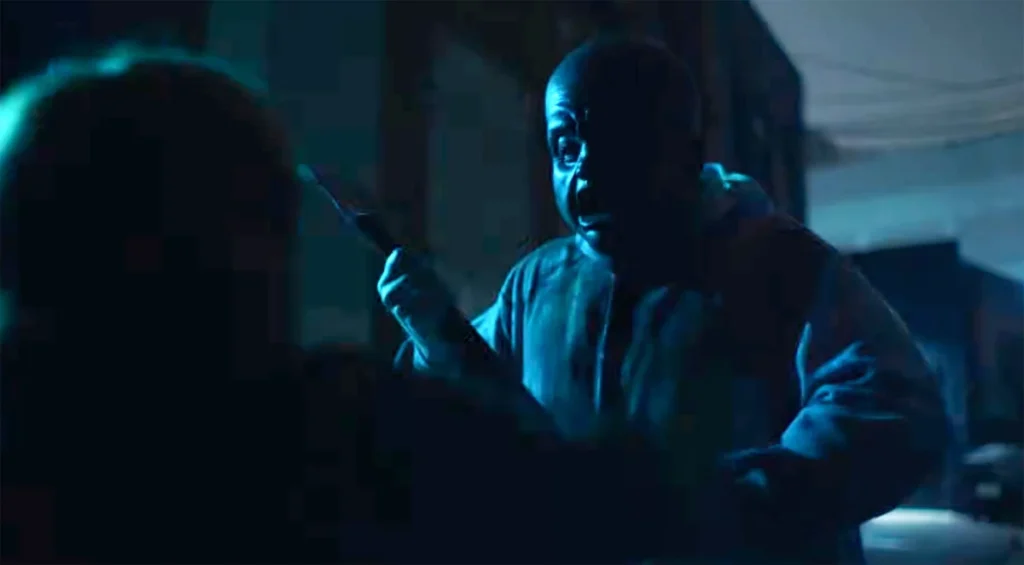

Brainstorm Media has unveiled the first teaser trailer for "Big Baby," a forthcoming meta horror-comedy helmed by filmmaker Spider One, known for his previous work including "Little Bites" and "Allegoria." The film, which premiered at the 2025 Screamfest Horror Film Festival, is slated for a direct-to-Video on Demand (VOD) release in early August 2026. The teaser offers a glimpse into the film’s unsettling premise, where the nightmares of a struggling horror screenwriter bleed into reality, manifesting as a terrifying killer known as "Big Baby."
The Genesis of a Nightmare: From Festival Circuit to VOD Release
"Big Baby" has been on the radar of horror enthusiasts since its premiere at Screamfest in 2025. The festival, a renowned platform for independent horror cinema, provided the initial showcase for Spider One’s latest directorial effort. Following its festival run, which also included screenings at other genre-specific events, Brainstorm Media has secured distribution rights, opting for a direct VOD release to reach a wider audience efficiently. The film is officially scheduled to become available on August 7th, 2026.
The narrative centers on Adam Lewis, a horror screenwriter whose creative process becomes dangerously intertwined with his subconscious. Plagued by vivid nightmares of a homicidal figure clad in a baby mask, Lewis finds inspiration for his next script. However, as the lines between his fictional creations and his waking life blur, he confronts the horrifying possibility that his envisioned killer, "Big Baby," may transcend the realm of fiction and embark on a real-world spree. This meta-narrative approach, where the act of storytelling directly influences reality, is a recurring theme in contemporary horror, tapping into anxieties about the power of media and the fragility of perception.
Spider One’s Distinctive Vision in Horror Cinema
Spider One, whose real name is Michael David Cummings, is no stranger to the horror genre. As the frontman for the industrial metal band Powerman 5000 and the elder brother of acclaimed filmmaker Rob Zombie, he brings a unique sensibility to his directorial projects. His filmography includes "Allegoria," "Bury the Bride," and the previously mentioned "Little Bites." His work is often characterized by a blend of the macabre, dark humor, and a distinct visual style, drawing from his background in music and a keen understanding of horror tropes.

"Big Baby" appears to continue this trajectory, promising a "haunting, bloody horror film packed with psychological dread." The teaser itself, released via YouTube, showcases a rapid-fire montage of unsettling imagery, punctuated by dialogue that hints at the film’s self-aware and darkly humorous tone. The line, "Wait—you can write whatever you want, and I can live! Sorry…" suggests a metatextual commentary on the creation and consumption of horror narratives.
Key Personnel and Production Insights
The film features a cast including Brandon Scott as the beleaguered screenwriter Adam Lewis, Krsy Fox, and Adam Marcinowski. Krsy Fox also serves as a producer on "Big Baby," alongside Spider One. Fox’s involvement as a producer is notable, given her own work in the horror sphere, including contributions to projects like "Terrifier 3." This collaborative effort between seasoned genre figures underscores the film’s commitment to delivering a compelling horror experience.
The production of "Big Baby" likely involved a meticulous approach to crafting its psychological and visceral elements. The meta-narrative structure requires careful balancing of suspense, gore, and thematic depth. The visual design of the titular killer, "Big Baby," is central to the film’s identity, and the teaser suggests a design that is both unsettling and potentially campy, fitting the horror-comedy subgenre.
Thematic Resonance and Genre Evolution
The concept of a killer inspired by a writer’s nightmares is not entirely novel in horror. However, "Big Baby" appears to lean into the meta-fictional aspect with a deliberate and perhaps even self-referential edge. This trend of meta-horror, which questions the nature of storytelling, audience engagement, and the very fabric of reality within a fictional world, has seen a resurgence in recent years. Films like "Scream" and "The Cabin in the Woods" have paved the way for narratives that deconstruct and play with established horror conventions.
"Big Baby’s" approach, as hinted by the teaser, seems to place a significant emphasis on the psychological toll of creation and the blurred boundaries between the artist and their art. The film’s exploration of a writer’s descent into madness, fueled by their own disturbing creations, taps into primal fears about losing control and the potential consequences of unchecked imagination.

Market Reception and Future Implications
The direct-to-VOD release strategy for "Big Baby" reflects a growing trend in the film industry, particularly for independent genre films. This approach allows for wider accessibility and potentially a quicker return on investment, bypassing the traditional theatrical distribution model. The success of such releases can significantly impact future distribution strategies for similar films.
The film’s performance on VOD platforms will be closely watched by industry analysts. A strong showing could further validate the viability of direct-to-consumer distribution for horror and independent cinema. Furthermore, the film’s reception could influence how meta-narratives and horror-comedy hybrids are approached by studios and filmmakers in the future. The "crazy teaser trailer" and the promise of a "bonkers new meta horror comedy" suggest that "Big Baby" aims to be a memorable and talked-about entry in the genre.
The presence of Spider One, a figure with a distinct artistic identity and a connection to prominent figures in the horror and rock music scene, also adds a layer of intrigue. His established fanbase, combined with the film’s genre appeal, could translate into significant initial viewership.
Analyzing the "Big Baby" Phenomenon
The character of "Big Baby," a maniacal killer in a baby mask, is a striking visual that immediately evokes a sense of uncanny valley and corrupted innocence. This archetype plays on deeply ingrained societal notions of childhood as a period of purity and vulnerability, subverting it with violence and malice. The juxtaposition of the infantile with the terrifying is a potent horror device, often used to create a sense of profound unease.
The film’s tagline, "Born to kill," further solidifies the killer’s seemingly predetermined and inescapable nature. This, combined with the screenwriter’s struggle to control his creation, raises questions about fate versus free will, and the extent to which individuals are products of their environment, their subconscious, or an inherent destiny.

The dialogue snippet from the teaser, "Wait—you can write whatever you want, and I can live! Sorry…", offers a glimpse into the film’s self-awareness. It hints at a potential exploration of the power of storytelling to grant agency, even to fictional entities, and the unintended consequences that can arise from such creative freedom. This meta-commentary suggests that "Big Baby" is not just a slasher film but also a commentary on the creative process itself and the relationship between creators and their audiences.
Broader Impact on the Horror Landscape
The release of "Big Baby" arrives at a time when the horror genre is experiencing a renaissance, with a diverse range of subgenres and stylistic approaches gaining traction. From elevated horror to slasher revivals and folk horror, audiences are demonstrating a voracious appetite for inventive and boundary-pushing content.
Spider One’s contribution, with its blend of meta-commentary, psychological dread, and potential for dark humor, fits within this evolving landscape. The film’s ability to attract attention through its unconventional premise and its established creative talent suggests a market ready for films that challenge traditional horror conventions.
The film’s success could also encourage further experimentation with meta-narratives in horror, pushing filmmakers to explore the inherent relationship between storytelling and reality in increasingly complex ways. The direct-to-VOD model for "Big Baby" also sets a precedent for how independent genre films can reach audiences, potentially democratizing the distribution process and fostering a more diverse ecosystem of filmmaking.
As August 7th, 2026, approaches, the horror community will be keenly awaiting the full release of "Big Baby." The teaser has effectively piqued interest, offering a tantalizing preview of a film that promises to be a unique and unsettling addition to the contemporary horror canon, a testament to the continued innovation and genre exploration within independent filmmaking.