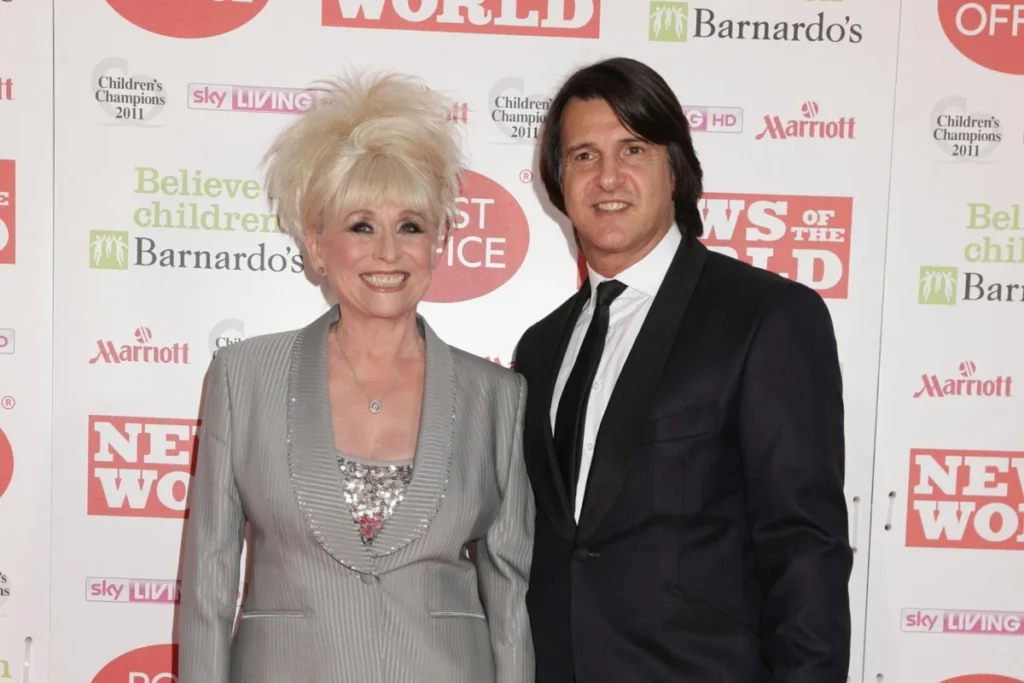

The fight against Alzheimer’s disease has found an enduring and vocal champion in Scott Mitchell, the widower of the iconic British actress Dame Barbara Windsor. Marking World Alzheimer’s Day on September 21, Mitchell has issued a poignant and urgent appeal for a paradigm shift in how the United Kingdom approaches dementia care, diagnostics, and clinical research. His advocacy, fueled by the memory of his late wife’s harrowing experience, aims to transform the political and scientific landscape surrounding the condition that the NHS identifies as the leading cause of dementia in the country.
The Personal Journey of a Public Legacy
Dame Barbara Windsor, beloved for her decades-long career in the Carry On films and her iconic portrayal of Peggy Mitchell in the BBC soap opera EastEnders, was diagnosed with Alzheimer’s disease in 2014. For the next six years, she and Scott Mitchell navigated the complex, often agonizing progression of the condition before her passing in 2020 at the age of 83.
Reflecting on those years, Mitchell has been remarkably candid about the emotional toll of the disease. "Alzheimer’s dementia is something I wouldn’t wish on my worst enemy," Mitchell stated. "It robs you of your loved ones in the most painful way possible." He emphasizes that his current activism is not a pursuit of personal accolades but a moral imperative born from the suffering he witnessed firsthand. By reframing his grief as a catalyst for systemic change, Mitchell has successfully moved the conversation beyond the private sphere of caregiving into the public arena of national health policy.

Chronology: From Private Diagnosis to Public Policy
The timeline of the couple’s involvement in dementia advocacy highlights a transition from personal management to national reform:
- 2014: Dame Barbara Windsor receives her Alzheimer’s diagnosis, marking the beginning of a private journey that would eventually inform national discourse.
- 2018: The couple makes the diagnosis public, using their platform to shed light on the realities of living with neurodegenerative disease.
- 2019: In a significant political intervention, Mitchell and Windsor delivered a letter to the-then Prime Minister Boris Johnson. The document, signed by thousands of supporters, implored the government to address the "devastating state" of dementia care in the UK.
- 2020: Dame Barbara Windsor passes away on December 10, aged 83.
- 2021–2022: Mitchell continues his partnership with Alzheimer’s Research UK, keeping the pressure on government bodies to increase funding for dementia research.
- 2023–2024: The launch of the Dame Barbara Windsor Dementia Mission represents a milestone in clinical infrastructure, focusing on accelerating the speed and efficacy of drug trials.
- September 2024: Mitchell marks World Alzheimer’s Day with a fresh appeal for increased clinical trials and a rejection of the "inevitability" narrative associated with aging and cognitive decline.
The Scientific Context: Why Research Matters
Alzheimer’s disease is a progressive neurodegenerative condition that fundamentally alters the structure and function of the brain. According to the NHS, it is the most common cause of dementia, characterized by the accumulation of abnormal proteins that disrupt neuronal communication. As the disease advances, it affects memory, executive function, and behavioral regulation, eventually leading to severe cognitive impairment.
The scientific community has, until recently, faced significant hurdles in developing disease-modifying therapies. However, as Mitchell pointed out in his recent address, the tide is beginning to turn. "It is not inevitable as we age," he noted, highlighting that advancements in preventative clinical trials and new pharmaceuticals capable of slowing the progression of the disease are finally entering the mainstream. The focus of the Dame Barbara Windsor Dementia Mission is specifically designed to capitalize on this momentum, streamlining the path from laboratory research to patient access.
Supporting Data and the Burden of Disease
The urgency of Mitchell’s appeal is underscored by stark epidemiological data. Alzheimer’s disease remains a leading cause of death in the United Kingdom. Estimates from the Alzheimer’s Society suggest that nearly one million people in the UK are currently living with some form of dementia. Projections indicate that this figure could rise to 1.6 million by 2040 if preventative and therapeutic measures are not significantly scaled up.

The economic and social burden is equally profound. Families currently bear the brunt of care costs, which are often catastrophic for households. The emotional labor provided by unpaid carers—like the role Scott Mitchell performed for years—is estimated to save the UK economy billions of pounds annually, yet these caregivers often operate without adequate systemic support.
Official Responses and the "Second Legacy"
Mitchell refers to his ongoing efforts, specifically The Dame Barbara Windsor Dementia Goals programme and The Barbara Alliance, as his wife’s "second legacy." By lobbying for more trials and funding, he is effectively creating a roadmap for future dementia management.
While government responses to the Dementia Mission have been positive, with various ministers acknowledging the need for a "moonshot" approach to neurodegeneration, advocates argue that the pace of funding remains insufficient relative to the scale of the crisis. Mitchell’s role has been that of a bridge-builder—connecting the human face of the disease with the cold, hard requirements of scientific infrastructure. His ability to maintain the momentum of the cause years after his wife’s passing has garnered widespread respect from the scientific community, including researchers at Alzheimer’s Research UK who view his voice as instrumental in keeping the condition at the forefront of the political agenda.
Broader Implications: A Shift in Societal Perception
The broader implication of Mitchell’s work is the destigmatization of dementia. For decades, the disease was often shrouded in shame or categorized as a "normal" part of the aging process. By speaking openly about the "painful journey" of caring for a loved one, Mitchell has encouraged a more empathetic and proactive public discourse.

Furthermore, his insistence that "we need to stop pretending it’s not happening" forces policymakers to treat dementia not merely as a social care issue, but as a critical public health priority on par with cancer or heart disease. The potential for early diagnostic tools—such as blood tests for Alzheimer’s biomarkers—means that the next generation may face a fundamentally different landscape than the one Dame Barbara Windsor encountered.
As World Alzheimer’s Day concludes, Mitchell’s message serves as a reminder that advocacy is a long-term commitment. By demanding "more funding, more research, more trials," he is positioning the fight against Alzheimer’s not as a tragic inevitability, but as a solvable challenge. The legacy of Dame Barbara Windsor, once defined by her unparalleled career on stage and screen, is now permanently intertwined with the fight to eradicate one of the most devastating health crises of the 21st century.
Looking Toward the Future
The path forward, as articulated by Mitchell and supported by medical experts, requires a multi-pronged approach. This includes:
- Investment in Diagnostics: Developing accessible, non-invasive tests to identify Alzheimer’s in its earliest stages, when interventions are most effective.
- Accelerating Clinical Trials: Reducing the bureaucratic barriers that often delay the testing of promising new drugs.
- Preventative Health: Increasing public awareness of lifestyle factors that may mitigate risk, while simultaneously funding research into the underlying genetic and environmental causes of the disease.
- Integrated Care: Ensuring that families are not left to manage the crisis in isolation, but are supported by a robust infrastructure that bridges the gap between medical treatment and long-term care.
Scott Mitchell’s relentless advocacy ensures that the conversation remains focused on the human stakes of the crisis. His call for change is a testament to the idea that, even in the face of profound loss, the pursuit of a cure is the most constructive response to a disease that seeks to strip away identity and memory. For the millions of families currently navigating the complexities of Alzheimer’s, Mitchell’s voice provides not only a call to action but a source of resilience in the ongoing battle against a formidable adversary.