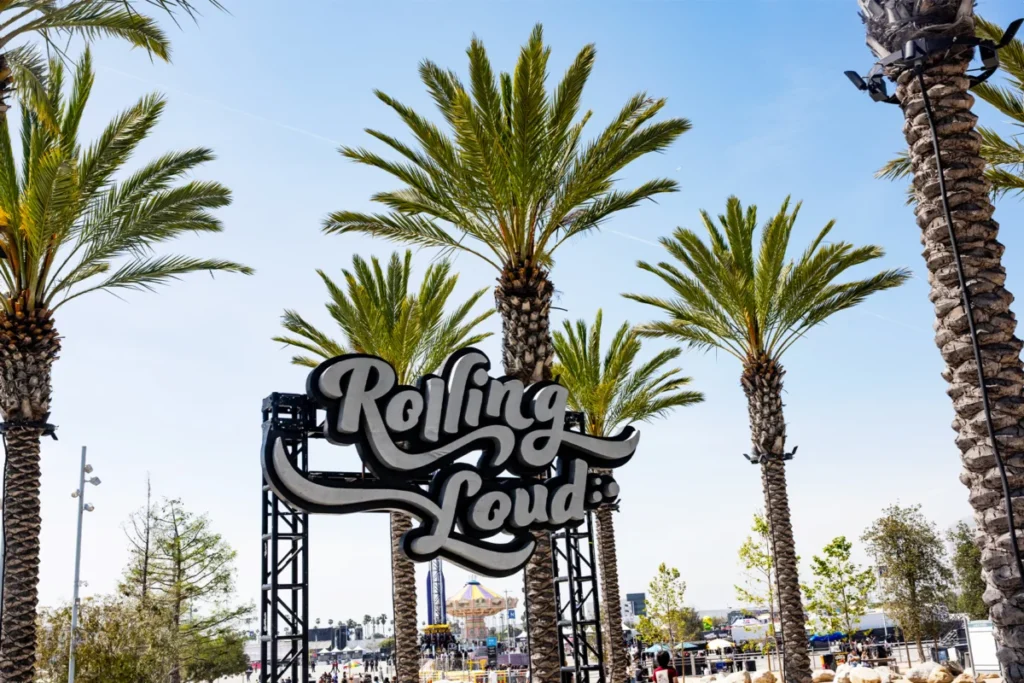

The live entertainment landscape continues to shift as promoters navigate economic fluctuations, changing consumer habits, and logistical hurdles. Amid these broader industry challenges, Rolling Loud—widely recognized as the preeminent hip-hop festival franchise in the world—has officially announced its return to Southern California. The three-day event is scheduled to take place from December 10–12, 2027, relocating back to the National Orange Show (NOS) Events Center in San Bernardino, California.
This upcoming iteration marks the eighth time the festival brand has hosted its flagship Southern California event since its inception. While the festival spent its recent years from 2023 to 2025 at Hollywood Park Grounds in Inglewood—drawing massive crowds and headliners such as Nicki Minaj, Playboi Carti, and Travis Scott—the decision to move back to the Inland Empire highlights a strategic shift toward maximizing fan experience, operational flexibility, and site logistics.
Strategic Relocation and the Appeal of San Bernardino
The decision to transition the festival back to the NOS Events Center is rooted in historical success and practical event management. San Bernardino previously hosted Rolling Loud in 2017 and 2021, cementing the venue as a dependable anchor for the brand’s West Coast operations.
According to Matt Zingler, co-founder and CEO of Rolling Loud, the choice was heavily influenced by the limitations and high costs associated with hosting massive multi-day events in major metropolitan centers like Los Angeles proper. Major urban venues often introduce severe logistical constraints, including strict noise ordinances, heavy traffic congestion, and elevated pricing models that trickle down to the consumer.
By utilizing the sprawling grounds of the NOS Events Center, organizers gain the physical space necessary to experiment with site layouts, introduce larger and more complex stage designs, and expand interactive brand activations. Zingler emphasizes that the Inland Empire boasts a dedicated, highly concentrated fanbase that has consistently supported the festival through its various iterations. Moving away from L.A. proper allows the festival to mitigate overhead costs while offering attendees a more expansive, less congested festival environment.
A Timeline of Global Expansion and Contraction
Since its founding in 2015 in Miami, Florida, Rolling Loud has evolved from a regional independent hip-hop showcase into a sprawling international enterprise. Over the past decade, the franchise has exported its brand to international markets across Europe, Asia, Oceania, and North America. Its footprint has spanned major global cities and regions, including New York, Northern California, Portugal, Australia, Canada, the Netherlands, Germany, Thailand, Austria, and India.

However, the international scaling of massive live music events is rarely linear. Earlier this year, festival organizers faced logistical setbacks that forced the cancellation of scheduled Australian dates in Sydney and Melbourne due to complications with local promotion partners. Publicly acknowledging the disappointment, organizers released a statement admitting that the setback was a significant blow to their international scheduling strategy.
Despite regional hurdles, the domestic pipeline remains robust. In May, the festival successfully took over Camping World Stadium in Orlando, Florida, featuring top-tier headliners such as Don Toliver, Playboi Carti, and NBA Youngboy. Organizers have already locked in dates for the next Florida installment, slated for May 7–9, 2027, reinforcing the brand’s commitment to its foundational domestic strongholds.
Navigating Market Competition and Economic Realities
The live music and festival sector has experienced significant volatility over the past five years, marked by pandemic-era disruptions, soaring production costs, tightening corporate sponsorships, and high-profile festival cancellations across the globe. Yet, Zingler maintains an assertive stance regarding Rolling Loud’s market position, asserting that the brand operates with virtually no direct competition within its specific musical ecosystem.
From a booking perspective, Zingler notes that few independent promoters or corporate festival conglomerates are currently investing heavily in dedicated urban and hip-hop lineups at scale. By maintaining a laser focus on rap culture, lifestyle branding, and fan engagement, Rolling Loud has insulated itself against broader industry contraction.
Zingler stresses that longevity in the festival business requires dynamic adaptation rather than stagnation. The core philosophy centers on aging alongside the core demographic while continuously capturing younger cohorts of music consumers. Without continuous creative renewal—ranging from stage production updates to merchandising strategies—long-running festival brands risk becoming obsolete.
International Footprint: The Growth of Rolling Loud India
A prime example of the brand’s adaptive international strategy is its expansion into South Asia. Rolling Loud India is set to return to Mumbai for its second consecutive year, running from December 12–13, following a successful debut that reportedly drew 65,000 attendees over two days.
The inaugural Mumbai festival served as an educational and cultural bridge for a local audience largely unfamiliar with large-scale American-style hip-hop productions. Organizers view the upcoming installment as an opportunity to scale capacity and refine the attendee experience based on lessons learned during the debut year.

Rather than deploying a rigid, cut-and-paste model across borders, Rolling Loud tailors its programming to regional music consumption habits. Because international markets digest and consume hip-hop differently than domestic audiences, lineup curation is adjusted to reflect local and regional preferences, ensuring that each international event resonates authentically with the host country’s demographic.
Diversification: Mergers of Tech, Cannabis, and Cinema
To maintain momentum in a crowded entertainment market, Rolling Loud has aggressively pursued cross-industry partnerships and brand diversification. Rather than relying solely on ticket sales from bi-annual music festivals, the organization has built a lifestyle ecosystem encompassing apparel, digital media, and strategic corporate alliances.
In a recent push to expand its experiential marketing footprint, Rolling Loud partnered with technology and cannabis lifestyle brand Weedmaps. This collaboration kicked off with high-profile special events and artist activations, beginning with the "Kickback New York Lit by Rolling Loud" event in Brooklyn. These initiatives allow the brand to monetize its cultural capital beyond the physical confines of the festival grounds.
Perhaps the most ambitious expansion for the company is its entry into Hollywood feature films. On October 2, Rolling Loud: The Movie is scheduled to open in U.S. theaters. Produced in partnership with Live Nation Studios, the narrative feature stars an ensemble cast including Owen Wilson, Matt Rife, Christian Convery, Christine Ko, and Henry Winkler.
The plot follows a father who takes his teenage son to the festival in Miami—partially filmed during Travis Scott’s 2024 headlining performance—only to lose him in the sprawling crowd, triggering a comedic and chaotic search. Written and directed by Jeremy Garelick, the film is loosely inspired by Garelick’s personal experiences losing his own child at the festival. Zingler collaborated closely with the production team to ensure the film maintained an authentic reflection of the genuine festival subculture. Prominent hip-hop artists such as Travis Scott, Sexyy Red, Ski Mask The Slump God, and Ty Dolla $ign are set to make cameo appearances, further blurring the line between music festival culture and mainstream Hollywood cinema.
Industry Implications and Looking Ahead
The return of Rolling Loud to San Bernardino in December 2027, coupled with its aggressive multi-platform expansion strategy, signals a resilient outlook for the live hip-hop sector. By shifting away from saturated urban centers, doubling down on international growth in regions like India, and diversifying into film and branded lifestyle products, the festival brand is positioning itself as a vertically integrated entertainment company.
As ticket sales for the 2027 California installment prepare to launch with pre-sales and general releases opening through the official portal, industry analysts will be watching closely to see how the market responds to the venue shift. With lineups yet to be announced, the enduring drawing power of the Rolling Loud brand will once again be put to the test in the diverse and competitive landscape of modern live entertainment.