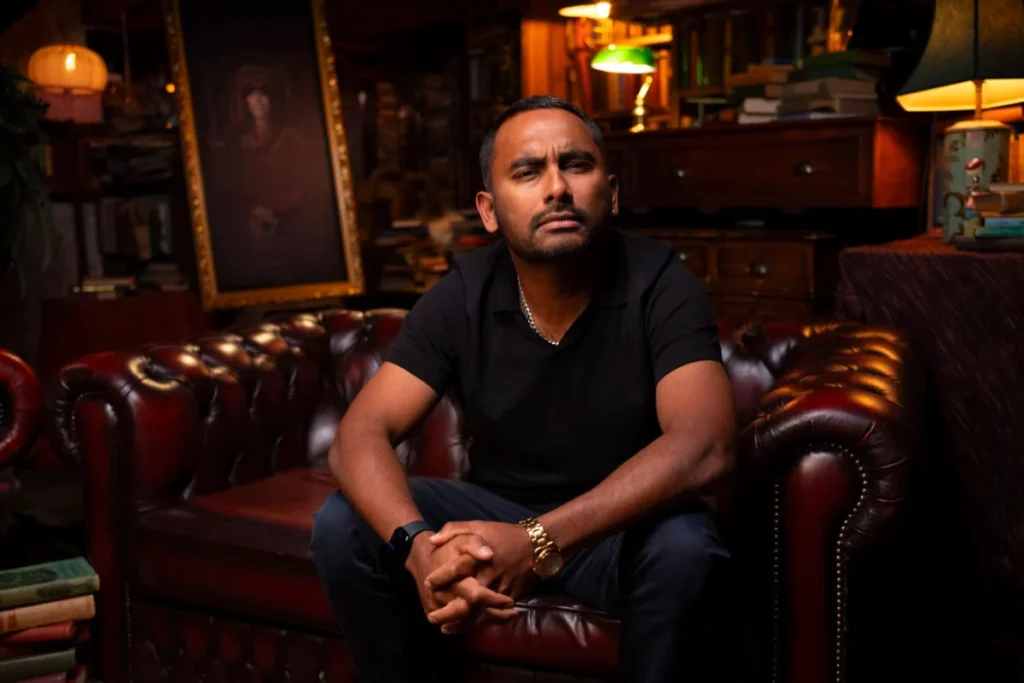

The landscape of modern reality television has shifted significantly with the arrival of the highly anticipated spin-off series, The Celebrity Traitors. While the civilian version of the show has enjoyed immense cultural success over several seasons, the introduction of a celebrity cohort has raised the stakes, testing the social deduction skills of some of the UK’s most recognisable faces. The latest episode saw the abrupt departure of journalist Amol Rajan, who became the first contestant to be eliminated via the game’s signature "murder" mechanic. His exit marks a pivotal moment in the season, as the Traitors—actor Richard E. Grant and presenter Maya Jama—successfully consolidated their power by removing a perceived intellectual threat early in the proceedings.
The Chronology of the Elimination
The events leading to Rajan’s departure unfolded rapidly over the course of the week’s broadcasts. On Thursday’s episode, the group dynamic shifted as the Traitors were given the opportunity to recruit an additional member to their ranks. This led to a tense sequence where both Amol Rajan and comedian James Acaster were brought before the existing Traitors, Grant and Jama, to plead their case for recruitment. The choice served as a strategic crossroads for the Traitors: recruit a player who could help manipulate the Faithful, or eliminate a player who might eventually prove to be a liability.
By Friday’s episode, the decision had been finalised. While James Acaster was formally invited to join the Traitors’ inner circle, Amol Rajan was officially "murdered," removing him from the game entirely. Speaking on the companion show The Celebrity Traitors: Uncloaked, Rajan expressed a candid assessment of his gameplay, admitting that he had failed to navigate the social intricacies required to survive in such a high-pressure environment. He noted that, with the benefit of 20/20 hindsight, his approach to the game was fundamentally flawed, leading him to play "the wrong game" during his brief tenure at the castle.

Strategic Missteps and the Burden of Persona
Rajan, known professionally for his sharp, inquisitive interview style on current affairs programs, acknowledged that his public persona may have worked against him. Entering the game, he was acutely aware that his reputation as a journalist—a profession synonymous with asking difficult questions—could make him a target. He had attempted to adopt a strategy of remaining understated, telling himself to "shut up" to avoid drawing undue attention or being perceived as a threat by his fellow contestants.
However, the nature of The Traitors requires a delicate balance between active participation and invisibility. By attempting to curb his natural instinct to investigate and question others, Rajan may have inadvertently made himself appear suspicious to the Traitors. Reflecting on the experience, he noted that had he been recruited as a Traitor himself, he believes he would have thrived. He posited that having spent a significant amount of time as a "Faithful"—the group tasked with identifying the traitors—he would have possessed a unique perspective on the paranoia and defensive tactics of the other contestants, which would have made him an effective operative for the opposition.
The Dynamics of Recruitment and Betrayal
The decision to recruit James Acaster over Rajan is viewed by many viewers as a calculated move to introduce a player capable of blending humor with strategic deception. Rajan himself praised the selection of Acaster, describing him as a "brilliant" choice for the role. This recruitment phase is perhaps the most critical juncture in any Traitors series, as it drastically alters the power balance.
The inclusion of celebrities brings a different layer of complexity to the show. Unlike civilian contestants, many of the celebrities in this cast have built entire careers on managing their public image and reading audience reactions. This inherent skill set makes the task of "bluffing" significantly harder. When a professional actor or performer lies, the other contestants are often left wondering whether they are witnessing a genuine emotional reaction or a carefully crafted performance.

The Richard E. Grant Factor: An Unforced Error?
The tension within the game escalated significantly during the latest roundtable, which ended on a dramatic cliffhanger. Richard E. Grant, one of the original Traitors, found himself at the centre of scrutiny after a series of erratic behaviors. It was noted that Grant had inadvertently revealed his true status to multiple contestants almost immediately after assuming the role.
This breach of security is rare in the format, where the primary objective is to maintain a cover of total anonymity. Rajan, commenting on the incident, expressed surprise at the actor’s lack of caution. "I think the one tactic that you should try to abide by is to keep a little bit… fly under the radar for the first few days," Rajan observed. The ability to control the flow of information is the most valuable currency in the castle; once that control is lost, a Traitor’s position becomes exponentially more precarious. The upcoming episode is expected to reveal whether the other contestants have picked up on these clues or if Grant’s charm has allowed him to deflect suspicion.
Broader Implications for the Format
The success of The Celebrity Traitors relies on the audience’s investment in how these public figures handle the psychological pressure of the game. Unlike other reality formats that focus on physical endurance or talent, The Traitors is a game of social engineering, trust, and betrayal. The "murder" of a high-profile contestant like Rajan early in the series sends a clear signal that no one is safe, regardless of their background or professional stature.
Data from previous seasons of the civilian version suggests that the "Faithful" often struggle to maintain a coherent alliance, largely due to the paranoia induced by the Traitors’ nocturnal activities. By removing a perceived intellectual threat in the first week, the Traitors have signaled that they intend to play a proactive game. The show’s production team, Studio Lambert, has carefully curated a cast that blends different archetypes, from the analytical to the emotional, ensuring that the social deduction elements remain the primary driver of the narrative.

The Psychological Toll of the Game
The "murder" mechanic is designed to be disorienting, and the exit interviews often reveal a lingering sense of frustration among the participants. For someone like Rajan, who is accustomed to driving the narrative in a journalistic setting, the helplessness of being a "Faithful" targeted by an invisible enemy is a profound shift in agency. The game demands a level of paranoia that few are prepared for, requiring contestants to constantly evaluate the sincerity of their closest allies.
As the series progresses, the audience can expect the intensity to increase. The remaining contestants must navigate the fallout of the latest roundtable, the introduction of new recruitment dynamics, and the constant threat of being banished by the group or murdered by the Traitors. The show’s structure, which encourages the formation of alliances that are destined to be broken, remains one of the most compelling aspects of modern television.
Looking Ahead: The Path to the Finale
With Amol Rajan’s departure, the game enters a new phase. The recruitment of James Acaster adds a layer of unpredictability to the Traitor camp, while the Faithful are left to regroup after losing one of their own. The central question remains whether the remaining contestants can successfully piece together the clues left behind by the Traitors’ missteps.
The broadcast schedule for the remainder of the series continues on BBC One and iPlayer. As the numbers dwindle, the margins for error shrink, and every conversation, glance, and vote at the roundtable will be scrutinised by the remaining players. For those who remain, the goal is simple: reach the end, avoid the purge, and secure the prize pot. For those who have left, the experience serves as a stark reminder that in the world of The Traitors, the only thing more dangerous than a lie is the person who tells it best. The upcoming episodes will test whether the current Traitors can maintain their composure or if their own strategic blunders will lead to their eventual unmasking.