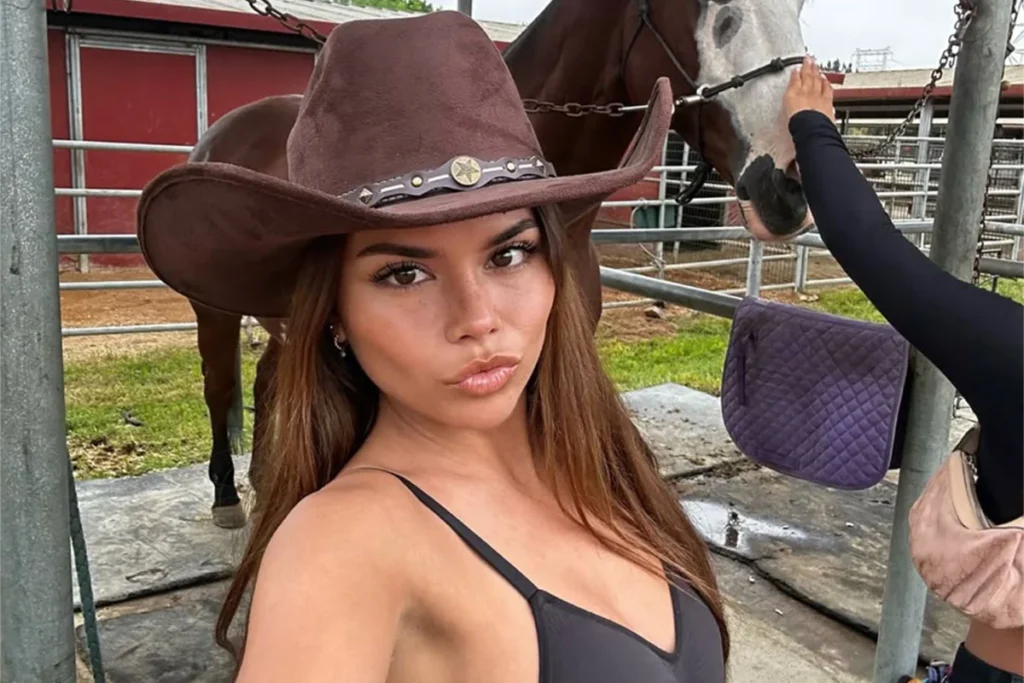

Alannah Keyser, a 21-year-old contestant who recently debuted as a bombshell on Love Island USA, has broken her silence following her abrupt departure from the popular reality dating series. Her exit came swiftly after social media users unearthed a video from her past in which she could be seen using a racial slur, alongside allegations of similar instances. The controversy ignited a widespread public outcry, leading to calls for her removal from the show, which ultimately materialized just four days after her introduction to the villa.
The Incident Unfolds: Alannah Keyser’s Brief Stint
Keyser’s entry into the Love Island USA villa, a highly anticipated moment for fans of the Peacock series, was meant to inject new dynamics into the established couples. However, her time on the show was dramatically cut short. Within days of her debut, online communities, known for their diligent "sleuthing," began circulating historical content linked to Keyser. The most prominent piece of evidence was a video showing her singing along to Roddy Ricch’s hit song "The Box," explicitly uttering the N-word during the lyrics. This video, dating back approximately six years, quickly became a focal point of discussion and condemnation across various social media platforms, including X (formerly Twitter) and TikTok.
The immediate reaction from the Love Island USA fanbase was one of profound disappointment and anger. Many viewers expressed that such language was unacceptable and incompatible with the values often promoted by the show, demanding immediate action from the production company. The pressure mounted rapidly, creating an untenable situation for both Keyser and the show’s producers.
Official Response and Departure from the Villa
The producers of Love Island USA responded to the growing controversy by swiftly removing Keyser from the series. The announcement of her departure was delivered concisely by the show’s narrator, Iain Stirling, who stated, "Welcome back to Love Island USA. Alannah has left Casa Amor." This brief statement, aired during an episode, confirmed what many fans had anticipated given the intensity of the backlash. The decision underscored the reality television industry’s increasing sensitivity to public image and the severe consequences of past actions resurfacing in the highly scrutinized environment of reality television.
Keyser’s removal mirrors a growing trend in reality television where contestants’ past social media activity or unearthed videos can significantly impact their participation and public reception. Production companies are under immense pressure to maintain an inclusive and respectful environment, both on and off-screen, and controversies involving racial slurs are typically met with zero tolerance.
Alannah Keyser Breaks Her Silence: The Apology
One week after her departure, Alannah Keyser took to TikTok to address the controversy directly. In a video shared with her followers, she offered an apology, specifically referencing the video of her singing "The Box." "I do want to begin by addressing the video of me singing along to a Roddy Ricch song that contains a racial slur," Keyser stated. "I’m sorry to whoever has seen that video and has been offended by it. That was never my intention. The video is from six years ago, and that word is just not in my vocabulary anymore."
Keyser’s apology sought to mitigate the damage by emphasizing the age of the video and asserting a change in her personal conduct and vocabulary since then. She further addressed other screenshots circulating online, which allegedly depicted her using the same slur in different contexts, claiming these were "falsified." "What has been shared does not reflect the truth, and it’s never been in my character to discriminate against anybody’s skin color. I do want to say directly that I do not support racism or discrimination of any kind, and I never have," she asserted.
Reflecting on the impact of the situation, Keyser conveyed her heartbreak and the lost opportunity to showcase her true self. "When I first found out that these things were going around online, it really broke my heart and I couldn’t do anything about it. But this has definitely been a learning lesson for me, and it sucks that I didn’t get a chance to really show my personality and who I am." Her statement highlighted the personal toll such public scrutiny can take, even as it underscored the necessity of accountability.
Parental Defense and Production Company’s Stance
In the wake of the controversy and prior to Alannah’s public statement, her father, Stephane Keyser, publicly defended his daughter. Speaking to TMZ, he described Alannah as an "educated sweetheart" and unequivocally stated that she is not racist. This parental defense aimed to counter the pervasive narrative quickly forming online, emphasizing her character beyond the single resurfaced video. Such interventions from family members are common in high-profile controversies, often seeking to humanize the individual and provide an alternative perspective to the prevailing public judgment.
Adding another layer to the incident, People magazine reported that the video depicting Alannah using the racial slur was not available online during Peacock’s vetting process for Love Island USA. This revelation raises questions about the scope and limitations of background checks conducted by reality television productions. While companies strive to thoroughly vet contestants, the sheer volume of historical online content, especially private or less accessible posts, presents a significant challenge. This indicates that while the show’s producers acted decisively once the content surfaced, it had initially bypassed their pre-show screening mechanisms.
The Broader Context: Accountability in the Digital Age
Alannah Keyser’s case is far from an isolated incident. It exemplifies a recurring challenge in the digital age: the enduring nature of online content and its potential to resurface years later, impacting individuals’ present and future opportunities. For public figures, particularly those entering the spotlight through reality television, their entire digital footprint becomes subject to intense scrutiny. What might have been a casual or ill-judged comment from a teenager can become career-defining once exposed to a mass audience.
This phenomenon highlights the growing demand for accountability for past actions, especially when those actions involve discriminatory language. The public, increasingly vocal and organized through social media, expects swift and firm responses from media organizations. The use of racial slurs, particularly the N-word, carries a profound historical and cultural weight in the United States, representing centuries of systemic racism and violence. Its utterance, regardless of intent or context, is widely considered deeply offensive and harmful, leading to widespread condemnation when it comes to light.
Challenges in Reality TV Vetting
The Love Island USA incident brings to the forefront the inherent difficulties faced by reality television production companies in their contestant vetting processes. While networks employ teams to conduct background checks, including social media audits, these processes are not infallible.
- Volume of Data: The sheer amount of digital content generated by individuals over years makes a comprehensive review incredibly challenging.
- Privacy Settings: Much of the content might have been posted on private accounts, deleted, or existed on platforms that are harder to access or track.
- Evolution of Platforms: Content might have been shared on defunct platforms or in formats that are no longer easily searchable.
- Human Error/Oversight: Even with diligent efforts, some content can simply be missed.
The statement that the video "was not available online" during vetting suggests that the content may have been in a less public domain or was difficult to uncover through standard searches. This underscores the need for production companies to continuously evolve their vetting strategies, perhaps incorporating more advanced digital forensics or more extensive direct questioning of potential cast members about their past online activities. The reputational risk for both the individual and the show is substantial, necessitating robust preventative measures.
Implications for Future Reality TV Casting
This incident will undoubtedly have implications for future casting decisions across the reality television landscape. Production companies may implement even stricter vetting protocols, potentially requiring contestants to grant more extensive access to their digital histories or to provide sworn statements about their past online conduct. The emphasis on diversity and inclusion within reality programming also means that any perceived tolerance for discriminatory behavior can severely damage a show’s brand and audience trust.
The swift removal of Alannah Keyser sends a clear message: past online transgressions, particularly those involving hate speech, will not be tolerated once a contestant enters the public eye. This reinforces a broader societal expectation for public figures to demonstrate a commitment to inclusive values. While individuals are capable of growth and change, the public sphere, especially the high-stakes environment of reality television, often offers little leniency for past missteps when they intersect with deeply sensitive social issues.
Conclusion
Alannah Keyser’s brief journey on Love Island USA serves as a stark reminder of the long shadow cast by digital footprints in an increasingly scrutinized public sphere. Her removal, following the resurfacing of a video containing a racial slur, highlights the critical intersection of personal accountability, the power of social media, and the responsibilities of media organizations. While Keyser has offered an apology and claimed personal growth, the incident underscores the ongoing societal dialogue about racial sensitivity, the weight of language, and the unforgiving nature of public judgment in the age of omnipresent digital records. It also compels reality TV producers to continually re-evaluate and strengthen their vetting processes, adapting to a world where a contestant’s past can quickly become their present controversy.