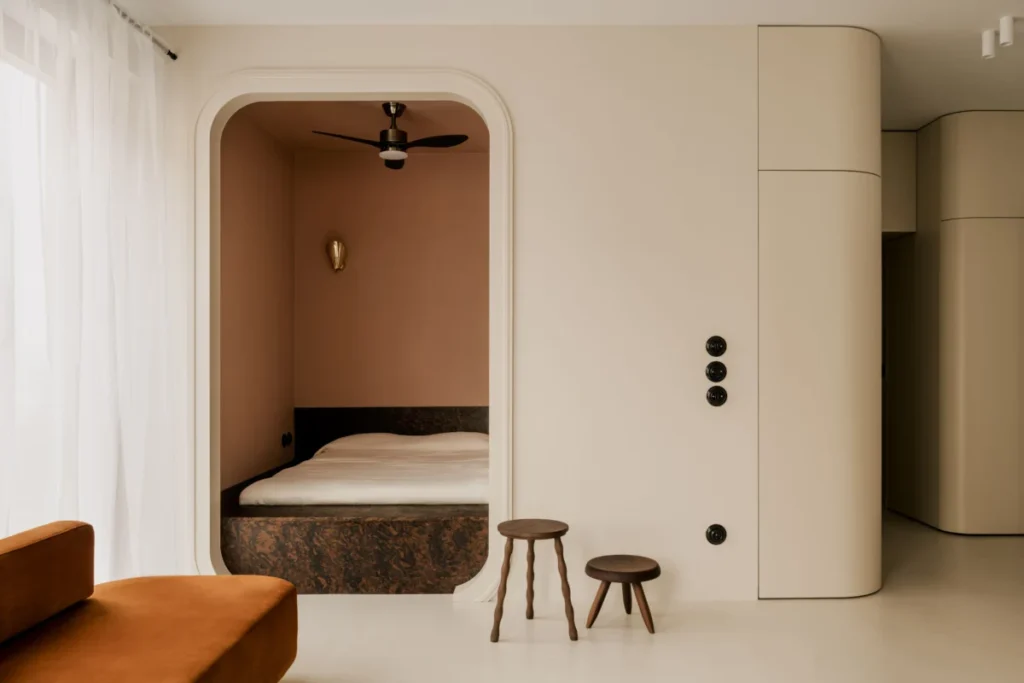

In the rapidly evolving cityscape of Warsaw, Poland, a 366-square-foot apartment in the Port Praski district has become a definitive case study in the power of architectural reconfiguration over mere interior decoration. Purchased by a photographer couple as a seasonal retreat, the compact residence was situated within a brand-new development completed in 2024. However, despite the building’s modern pedigree, the owners sought a radical departure from the standard developer-grade layout. They commissioned local architect Dawid Konieczny to dismantle the existing structure and reimagine the space as a sophisticated, functional sanctuary that balances the rigor of modernism with the warmth of vintage aesthetics.
The project, located in the historic Praga-Północ district, represents a broader trend in European urban centers: the high-end optimization of micro-apartments. As real estate prices in Warsaw continue to climb, particularly in regenerated waterfront zones, the demand for architecturally significant small-format living has intensified. Konieczny’s approach to this specific project involved a total systemic overhaul, prioritizing spatial flow and material integrity over traditional room divisions.

The Urban Context: The Port Praski Regeneration Project
To understand the significance of this renovation, one must look at the surrounding environment. Port Praski is currently one of the most ambitious urban regeneration projects in Europe. Spanning approximately 38 hectares (nearly 100 acres), the site was once a bustling industrial dockland and port facility on the right bank of the Vistula River. Following decades of neglect during the post-war era, the area is being transformed into a "city within a city," featuring a mix of residential, office, and recreational spaces.
The regeneration is divided into several distinct phases: the Old Pier, the Docks, the City, and the Media Park. The photographer couple’s apartment is situated in a newly completed residential block that mirrors the industrial heritage of the area while providing 21st-century amenities. The transformation of Port Praski has significantly impacted Warsaw’s real estate market, turning the once-overlooked Praga district into a hub for the creative class and international investors.
A Strategic Overhaul of the Floor Plan
When Dawid Konieczny first assessed the 34-square-meter (366-square-foot) space, he identified several inefficiencies common in modern developer layouts, which often prioritize the number of rooms over the quality of living areas. The original plan felt cramped and lacked a cohesive narrative. The architect’s first decision was to gut the interior entirely, including a comprehensive replacement of the electrical and plumbing systems to accommodate a completely new spatial logic.

The most dramatic shift in the floor plan involved the relocation of the kitchen. By moving the bedroom into the space formerly occupied by the kitchen, Konieczny was able to consolidate the remaining area into a "compound living and dining area." This move created a fan-shaped main room that feels significantly larger than its actual footprint.
The entry sequence was also reimagined. The entryway is now flanked by custom-built storage units finished in a soft, oatmeal-colored lacquer. These units are designed with rounded corners, a recurring motif throughout the apartment that softens the transitions between zones. The hallway leads diagonally into the main living space, a technique used to create a sense of discovery and to maximize the visual depth of the apartment.
Materiality and the "Sunset" Aesthetic
The aesthetic direction of the apartment is defined by a palette of warm, muted tones and high-contrast textures. Konieczny avoided the clinical "white box" approach often seen in small-space design, opting instead for a "cocooning" effect.

The floors, walls, and ceilings are finished in an off-white polished concrete. This monolithic application provides a neutral, tactile backdrop that allows the furniture and cabinetry to stand out. In the kitchen, the architect employed a sophisticated mix of materials: oiled oak cabinet fronts are paired with cream-colored lacquer panels and Blue Roma quartzite. The quartzite, sourced from Brazil, features dramatic copper and brown veining that echoes the warmth of the oak, while its cool blue-grey base provides a necessary counterpoint to the room’s warmer elements.
The bedroom represents the most intimate expression of this color story. Wrapped in an all-over apricot hue, the room is designed to evoke the cozy, efficient quarters of a luxury ship’s cabin. To add a sense of luxury and history, Konieczny utilized Alpi Wood California burl wood trim. Burl wood, characterized by its complex, swirling grain patterns caused by tree stress, has seen a resurgence in contemporary design as a bridge between 1970s maximalism and modern organicism.
Chronology of the Transformation
The timeline of the project reflects the meticulous nature of Konieczny’s process:

- Late 2023 – Early 2024: The clients acquired the property in the Port Praski development. Initial consultations with Dawid Konieczny focused on the need for a "pied-à-terre" that could serve as both a relaxation space and a visually inspiring environment for two photographers.
- Spring 2024: Demolition phase. The internal walls, developer-installed flooring, and standard utilities were removed.
- Summer 2024: Structural and systemic installation. New plumbing lines were run to accommodate the relocated kitchen and bathroom fixtures. Custom cabinetry fabrication began off-site.
- Autumn 2024: Finishing and furnishing. The application of polished concrete, the installation of the Blue Roma quartzite, and the integration of vintage lighting and furniture pieces.
- Late 2024: Project completion and handover.
The Bathroom: A Synthesis of Design Movements
While the living area is the heart of the home, the owners have cited the bathroom as their favorite space. This room serves as a microcosm of the apartment’s overall design philosophy—blending functional modernity with vintage flair.
The bathroom features an Art Deco-inspired checkerboard floor in red and white tiles. This bold geometric pattern is softened by the presence of blue stucco walls and a vanity finished in the same Alpi California burl wood seen in the bedroom. The inclusion of a rustic, handmade ceramic vase from Gropk Ceramic adds a "wabi-sabi" element, grounding the high-design space with a sense of the artisanal.
The repositioning of the shower and toilet was a technical challenge given the constraints of the building’s central risers, but the resulting layout is significantly more ergonomic than the original. The use of vintage fixtures further reinforces the apartment’s connection to the past.

Furniture and the Influence of Charlotte Perriand
The selection of furniture was critical in ensuring the small space did not feel cluttered. Konieczny and the clients chose pieces that are both iconic and spatially efficient.
In the dining area, wooden stools from Zara Home are paired with a design by Charlotte Perriand for Cassina. Perriand, a pioneer of modernism who worked alongside Le Corbusier, was famous for her belief that better design helps create a better society. Her influence is felt in the apartment’s emphasis on "l’art de vivre" (the art of living) within a compact footprint.
Above the dining bench, a vintage brass artwork found at a flea market in Belarus serves as a focal point. This piece, along with vintage bedside lamps, imbues the 2024 apartment with a sense of history. It creates a "lived-in" atmosphere that is often missing from new-build properties.

Broader Implications for Urban Architecture
The success of the Port Praski pied-à-terre offers several insights into the future of urban living:
- The Death of the Standard Layout: As living spaces shrink, the "one size fits all" developer floor plan is becoming obsolete. Bespoke architectural intervention is increasingly seen as a necessity rather than a luxury for micro-apartments.
- Tactile Minimalism: The move away from stark minimalism toward "warm minimalism"—characterized by polished concrete, natural woods, and earth tones—reflects a growing desire for homes that provide emotional comfort.
- Adaptive Reuse of Materials: The integration of high-end materials like quartzite and burl wood in small quantities allows homeowners to achieve a level of luxury that might be cost-prohibitive in a larger residence.
Dawid Konieczny’s work in Warsaw demonstrates that 366 square feet is sufficient for a high-functioning, aesthetically rich lifestyle, provided the architectural bones of the space are correctly aligned. By prioritizing light, flow, and a sophisticated material palette, the project has successfully transformed a standard dockside unit into a world-class example of contemporary interior architecture.
As Port Praski continues its multi-phase evolution, this apartment stands as a testament to the area’s new identity: a place where Warsaw’s industrial past meets a design-forward, global future. The photographer couple now possesses more than just a place to stay; they have a curated environment that mirrors their own professional commitment to the art of the visual.