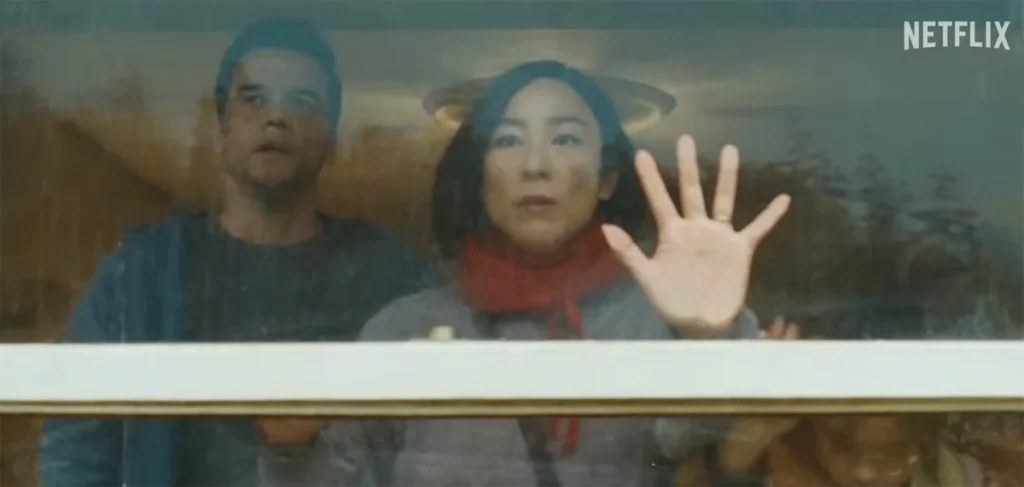

Netflix has unveiled the first official trailer for "The Last House," a forthcoming sci-fi thriller directed by Louis Leterrier, a filmmaker known for his contributions to action cinema, including "Clash of the Titans," "Now You See Me," and "Fast X." The film, slated for a worldwide streaming release on Netflix on August 7th, 2026, centers on a family of four who find themselves inexplicably sealed within their home by a mysterious and violent storm. This premise evokes comparisons to other cinematic explorations of isolation and entrapment, such as "Vivarium." The screenplay is penned by Matthew Robinson, whose previous writing credits include "Love and Monsters" and "Good Luck, Have Fun, Don’t Die."
The narrative thrust of "The Last House" revolves around the struggle for survival as the family confronts dwindling resources and an unknown, external threat that prevents their escape. The trailer’s ominous tone and the tagline, "We are safe. We are home. But most importantly – we have each other," underscore the psychological and physical challenges the characters will face. The film’s cast is anchored by Greta Lee as Riley and Wagner Moura as Jason, with Riley Chung and Emma Ho portraying their children. Supporting roles are filled by Noah Alexander Sosnowski, Gabriel Barbosa, and Sam Lerner. The production is backed by producers Kori Adelson, Peter Chernin, Louis Leterrier, Joe Neurauter, Oliver Obst, Omar Sy, and Jenno Topping.
Unpacking the Premise: A Family Under Siege
"The Last House" taps into a potent primal fear: the violation of sanctuary. The home, typically a bastion of safety and security, becomes a prison. The trailer hints at an external force, a meteorological anomaly of unprecedented ferocity, that not only prevents egress but also serves as a constant, looming menace. This setup allows for an intense focus on interpersonal dynamics under extreme duress, a hallmark of effective survival thrillers. The question of "How long can you survive?" posed by the film’s promotional material, directly addresses the audience’s engagement with the protagonists’ plight.
The narrative structure suggests a confined thriller, where the external threat is as much about what is outside the house as it is about the psychological toll of being trapped inside. This often involves a gradual reveal of information, forcing the audience to piece together the nature of the threat alongside the characters. The film’s success will likely hinge on its ability to maintain suspense, develop compelling character arcs within the confined setting, and provide a satisfying, albeit potentially unsettling, explanation for the extraordinary circumstances.

Director Louis Leterrier’s Transition to Sci-Fi Thriller
Louis Leterrier’s directorial career has been predominantly defined by high-octane action films. His filmography includes "The Transporter" series, "The Incredible Hulk," and "Fast X," establishing him as a capable hand in crafting visually dynamic and thrilling sequences. However, "The Last House" marks a significant foray into the sci-fi thriller genre, a departure that could allow him to explore different narrative and thematic territories.
Leterrier’s experience with large-scale productions and his knack for visceral action sequences suggest that "The Last House" will likely be visually impressive, even within its confined setting. The challenge will be to balance these elements with the psychological tension and mystery inherent in the plot. His previous work, while often action-heavy, has also shown an ability to build engaging narratives. The transition to a more contained, suspense-driven story might allow for a deeper exploration of character and thematic elements that are often secondary in his more action-oriented films.
Writer Matthew Robinson’s Vision
Matthew Robinson’s involvement as the screenwriter is another crucial element. His recent work on "Love and Monsters," a post-apocalyptic adventure that blended humor with genuine stakes, and "Good Luck, Have Fun, Don’t Die," suggests a talent for crafting engaging genre narratives that can resonate with audiences. "Love and Monsters," in particular, demonstrated an ability to create a compelling world with unique challenges and a strong emotional core. This background bodes well for "The Last House," indicating a potential for well-developed characters and a narrative that is more than just a series of escalating threats.
The collaborative effort between Leterrier and Robinson could yield a unique blend of visual spectacle and narrative depth. The success of confined thrillers often lies in the strength of their scripts, which must meticulously plot the characters’ reactions, the unraveling of the mystery, and the escalating tension. Robinson’s prior successes suggest he is adept at managing these narrative complexities.
Thematic Resonance and Audience Appeal
The premise of "The Last House" touches upon contemporary anxieties related to isolation, environmental disruption, and the fragility of our perceived security. In an era where the unexpected has become a recurring theme in global events, a story about a family trapped by an inexplicable force can resonate deeply. The film’s focus on a family unit also taps into universal themes of love, resilience, and the instinct for self-preservation.

The "trapped inside" subgenre of thrillers has a consistent audience appeal. Films like "Panic Room," "10 Cloverfield Lane," and "Bird Box" have all found success by exploring similar scenarios. These narratives often thrive on the claustrophobia, the psychological toll of confinement, and the suspense of the unknown. "The Last House" appears poised to capitalize on these elements, offering a fresh take on a familiar, yet perennially engaging, concept.
Supporting Data and Industry Context
The science fiction thriller genre remains a strong performer in the streaming landscape. Netflix, in particular, has invested heavily in original content within this sphere, recognizing its broad international appeal and ability to drive subscriber engagement. The release of "The Last House" aligns with this strategy. The platform’s success with films like "Bird Box" and "Don’t Look Up" demonstrates a willingness to back ambitious genre projects with established directors and compelling premises.
The casting of Greta Lee and Wagner Moura is also noteworthy. Both actors have garnered critical acclaim for their performances. Lee’s recent work, including her acclaimed role in Celine Song’s "Past Lives," has showcased her ability to convey nuanced emotional depth. Moura, known for his powerful portrayals in "Narcos" and "Elysium," brings a commanding presence to his roles. Their combined talent suggests that "The Last House" will feature strong central performances, which are crucial for grounding the fantastical elements of the story in relatable human experiences.
The inclusion of Noah Alexander Sosnowski, Gabriel Barbosa, and Sam Lerner as part of the ensemble further suggests a focus on ensemble dynamics, potentially exploring how different personalities react to extreme pressure. The presence of child actors in such a scenario adds an additional layer of emotional stakes, as their vulnerability often amplifies the peril for the adult characters.
Production and Release Timeline
The announcement of the trailer and the August 7th, 2026 release date indicates that "The Last House" is in the final stages of post-production. This typical release schedule for a major Netflix production suggests that principal photography was likely completed well in advance, allowing ample time for editing, visual effects, and sound design. The film’s promotional rollout, beginning with the trailer, is a standard industry practice designed to build anticipation among potential viewers.

The film’s debut on Netflix, a global platform, ensures its immediate accessibility to a vast audience worldwide. This distribution model allows for a significant impact upon release, bypassing traditional theatrical windows and reaching subscribers simultaneously across multiple regions. This approach is particularly beneficial for genre films that can generate significant word-of-mouth buzz online.
Analysis of Implications
The success of "The Last House" could have several implications for Netflix and the broader streaming landscape. A strong performance from this original sci-fi thriller would reinforce Netflix’s position as a leading producer of genre content. It could also pave the way for future collaborations with director Louis Leterrier on similar projects, leveraging his established expertise in action and his newfound exploration of suspense.
Furthermore, the film’s thematic relevance to contemporary anxieties could prompt discussions about environmental concerns and the importance of community in the face of adversity. If "The Last House" effectively balances its genre elements with profound thematic undertones, it could transcend mere entertainment and offer a more thought-provoking cinematic experience. The audience’s reception will ultimately determine its impact, but the ingredients for a compelling and potentially significant release appear to be in place. The film’s performance will be closely watched as an indicator of audience appetite for meticulously crafted, high-concept sci-fi thrillers within the streaming ecosystem.