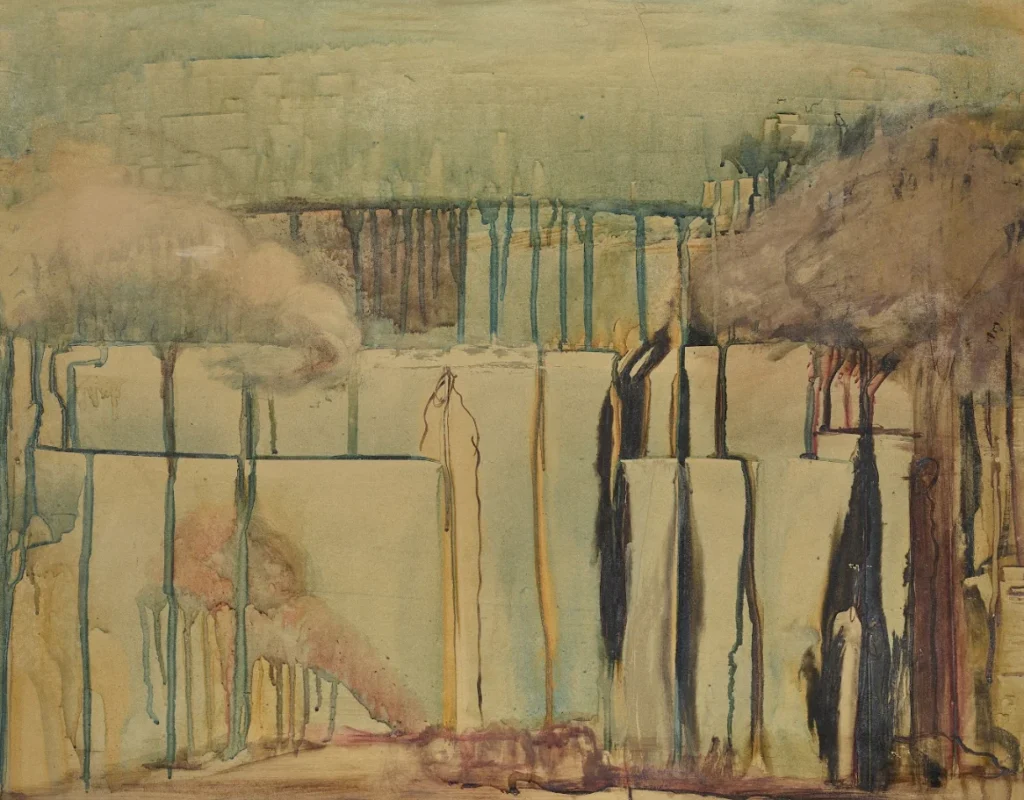

A significant piece of Egyptian royal and artistic history is set to grace the auction block in London next week, offering discerning collectors a singular opportunity to acquire a work by Queen Farida, the final consort of Egypt’s last monarch, King Farouk. The painting, titled Abstract Landscape, will be presented as part of Olympia Auctions’ Modern & Contemporary African and Middle Eastern Art sale on June 3, marking a moment of considerable interest in the artistic legacy of a woman whose life spanned tumultuous epochs of Egyptian history.
A Royal Figure Reimagined Through Art
The artwork, an oil on gold paper, is expected to command a price between £7,000 and £9,000. Hailing from a private London collection, its appearance on the market coincides with a burgeoning recognition of Queen Farida’s contributions to the art world, a facet of her life often overshadowed by her prominent royal biography.
Born Safinaz Zulficar in Alexandria in 1921, Farida ascended to national prominence upon her marriage to King Farouk in 1938. Their union was a grand affair, captivating the Egyptian populace and solidifying her image as a radiant and elegant queen during the twilight years of the Egyptian monarchy. The marriage, however, was to be a chapter in a life marked by profound personal and political upheaval.
From Palace to Personal Canvas: A Life in Transition
The trajectory of Farida’s life shifted dramatically following her divorce from King Farouk in 1948, a move that sent ripples through the nation. This personal separation was soon followed by a seismic political event: the Egyptian Revolution of 1952, which led to the abolition of the monarchy and the departure of King Farouk into exile.
It was in the wake of these profound societal and personal transformations that Queen Farida, no longer bound by the strictures of royal life, embarked on a new path as an artist. This period of exile became a fertile ground for creative expression, transforming the introspection born from upheaval into a vibrant artistic practice. Painting emerged not merely as a hobby but as both a solace and a dedicated pursuit.
Artistic Lineage and Developing Style
Her artistic development was significantly nurtured by her uncle, Mahmoud Said, a celebrated artist in his own right and widely revered as the progenitor of modern Egyptian art. Under his tutelage and encouragement, Farida honed a distinctive artistic style. Her work became imbued with the essence of memory, spirituality, and an enduring emotional connection to her homeland, Egypt, even as she lived in various locations across the globe.
During her years in exile, which saw her reside in Beirut, Switzerland, and Paris, Queen Farida cultivated a significant body of work. These pieces explored themes of place, identity, and the poignant sentiment of nostalgia, reflecting her experiences and her deep-seated ties to her origins. For many years, the artistic merit of her paintings was often secondary in public perception to her status as queen.
Growing Acclaim and Institutional Recognition
However, a significant re-evaluation of Queen Farida’s artistic legacy has gained momentum in recent years. Both scholars and cultural institutions have increasingly acknowledged her substantial contribution to Middle Eastern art. Her paintings are now held in prestigious collections, including the Mathaf: Arab Museum of Modern Art in Doha, the National Museum of Egyptian Civilization in Cairo, and the Royal Jewelry Museum in Alexandria, underscoring the growing importance of her oeuvre.
The renewed interest in her artistic output received a significant boost last year with a major exhibition at Cairo’s Liwan Gallery. This showcase thoughtfully presented her paintings alongside those of her granddaughter, Yasmine Perreten, drawing further attention to the continuation of artistic talent within the family and highlighting the intergenerational impact of their creative endeavors.
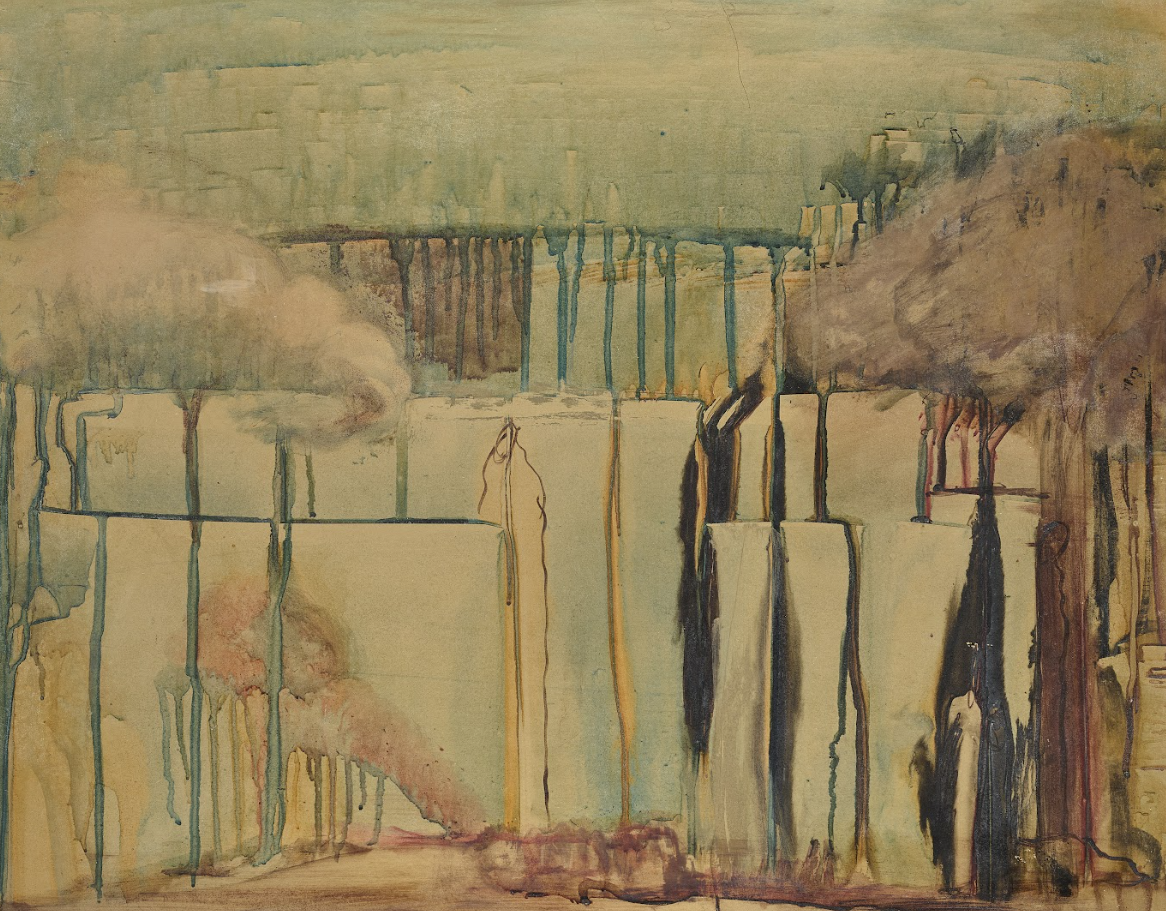
Abstract Landscape: A Glimpse into Artistic Maturity
According to Olympia Auctions, the Abstract Landscape up for auction represents a deeply personal phase of Farida’s artistic journey. The painting is characterized by luminous surfaces and atmospheric qualities, hallmarks that defined her mature artistic style. This particular piece offers a window into her mature artistic vision, showcasing her ability to convey emotion and place through abstract forms.
Janet Rady, a specialist in African and Middle Eastern art at Olympia Auctions, commented on the significance of the upcoming sale. "Queen Farida occupies a unique place in Egyptian history," Rady stated. "While she is remembered as the former Queen of Egypt and wife of King Farouk, her achievements as an artist are now receiving renewed attention. Because her paintings are so rarely seen on the market, opportunities to acquire one are exceptionally limited." This scarcity, coupled with the historical weight of the artist, undoubtedly contributes to the anticipated interest from collectors.
A Broader Context: Egyptian Art and History on Display
The sale at Olympia Auctions is not solely defined by Queen Farida’s contribution. The auction also features another significant piece connected to Egypt’s political and cultural narrative: a portrait of Mahmoud Hamed, a former governor of the Central Bank of Egypt, by the renowned Egyptian artist Kamel Moustafa. This portrait is estimated to fetch between £3,000 and £5,000.
Adding a layer of royal provenance, this painting once belonged to Queen Farida’s brother, Sa’id Zulficar. The artwork is now being consigned by the queen’s great-nephew, further intertwining the pieces with the history of the royal family. The inclusion of both works provides a compelling dual perspective, offering a rare glimpse into the lives of individuals who significantly shaped modern Egypt. Furthermore, these items collectively highlight the escalating international appreciation for 20th-century Middle Eastern art, signaling a broader trend of collectors and institutions seeking out historically significant and artistically meritorious works from the region.
Timeline of Queen Farida’s Life and Artistic Journey
- 1921: Born Safinaz Zulficar in Alexandria, Egypt.
- 1938: Marries Prince Farouk, becoming Queen of Egypt.
- 1948: Divorced from King Farouk.
- 1952: The Egyptian Revolution leads to the abolition of the monarchy and King Farouk’s exile. Queen Farida begins her artistic career in earnest.
- Post-1952: Lives in exile in various locations including Beirut, Switzerland, and Paris, developing her artistic practice.
- Recent Years: Increased scholarly and institutional recognition of her artistic contributions. Paintings acquired by major museums.
- 2023: A major exhibition of her work is held at Cairo’s Liwan Gallery.
- June 3, 2024: Abstract Landscape, an oil on gold paper painting by Queen Farida, is auctioned at Olympia Auctions in London.
Supporting Data and Market Trends
The market for Middle Eastern and North African art has seen a steady increase in recent years, driven by a growing global interest in the region’s cultural heritage and artistic talent. Auctions featuring works by established and emerging artists from this part of the world have consistently attracted strong bidding, indicating a robust and expanding collector base.
The estimated price range of £7,000-£9,000 for Queen Farida’s Abstract Landscape places it within the mid-range for significant works by historically important artists from the region. The fact that the painting is oil on gold paper adds a unique textural and visual element, potentially increasing its appeal. The provenance, originating from a private collection and linked to the royal family, further enhances its desirability and market value.
The inclusion of Kamel Moustafa’s portrait, with its royal connection through Sa’id Zulficar, also signals a broader trend in the art market to highlight works with demonstrable historical and familial ties. This adds depth to the narrative surrounding the sale and appeals to collectors interested in both art and historical artifacts.
Broader Implications for Art History and Cultural Appreciation
The emergence of Queen Farida’s Abstract Landscape for auction is more than just a transaction; it represents a significant moment in the ongoing re-evaluation of historical figures and their often-underappreciated artistic contributions. For too long, the narrative of women in royal families has been confined to their public roles and personal lives, often overshadowing their creative endeavors.
This sale provides a valuable opportunity to celebrate Queen Farida as an artist in her own right, a creator who found her voice and pursued her passion amidst profound personal and political change. The renewed attention on her work, evidenced by institutional acquisitions and major exhibitions, suggests a growing appreciation for the artistic landscape of the Middle East in the 20th century, moving beyond a singular focus on known masters to encompass a more diverse and inclusive understanding of art history. The success of this auction could further encourage the discovery and exhibition of other overlooked artistic legacies from the region, enriching our understanding of its cultural tapestry.