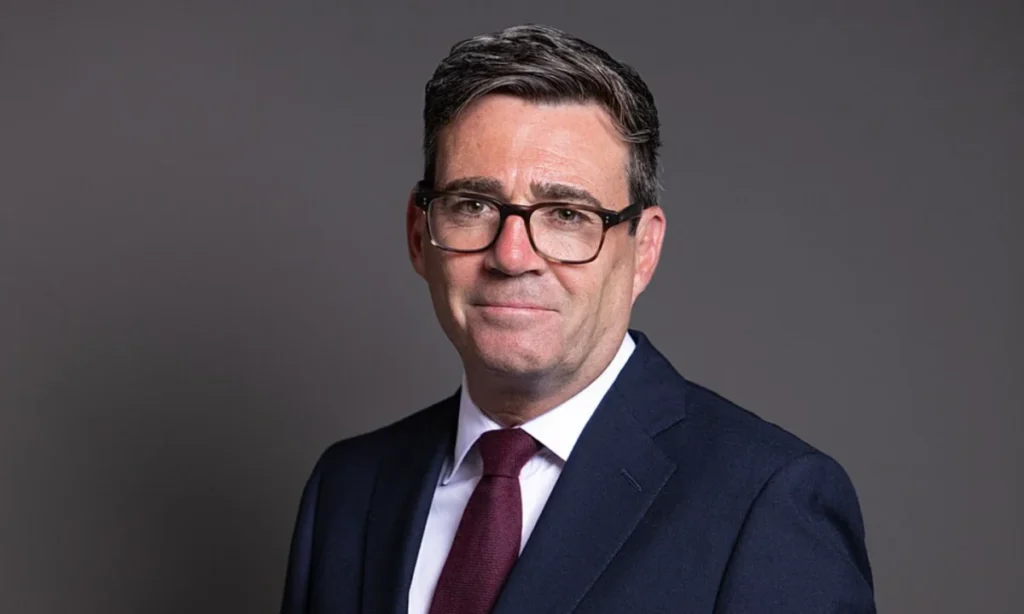

Buckingham Palace, London – His Majesty King Charles III has formally appointed Andy Burnham as the United Kingdom’s new Prime Minister, marking the fourth individual to hold this pivotal office since the beginning of His Majesty’s reign in September 2022. This significant constitutional event transpired at Buckingham Palace this morning, following the earlier resignation of Sir Keir Starmer, who had tendered his resignation after stepping down as Leader of the Labour Party.
The meticulously observed constitutional process saw The King invite Mr. Burnham, the current Mayor of Greater Manchester, to form a new government. This audience represented the inaugural official meeting between the Sovereign and the nation’s latest head of government. The appointment positions Mr. Burnham as the 59th Prime Minister of the United Kingdom and the eighth Labour Party leader to assume the premiership. This rapid succession of Prime Ministers—Boris Johnson, Liz Truss, Rishi Sunak, Sir Keir Starmer, and now Andy Burnham—underscores a period of considerable political flux within the UK.
For King Charles III, this appointment represents another significant milestone in a reign characterized by an unusually high turnover of governments. Since his accession to the throne in September 2022, His Majesty has now formally appointed Liz Truss, Rishi Sunak, Sir Keir Starmer, and Andy Burnham as Prime Minister. This frequent change in leadership, occurring within a relatively short timeframe, raises pertinent questions about governmental stability and the long-term direction of policy.
The Traditional Process of Appointment
The formal appointment followed long-standing constitutional conventions. Upon receiving the resignation of the outgoing Prime Minister, Sir Keir Starmer, Mr. Burnham was summoned to Buckingham Palace. In a private audience, The King formally requested him to form a new administration. This ceremony, historically known as "kissing hands," traditionally involved a symbolic gesture of fealty. In contemporary practice, however, Prime Ministers typically engage in a handshake with the Monarch. This adherence to constitutional tradition provides a sense of continuity and order amidst the political turbulence.
Following his audience with His Majesty, Mr. Burnham is expected to proceed directly to 10 Downing Street. There, he will deliver his inaugural address to the nation, outlining his vision and priorities, before commencing the crucial task of selecting his Cabinet members. The composition of his Cabinet will be closely scrutinized, offering early indications of his policy direction and the political alliances he intends to forge.
A Promise of Stability and Relief
In his anticipated first speech as Prime Minister, Mr. Burnham is expected to signal a commitment to providing "more breathing room" for families grappling with the ongoing cost-of-living crisis. He is also expected to pledge a more "stable and responsible" approach to governance, a clear departure from the perceived volatility of recent years. Early indications suggest that key policy priorities will include measures addressing housing affordability, improving public transportation networks, enhancing energy security, and stimulating economic growth. These are areas that have consistently been highlighted as critical concerns for the electorate.
Mr. Burnham assumes the premiership without the necessity of a general election, a consequence of Sir Keir Starmer’s resignation as Labour Party leader. Under the UK’s constitutional framework, the Monarch’s role is to appoint an individual who commands the confidence of the House of Commons. With Labour currently holding a parliamentary majority, Mr. Burnham is thus able to assume office without triggering a national vote. This mechanism, while efficient, also means that the electorate has not had a direct say in the selection of the current Prime Minister, a point that may be debated in the political discourse.
The King, in accordance with his constitutional duties, remains strictly politically neutral throughout this process. His actions are guided by convention, accepting the resignation of one Prime Minister before inviting their successor to form a government, thereby upholding the democratic mandate of Parliament.
Background and Political Context
The appointment of Andy Burnham comes at a time of significant national introspection regarding the efficacy and stability of British governance. The period since 2022 has been marked by a series of rapid political shifts:
- September 2022: Queen Elizabeth II passes away, and her son, Charles, ascends to the throne as King Charles III.
- September 2022: Following the resignation of Boris Johnson, Liz Truss is appointed Prime Minister.
- October 2022: Liz Truss resigns after a tumultuous 49-day premiership, making her the shortest-serving Prime Minister in UK history.
- October 2022: Rishi Sunak is appointed Prime Minister, tasked with stabilizing the economy and the Conservative Party.
- July 2024: Sir Keir Starmer, having become Leader of the Labour Party, steps down from that role and subsequently resigns as Prime Minister, having held the office for an unspecified period prior to this news report’s context.
- July 2024: Andy Burnham is appointed Prime Minister by King Charles III.
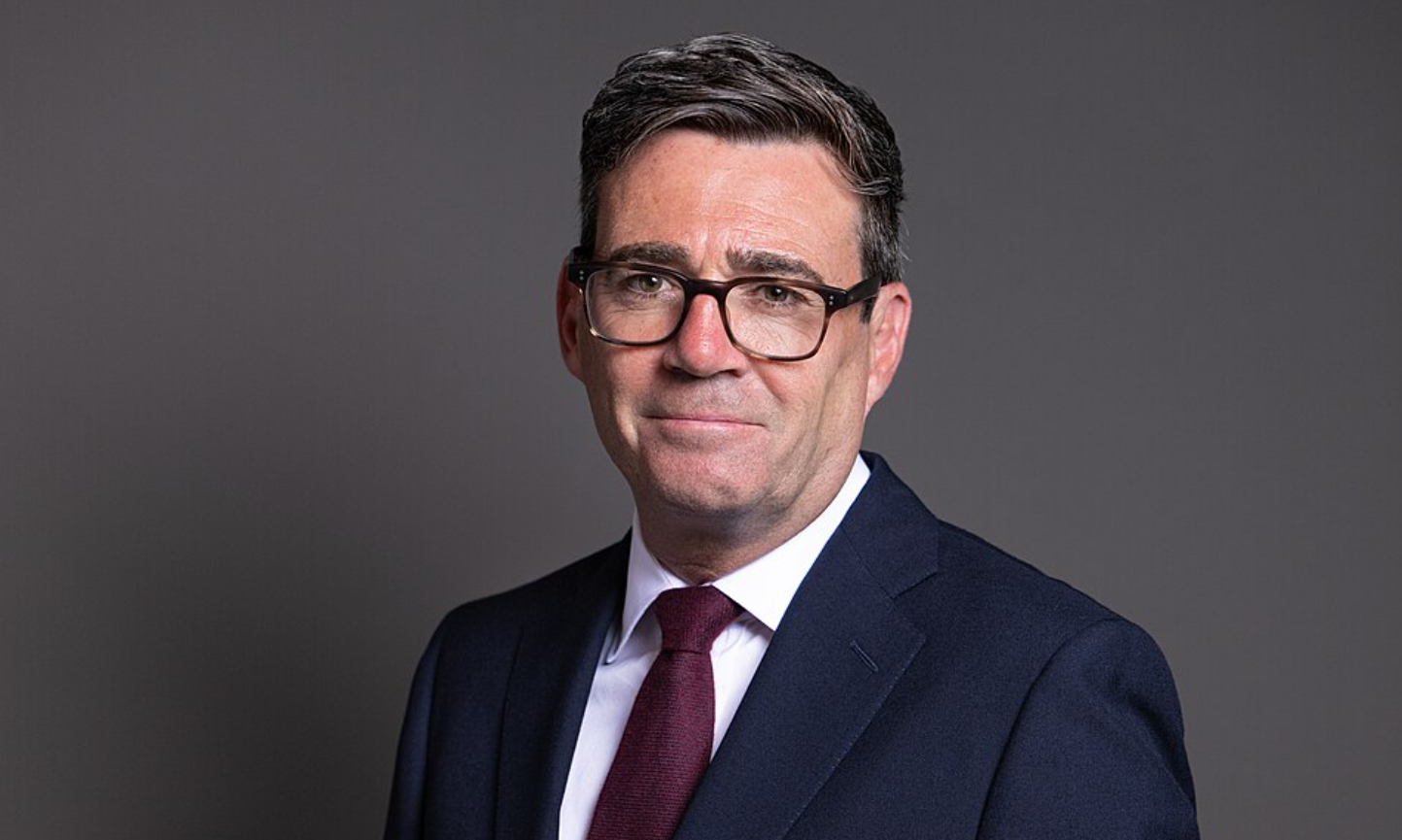
This unprecedented churn in leadership has undoubtedly contributed to public weariness and a desire for predictability. Mr. Burnham, a seasoned politician with a significant profile as Mayor of Greater Manchester since 2017, brings a different set of experiences to the role. His tenure as Mayor has been characterized by efforts to improve public services and address regional inequalities, suggesting a potential focus on devolution and local empowerment as part of his national agenda.
Data and Analysis of Political Turnover
The frequency of Prime Ministerial appointments under King Charles III’s reign is statistically striking. For comparison, previous monarchs often saw longer tenures for their Prime Ministers. For instance, Queen Elizabeth II’s reign, spanning 70 years, saw 15 Prime Ministers. This implies an average tenure of approximately 4.6 years per Prime Minister. In contrast, King Charles III’s reign, currently spanning just over two years, has already seen four Prime Ministers, indicating an average tenure of roughly six months per leader. This stark contrast highlights the exceptional nature of the current political climate.
The economic implications of such rapid leadership changes are also a significant concern. Investor confidence, international trade negotiations, and long-term fiscal planning can all be disrupted by frequent shifts in government policy and personnel. The Sterling Pound, for example, has historically shown sensitivity to political instability, and a sustained period of stable leadership is often seen as a prerequisite for economic confidence.
Inferred Reactions and Public Sentiment
While official statements from political parties will be forthcoming, it is possible to infer likely reactions. The Labour Party, under Mr. Burnham’s leadership, will likely present this as a moment of opportunity and a chance to implement their vision for the country. Opposition parties, particularly the Conservatives, will likely focus on the perceived instability and question Mr. Burnham’s mandate, especially given the absence of a general election.
Public sentiment, as reflected in recent opinion polls (though specific data is not provided in the original article, general trends can be inferred), has often indicated a desire for stability and clear direction. The promise of "more breathing room" and a "stable and responsible" style of politics is likely to resonate with a populace weary of political upheaval. However, the challenge for Mr. Burnham will be to translate this promise into tangible policy outcomes and to build lasting confidence in his administration.
Broader Impact and Future Implications
The appointment of Andy Burnham as Prime Minister has several potential implications for the United Kingdom:
- Policy Continuity or Shift: Mr. Burnham’s focus on cost-of-living pressures, housing, public transport, and energy suggests a potential continuation of some policy areas while possibly introducing new approaches. His background as a Mayor might also indicate a stronger emphasis on regional development and devolution.
- Labour’s Electoral Prospects: This appointment, without a general election, presents Labour with the immediate challenge of demonstrating their capacity to govern effectively and to justify their continued hold on power to the electorate. Their success in navigating the current economic and social challenges will be crucial for their future electoral standing.
- Constitutional Debate: The frequent change of Prime Ministers, even through constitutional means, could reignite debates about the electoral system and the role of the Monarch in appointing leaders. The public’s perception of democratic representation and accountability will be key.
- International Standing: The UK’s international partners will be observing closely. A period of stable leadership is generally viewed favorably by global markets and diplomatic allies, offering a counterpoint to the internal political volatility.
In conclusion, the formal appointment of Andy Burnham as Prime Minister by King Charles III marks a significant moment in British political history. It ushers in a new leadership at a time of considerable challenge and uncertainty. The coming months will be critical in determining whether Mr. Burnham can provide the stability and effective governance that the nation seeks, and whether his tenure will mark a turning point after a period of unprecedented political volatility.