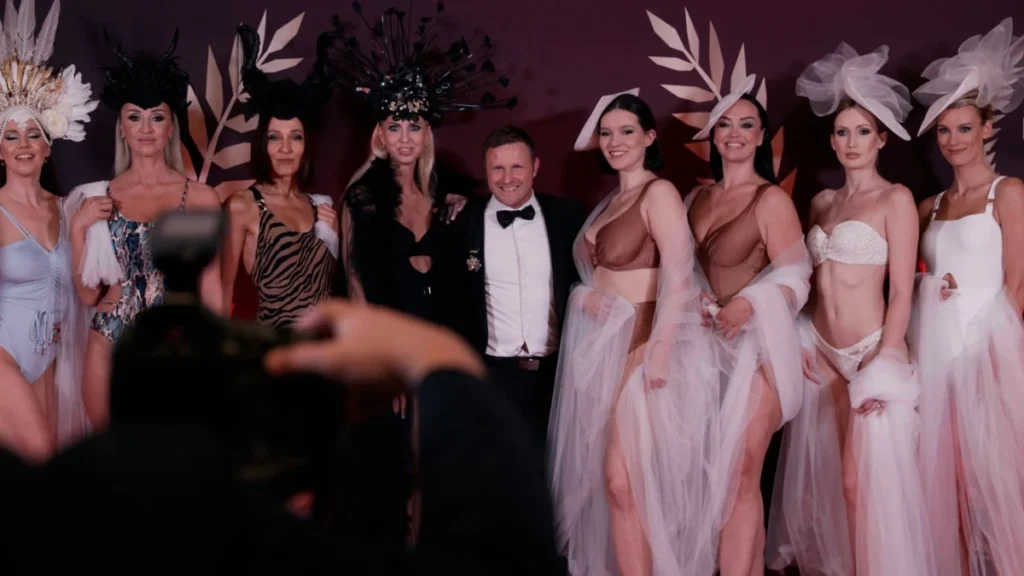

The glitz and glamour of international film festivals are traditionally viewed through a polished lens—flawless red carpet broadcasts, pristine celebrity photographs, and tightly edited television segments. Yet, the grueling realities behind capturing these fleeting moments have largely remained shielded from the public eye. That dynamic shifts with the world premiere of the documentary A Photographer in Cannes, debuting in the Special Screenings program at the landmark 30th edition of the Tallinn Black Nights Film Festival (PÖFF) in Estonia.
At the center of the film is Erlend Štaub, Estonia’s foremost chronicler of cinematic pageantry. For over a decade and a half, Štaub has been a ubiquitous presence on some of the world’s most exclusive red carpets, including the Cannes Film Festival, the Berlinale, and PÖFF’s own distinctive black carpet. Rather than hiding behind his telephoto lens, Štaub takes center stage in a cinematic exploration of endurance, physical stamina, and professional artistry that defines the modern entertainment photojournalist.
The documentary, directed and cinematographed by Kullar Viimne and co-written with editor Erik Norkroos, pulls back the curtain on a profession defined by high stakes, chaotic environments, and relentless physical demands. As A Photographer in Cannes makes its international bow in Estonia, it offers audiences a rare, unfiltered examination of the grueling lifestyle required to survive at the highest echelons of global cinema.
The Genesis of a Project: From Early Morning Text to Cinematic Reality
The journey to bringing A Photographer in Cannes to the screen began with an unexpected early morning communication. Director Kullar Viimne reached out to Štaub at 6:00 a.m. with an unorthodox proposal: to turn the camera on the man who usually spends his days and nights capturing others.
"First, I laughed loudly," Štaub recalled, reflecting on the initial pitch. "Kullar texted me at six in the morning. I wrote him back, and I said it was not a good idea. And he told me, ‘Just listen to me. Let’s meet, and I’ll explain everything.’"
Upon meeting, Štaub recognized that his day-to-day routine—though mundane to him—carried a sense of disbelief and fascination for the general public. Agreeing to the collaboration on the condition that he would assist the production when necessary, Štaub allowed Viimne unprecedented access to his professional ecosystem.
For a man accustomed to zeroing in on his subjects with absolute tunnel vision, sharing space with an additional camera crew required a brief mental adjustment. However, Štaub notes that his intense professional focus insulated him from distraction. "When I’m working, I’m always focused, and I don’t notice anybody else—I only see the people of whom I want to take a picture," he explained. "So, I didn’t have a problem with it."
Navigating the Machinery of Cannes
Gaining documentary access to the tightly controlled, hyper-secure environment of the Cannes Film Festival is no small feat. Security protocols, strict accreditation timelines, and territorial space management make unauthorized or observational filmmaking on the red carpet virtually impossible. Yet, due to Štaub’s stellar, long-standing reputation with the festival organizers, the production was granted a unique exception.
Representing Estonia—a small nation in the grand landscape of European cinema—Štaub has spent fifteen consecutive years earning the trust of French organizers, standing shoulder-to-shoulder with elite American and French photographers. Recognizing this mutual respect, festival organizers accommodated the documentary crew’s needs.
While standard accredited filmmakers must renew their red carpet access on a daily basis, Štaub’s standing allowed for a more integrated approach. When the production team requested permission to position cameras behind and in front of him on the carpet, festival officials facilitated the request. This institutional support allowed Viimne and his crew to capture authentic interactions, including candid moments between Štaub and high-profile figures such as model Bella Hadid.
The Physicality of Photojournalism: Training Like a Soldier
One of the most striking revelations of A Photographer in Cannes is its deep dive into the physical fitness required to excel in entertainment photojournalism. Popular perception often reduces red carpet photography to simply holding a camera and pressing a button. In reality, the profession demands the physical conditioning of an athlete and the mental resilience of a tactical operative.
Štaub is candid about the physical toll of his work. Long hours standing on concrete, heavy equipment loads, aggressive crowds of competing media personnel, and suffocating deadlines create an environment of extreme chronic stress.
"It’s very important because this is stressful work, so your physical shape needs to be strong, like a military person," Štaub emphasized, noting that he maintains a home gym specifically to combat the occupational hazards of his career. "The pressure is so high, and I’m just afraid that maybe I’m going to die on the red carpet [if I am not in good shape] because there are too many things going on."
Days do not end when the cameras stop flashing on the red carpet or inside exclusive parties. Štaub’s nights are routinely spent curating, editing, and transmitting thousands of high-resolution images to global news desks before the sun rises, ensuring publication by the following morning.
Mentorship and Authenticity: Advice for Aspiring Photographers
For young photographers looking to break into the hyper-competitive world of festival media, Štaub offers a singular, foundational piece of advice: authenticity above all else.
In an industry heavily populated by individuals striving to fit a specific aesthetic or behavioral mold, Štaub believes that a distinct personality is a professional asset rather than a liability. "First, don’t try to be anybody else. That is really important because you have your own business and your own personality, and people love that," he advised. "It’s very funny because I think I’m crazy, I’m not a normal person. But people love [personality]. So, be yourself!"
This unvarnished approach has yielded long-lasting professional relationships. Štaub recounts an encounter at the Berlinale seven years ago where he photographed a stranger in passing. Years later, the individual recognized him at the Tallinn Black Nights Film Festival, exclaiming, "Oh my God, you are the guy! I remember you from Berlin." For Štaub, creating memorable, face-to-face impressions with subjects and industry peers remains the cornerstone of effective visual storytelling.
Mutual Respect: Celebrities and the Media Ecosystem
Throughout his career, Štaub has photographed hundreds of the world’s most recognizable actors, directors, and cultural icons. When asked which celebrities are the most cooperative and pleasant to work with, he points to seasoned veterans who maintain a genuine appreciation for their audiences and the media. Names like Bill Murray, Omar Sy, Harrison Ford, Penélope Cruz, and Will Smith stand out for projecting an authentic warmth toward fans and photographers alike.
One particular encounter at the Cannes Film Festival left an indelible mark on the Estonian photographer. Vin Diesel, attending a major photocall, approached the media line with a distinct message of gratitude.
"The first thing he did was give me a fist bump," Štaub recalled. "And I said, ‘My God, this is the best day of my life.’ He really appreciates all the people. He came and said, ‘Thank you, everybody. I want to tell you one thing. I’m here because of all of you. You journalists and photographers made me a real actor.’ He really respects the photographers, the fans, and the audience."
Looking ahead, Štaub maintains a curated wishlist of cinematic icons he hopes to capture through his lens, leaning heavily toward performers known for intense, commanding screen presences. Alongside figures like Samuel L. Jackson, Keanu Reeves, Anthony Hopkins, Charlie Hunnam, Ron Perlman, and Danny Trejo, Štaub holds a special admiration for Sylvester Stallone, whom he has photographed previously and whose career resilience continues to inspire him.
The Local Stage: Tallinn Black Nights and the Art of Connection
While international festivals like Cannes and Berlin offer massive global footprints, Štaub’s relationship with Estonia’s own Tallinn Black Nights Film Festival (PÖFF) represents a different kind of professional fulfillment. Marking its milestone 30th edition, PÖFF has evolved from a regional eastern European showcase into an A-list international film festival, drawing heavy media scrutiny and massive public attendance.
Despite the intensity of managing crowds along the festival’s signature black carpet, Štaub views the local event with pride rather than undue pressure. However, the sheer volume of attendees means that difficult choices must be made. "Okay, a little bit [of pressure], because we have so many people and everybody wants to have a photo," he noted, acknowledging the heavy public demand. "And I see the [sad] faces when I must say, ‘Sorry, we need to close this black carpet.’"
Ultimately, whether working the sprawling walkways of the French Riviera or his home turf in Tallinn, Štaub’s methodology remains rooted in human connection. Rejecting the notion of detached, spray-and-pray photojournalism, his ideal working condition involves direct, individual engagement with his subjects.
"I always get the picture when people are looking straight at me. That’s, for me, the number one thing," Štaub explained. "Even at the Cannes Film Festival, if they are looking straight at my camera, that feels like I, the person [looking at the picture], and the celebrity are the only people in the room. There is a real connection."
Through A Photographer in Cannes, audiences are invited into that exact space of connection—witnessing firsthand the grit, sweat, and artistic dedication required to freeze a fraction of cinematic history onto a digital frame. As the documentary celebrates its world premiere at PÖFF, it ensures that the man behind the lens is finally recognized as a vital part of the cultural tapestry he has documented for decades.