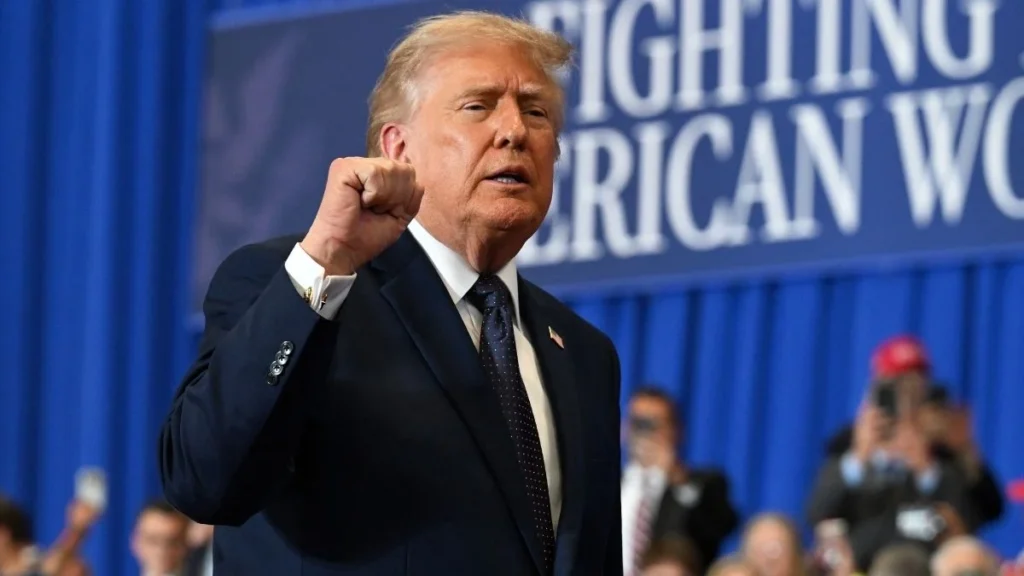

Donald Trump has publicly asserted that he achieved a perfect score on a high-difficulty cognitive assessment during a recent medical evaluation at the Walter Reed Military Medical Center. In a series of statements shared via his social media platform, Truth Social, the former president and current political figure touted his "extreme intelligence" and released specific details regarding his performance on the examination. The announcement, which surfaced over the final weekend of May 2026, has reignited a national conversation regarding the mental fitness of high-ranking government officials and the transparency of medical records for those seeking or holding executive office.
According to the posts shared by Trump, the cognitive screening was part of a broader physical examination. He reported a score of 30 out of 30, a result he characterized as "extremely good" and a feat he claims is rarely achieved by his peers in the political sphere. The post, which had garnered over 21,000 likes within a short period of its publication, serves as a cornerstone of Trump’s ongoing narrative regarding his personal health and mental acuity relative to his political opponents.
Details of the Medical Examination and Test Results
The examination took place at the Walter Reed Military Medical Center, a facility traditionally used by sitting presidents and high-level military personnel for comprehensive health assessments. Trump indicated that the results of the physical were "extremely good," but he placed the primary emphasis on the cognitive portion of the evaluation. By scoring 30 out of 30, Trump claimed to have demonstrated a level of mental clarity that he labeled "extreme intelligence."
This recent test reportedly marks the fourth time Trump has undergone such an assessment. In his communication, he noted a cumulative record of "120 correct answers out of 120 questions asked" across these four separate occasions. "It is very rare that anyone gets a Perfect Score, especially when achieved four times in a row," the post read. The consistency of these results has been utilized by Trump’s team to project an image of sustained cognitive health as he continues his involvement in the American political landscape at the age of 79.
The specific nature of the test was not explicitly named in the social media post, though it is widely inferred by medical experts and political analysts to be the Montreal Cognitive Assessment (MoCA). The MoCA is a 30-point screening tool designed to detect mild cognitive impairment and early signs of dementia. It assesses several cognitive domains, including attention and concentration, executive functions, memory, language, visuo-constructional skills, conceptual thinking, calculations, and orientation.
Chronology of Cognitive Testing and Public Disclosure
The focus on cognitive testing has been a recurring theme in Trump’s public discourse for several years. The timeline of these disclosures provides context for the most recent announcement:
- January 2018: During his presidency, Donald Trump underwent a physical exam conducted by then-White House physician Dr. Ronny Jackson. At Trump’s request, a cognitive test (the MoCA) was included. Dr. Jackson announced that the president had scored 30/30, stating at the time that there were "no indications whatsoever of any cognitive issues."
- July 2020: Trump frequently referenced his 2018 test results during interviews, famously describing the difficulty of the final questions, which often involve memory recall and basic arithmetic. He used these results to challenge the mental fitness of his then-opponent, Joe Biden.
- May 18–26, 2026: Leading up to the latest disclosure, Trump’s social media activity drew scrutiny when he repeated an old post word-for-word. Critics used the repetition to question his focus, while supporters viewed it as a consistent messaging strategy.
- May 31, 2026: Trump officially releases the results of his latest Walter Reed examination, claiming his fourth consecutive perfect score and calling for mandatory testing for all presidential candidates.
The Call for Mandatory Cognitive Testing for Politicians
A significant portion of Trump’s announcement was dedicated to a policy proposal regarding the eligibility of candidates for the nation’s highest offices. He argued that any individual running for President or Vice President should be legally "forced" to undergo high-difficulty cognitive tests. This demand was extended to include members of Congress, with Trump urging both Democrats and Republicans to support legislation that would mandate these screenings.
In his characteristic rhetorical style, Trump utilized the term "Dumocrats" to mock his political rivals, suggesting that they would be surprised by his performance. By framing the cognitive test as a hurdle that others might fail, he has positioned mental acuity as a primary campaign issue. The demand for mandatory testing taps into a broader public debate regarding the age of the American gerontocracy, as the average age of top-tier political leaders has trended upward over the last decade.
Understanding the Montreal Cognitive Assessment (MoCA)
To provide a factual basis for Trump’s claims, it is necessary to examine what a "30 out of 30" score signifies in a clinical setting. The MoCA is not an IQ test designed to measure "extreme intelligence," as Trump suggested, but rather a screening tool used by clinicians to establish a baseline of cognitive function.
The test typically includes tasks such as:
- Visuospatial/Executive: Drawing a clock set to a specific time and connecting letters and numbers in a specific sequence.
- Naming: Identifying drawings of animals (e.g., a lion, a rhinoceros, a camel).
- Memory: Recalling a list of five words after a delay.
- Attention: Repeating a string of numbers forward and backward.
- Language: Repeating complex sentences and naming as many words as possible starting with a specific letter within one minute.
- Abstraction: Explaining the similarity between two objects (e.g., a train and a bicycle).
- Orientation: Stating the current date, month, year, day, and city.
While a perfect score indicates that the subject does not currently suffer from detectable cognitive impairment, medical professionals often note that the test is designed to be easy for individuals with normal brain function. However, in the high-stakes environment of executive politics, the ability to produce a "perfect" result is often used as a defensive tool against allegations of age-related decline.
Political Reactions and Public Implications
The reaction to Trump’s post has followed predictable partisan lines. Supporters have lauded the results as proof of his vitality and readiness for leadership, often sharing the 30/30 score as a badge of competence. On the other hand, critics and political opponents have questioned the "high difficulty" description of the test, pointing out that the MoCA is a basic screening tool rather than a comprehensive neurological exam.
The Democratic Party has not officially responded to the "Dumocrats" label, but various representatives have previously argued that health disclosures should be standardized and handled by independent medical boards rather than through social media snippets. The call for mandatory testing for the Vice Presidency and Congress adds a new layer to the debate, potentially affecting a wide swath of veteran lawmakers if such a requirement were ever enacted.
Furthermore, the timing of the post—following a week where Trump was trolled for "recycling" content—suggests a strategic effort to pivot the narrative back to his strengths. By emphasizing the Walter Reed results, the Trump communications team is attempting to overshadow recent social media gaffes with "hard data" from a respected military institution.
Broader Impact on Presidential Standards
The precedent of disclosing cognitive health is a relatively new phenomenon in American politics. Historically, presidents like Franklin D. Roosevelt and John F. Kennedy went to great lengths to hide significant physical ailments from the public. The modern era, characterized by 24-hour news cycles and social media, has demanded a higher level of transparency.
Trump’s insistence on cognitive testing may set a new standard for future candidates. If the public begins to expect or demand MoCA results (or more rigorous evaluations) from all presidential hopefuls, it could fundamentally change how campaigns are run and how candidates are vetted. This shift places a premium on "performative health," where the ability to pass a test and publicize the results becomes as important as policy platforms.
As the 2026 political season progresses, the focus on mental fitness is unlikely to wane. Trump’s latest claims have ensured that cognitive health remains a central theme, challenging both his allies and his detractors to address the intersection of age, medical transparency, and executive capability. Whether the "30 out of 30" score will influence voters remains to be seen, but it has undeniably succeeded in placing the former president’s mental stamina at the forefront of the national discourse once again.