

The South Korean entertainment industry continues to solidify its position as a dominant force in the global streaming landscape, with May 2026 poised to deliver a diverse slate of high-budget productions across various platforms. As the "K-content" phenomenon evolves into its next phase, major broadcasters and international streaming giants like Netflix, tvN, MBC, and JTBC are shifting their focus toward high-concept narratives that blend traditional Korean tropes with innovative genre-bending elements. This upcoming month features a strategic mix of historical fantasy, "healing" melodramas, and supernatural mysteries, reflecting a broader industry trend of catering to both domestic audiences and a burgeoning international fanbase that demands higher production values and complex storytelling.
The scheduled releases for May 2026 indicate a significant investment in intellectual property (IP) adaptations, particularly from popular webnovels and webtoons. This strategy serves to mitigate financial risks by leveraging existing fanbases while providing a narrative blueprint that has already proven successful in digital formats. Furthermore, the inclusion of established K-pop idols in leading roles remains a cornerstone of the industry’s marketing strategy, ensuring cross-promotional success and high social media engagement prior to premiere dates.
Chronological Breakdown of May 2026 K-Drama Premieres
The May lineup is strategically distributed across the month to maximize viewership and minimize direct competition between tentpole series. The following chronology outlines the primary releases:

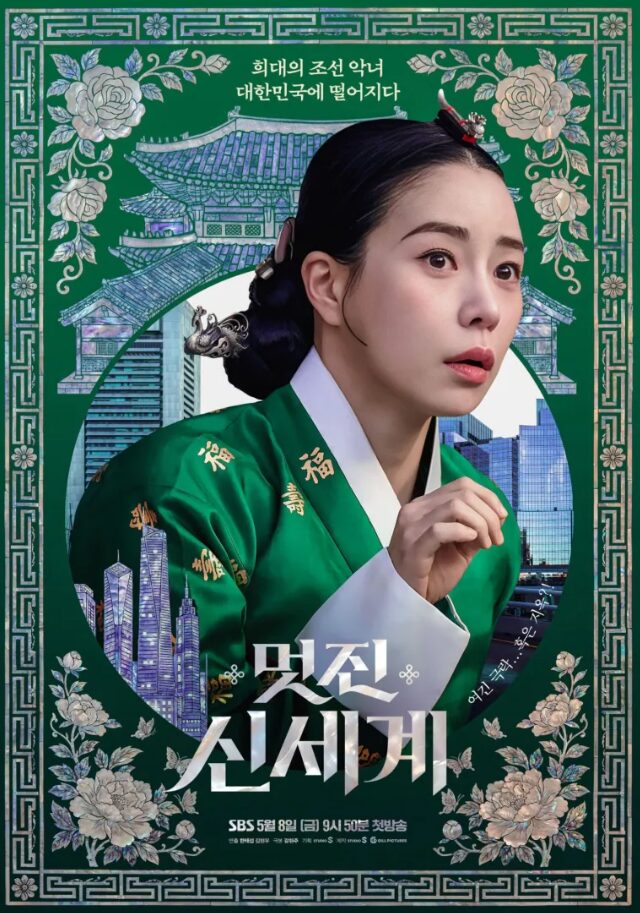
May 8: My Royal Nemesis (Netflix)
Kicking off the month’s major releases, Netflix presents My Royal Nemesis, a series that merges the popular "reincarnation" subgenre with the historical "sageuk" aesthetic. The narrative follows a notorious villainess from the Joseon era who, after being executed by poison, finds herself transported to modern-day Seoul. Her soul inhabits the body of a struggling actress, creating a fish-out-of-water scenario that drives the show’s comedic and dramatic beats.
The central conflict arises when she encounters a ruthless chaebol heir, described as a "monster of capitalism." This character dynamic explores the friction between feudal-era social hierarchies and modern corporate power structures. Industry analysts suggest that Netflix is positioning this series as a successor to its previous historical-fantasy hits, aiming to capture the audience that enjoys high-stakes romance tempered with social commentary.
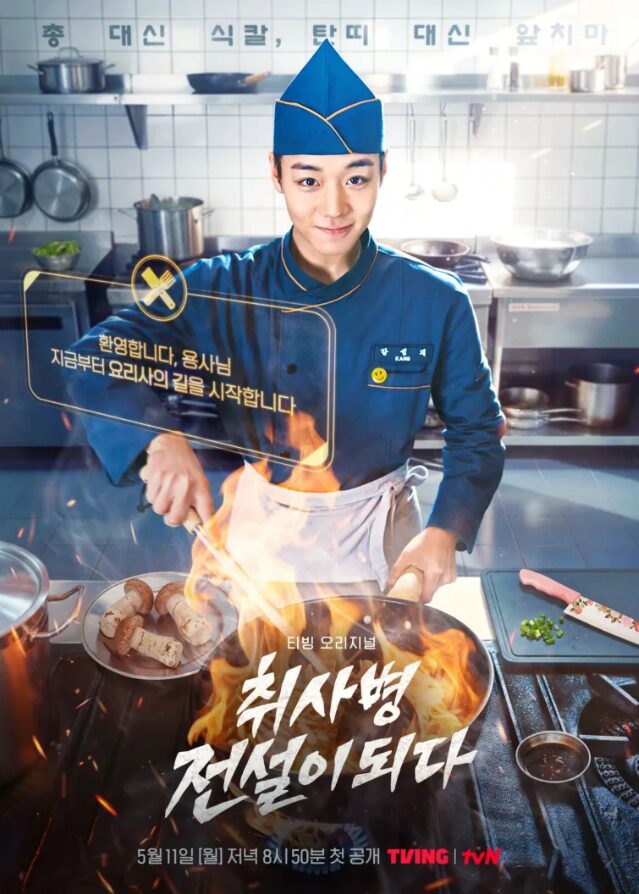
May 11: The Legend of Kitchen Soldier (tvN)
Simultaneously premiering on cable network tvN, The Legend of Kitchen Soldier introduces a unique "gamified" reality within a military setting. The story focuses on a young man who enlists in the army to escape a bleak civilian life, only to discover that his military experience is governed by a virtual interface visible only to him.
The protagonist must complete specific quests—manifesting as pop-up screens—to rise through the ranks. However, rather than becoming a combat specialist, the system directs him toward becoming a legendary military cook. This series reflects the growing "LitRPG" (Literary Role-Playing Game) influence in Korean media, where characters navigate life using video game mechanics. It offers a satirical take on mandatory military service while celebrating the unsung heroes of the mess hall.

May 11: Azure Spring (Streaming Platform TBD)
Also premiering on May 11, Azure Spring represents the "healing drama" genre, which has seen a resurgence in popularity as viewers seek comfort-oriented content. Starring Yeri of the globally recognized K-pop group Red Velvet, the series is set in a coastal diving village.
The plot centers on two individuals burdened by past trauma and existential dread regarding their futures. As they work as divers—a profession deeply rooted in Korean coastal culture—they form a bond that facilitates mutual psychological recovery. Production insiders note that the series emphasizes cinematography and atmospheric storytelling, aiming to provide a visual and emotional "respite" for the audience.
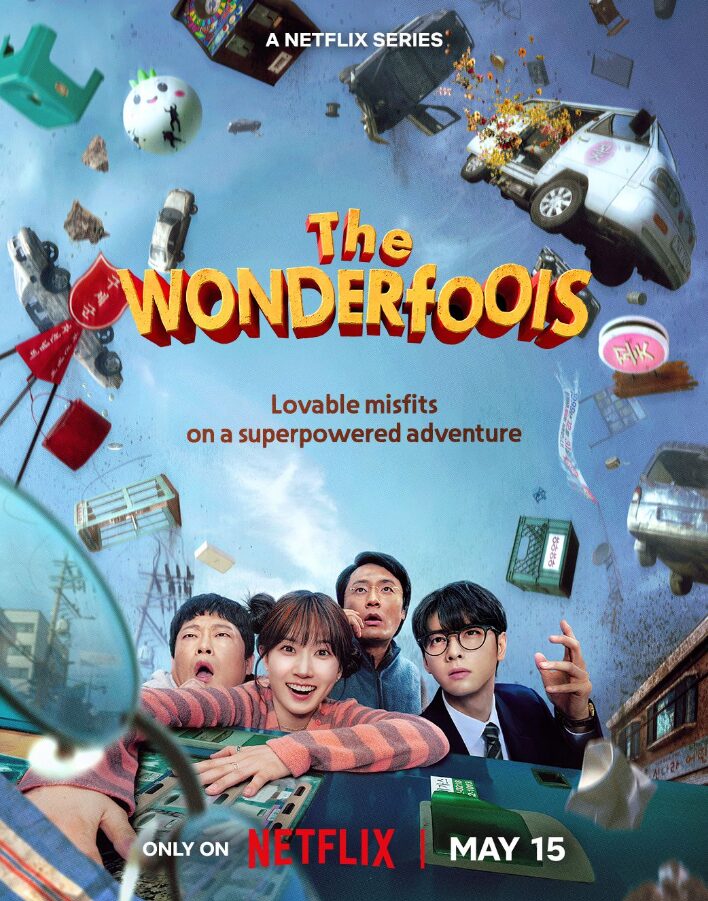
May 15: The WONDERfools (Netflix)
Mid-month, Netflix returns with The WONDERfools, a superhero drama set against the nostalgic backdrop of 1999. Unlike traditional superhero narratives that feature infallible icons, this series focuses on "ordinary" citizens who gain flawed and often uncontrollable powers.
The setting is crucial, as the characters must navigate their new abilities while the world prepares for the turn of the millennium and the "Y2K" era. The plot thickens when the group uses their powers to investigate a string of mysterious disappearances in their city. The series is expected to blend retro aesthetics with modern special effects, tapping into the global trend of "subversive" superhero media.
May 22: Fifties Professionals (MBC)
MBC’s major contribution for the month is Fifties Professionals, a thriller that shifts the spotlight to a demographic often sidelined in mainstream K-dramas: middle-aged professionals. The story involves three former elite power brokers who, following a significant fall from grace, have retreated to a remote island to live in obscurity.
Their quiet lives are disrupted when a cold case from their past resurfaces, forcing them back into a world of high-stakes intrigue. The drama is expected to be a masterclass in ensemble acting, focusing on the weight of secrets and the complexities of redemption. It targets an older demographic while maintaining the tension necessary to attract younger thriller enthusiasts.
May 30: Reborn Rookie (JTBC)
Closing the month is JTBC’s Reborn Rookie, an office-fantasy series based on the popular webnovel The New Employee Chairman Kang by San Kyung. The premise involves a supernatural soul-swap between a powerful corporate chairman and a professional soccer player.
The narrative hook lies in the chairman being forced to navigate the corporate ladder of his own company from the very bottom as a rookie employee. This "undercover boss" scenario, enhanced by fantasy elements, allows for a critique of Korean corporate culture and the generational gap in the workforce. Given the success of previous JTBC webnovel adaptations like Reborn Rich, expectations for this series are high.
Supporting Data and Production Trends
The May 2026 slate highlights several critical data points regarding the current state of the Korean television industry. First, there is a clear reliance on "hybrid genres." Out of the six major releases, four involve elements of fantasy, time travel, or supernatural intervention. This shift suggests that domestic production houses believe traditional melodramas require a "high-concept" hook to compete in a saturated global market.
Furthermore, the budget allocations for these series show a marked increase compared to the previous two years. Netflix’s The WONDERfools and My Royal Nemesis reportedly feature per-episode budgets exceeding 3 billion KRW (approximately $2.2 million USD), primarily driven by the costs of period-accurate costumes and advanced CGI for superpowers and historical recreations.
The casting of "idol-actors" like Red Velvet’s Yeri in Azure Spring continues to be a calculated business move. Data from previous years indicates that dramas featuring K-pop stars see a 40% higher rate of international streaming subscriptions and a significant boost in social media mentions, which serves as free marketing for the platforms.
Industry Reactions and Strategic Analysis
While official statements from the networks remain focused on promotional highlights, industry analysts have noted a strategic "narrowcasting" approach in the May schedule. By diversifying the genres—ranging from the military comedy of The Legend of Kitchen Soldier to the mature thriller Fifties Professionals—broadcasters are attempting to capture distinct segments of the viewing public simultaneously.

"The May 2026 lineup demonstrates a sophisticated understanding of platform dynamics," says Kim Min-ho, a media analyst at the Seoul Center for Cultural Studies. "Netflix is doubling down on high-concept, globally digestible tropes like superheroes and reincarnation, while domestic channels like MBC and tvN are leaning into niche cultural experiences, such as military life and the ‘healing’ coastal aesthetic, to maintain their local stronghold."
Inferred reactions from production houses suggest a growing pressure to deliver "viral" moments. The soul-swapping mechanic in Reborn Rookie and the virtual interface in The Legend of Kitchen Soldier are designed to be easily clipped and shared on platforms like TikTok and Instagram, which has become a primary metric for a drama’s success in the mid-2020s.
Broader Impact and Global Implications
The global implications of this May slate extend beyond mere entertainment. As K-dramas continue to dominate top-10 lists in regions such as Southeast Asia, Latin America, and increasingly Europe, these shows act as a vehicle for "soft power."
The focus on historical accuracy in My Royal Nemesis and the exploration of Korean corporate hierarchy in Reborn Rookie provide international viewers with a nuanced (albeit dramatized) look at Korean history and social values. This cultural export has direct economic benefits, influencing everything from tourism to the global demand for Korean consumer goods, a phenomenon often referred to as the "Hallyu Effect."
Moreover, the competition between global streamers and local broadcasters is leading to a "quality arms race." To compete with Netflix’s massive production budgets, local networks like JTBC and tvN are forming international partnerships and seeking co-production deals. This globalization of the production process means that even "local" dramas are now being filmed with an international eye, utilizing higher frame rates, 4K HDR standards, and more sophisticated sound design.
In conclusion, May 2026 is set to be a landmark month for K-content. The variety of stories—from the kitchens of the military to the high-rise offices of Seoul and the mystical shores of diving villages—ensures that there is a narrative for every type of viewer. As these series begin to air, they will likely set the tone for the remainder of the year’s television trends, proving once again that the Korean creative engine shows no signs of slowing down.