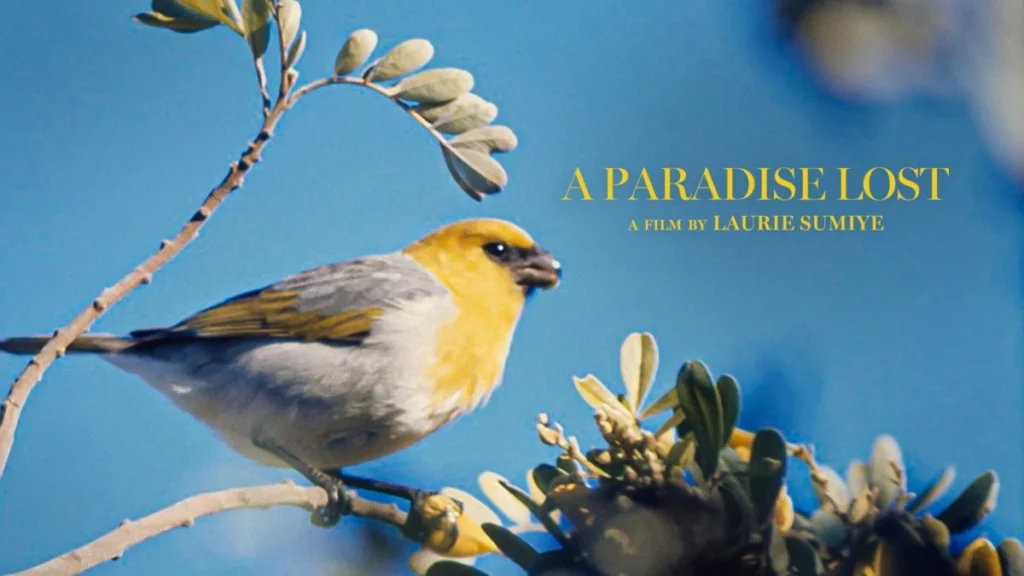

An official trailer has been released for the compelling documentary film A Paradise Lost, a powerful exploration of conservation, extinction, and the legal battles waged to protect endangered species. The film, helmed by artist and filmmaker Laurie Sumiye, chronicles the extraordinary story of an animated Hawaiian bird that became the first animal to sue humans in a landmark case aimed at preventing its extinction. This documentary delves into the urgent threats of climate change, wildfires, and invasive species that imperil native wildlife, presenting a timely and poignant narrative for a world grappling with ecological crises.
The Palila v. Hawaii Landmark Case: A Bird’s Fight for Survival
At the heart of A Paradise Lost lies the pivotal 1979 lawsuit, Palila v. Hawaii Department of Land and Natural Resources. This groundbreaking legal challenge saw an endangered animal, represented by a stuffed palila bird in the courtroom, take human authorities to court to safeguard its existence. The case was a direct response to the devastating impact of introduced sheep and goats on the palila’s critical habitat on Mauna Kea, Hawaii Island. These invasive herbivores consumed native vegetation, decimating the food sources and nesting grounds of the palila, pushing the species to the precipice of oblivion. The legal action represented a radical assertion of the right to exist for non-human species, a concept that resonated deeply within the environmental advocacy community and continues to hold relevance today.
The palila, a small, honeycreeper bird endemic to Hawaii, is characterized by its vibrant yellow plumage. Once a thriving species, its population has plummeted dramatically over the past century due to habitat loss, introduced predators, and disease. The legal battle was a desperate measure to halt the destruction of its sub-alpine forest habitat, a delicate ecosystem uniquely suited to the bird’s survival. The lawsuit’s success mandated the removal of the invasive ungulates from the palila’s critical habitat, a significant victory for conservation efforts and a testament to the power of legal recourse in environmental protection.
Filmmaker Laurie Sumiye’s Vision: Interweaving Perspectives

Laurie Sumiye, a renowned Hawaiian nature artist, brings her unique perspective to A Paradise Lost, her first feature-length documentary. The film masterfully blends various cinematic techniques to create a rich and immersive experience. Through a combination of interviews with scientists, conservationists, and community members, archival footage, vérité sequences, and evocative animation, Sumiye crafts a narrative that transcends human viewpoints. The film poetically explores the interconnectedness of life, death, rebirth, and recovery within natural ecosystems, offering audiences a profound glimpse into the non-human experience of nature.
Sumiye’s artistic background imbues the documentary with a visually stunning aesthetic. The film showcases the breathtaking landscapes of Hawaii, particularly the misty sub-alpine forests of Mauna Kea, a region often referred to as the "Bird Extinction Capital of the World" due to the alarming rate of species loss in the archipelago. By highlighting these natural wonders, Sumiye underscores the immense biodiversity at stake and the urgent need for preservation. The animated sequences, featuring the palila bird as the central protagonist, serve as a powerful narrative device, allowing the audience to connect with the animal’s plight on an emotional level.
A Decade in the Making: The Long Road to Conservation
The creation of A Paradise Lost has been a monumental undertaking, spanning over a decade. This extended period of production allowed Sumiye and her team to delve deeply into the complex history of conservation efforts in Hawaii, the challenges faced by indigenous species, and the enduring legacy of the Palila v. Hawaii lawsuit. The film meticulously uncovers the decades-long struggle against those who opposed habitat restoration and the removal of invasive species, revealing the intricate web of human interests and ecological imperatives at play.
The journey to protect the palila has been fraught with obstacles. For years, the bird’s habitat was under severe threat from introduced game animals that decimated native flora. The legal action was a last resort, a bold attempt to force authorities to prioritize the survival of a species over traditional land use practices. The film documents not only the legal battles but also the ongoing challenges of ecological restoration, demonstrating that conservation is a continuous process requiring sustained commitment and vigilance.
Key Figures and Voices in the Documentary

A Paradise Lost features a cast of individuals who have been instrumental in the fight for conservation and the legal defense of endangered species. While specific details about their on-screen roles are limited in the initial trailer, the film is expected to include insights from:
- Kalā Lindsey-Asing: Likely to offer a perspective rooted in Hawaiian culture and indigenous knowledge, potentially connecting the palila’s struggle to broader themes of environmental stewardship.
- Michael Sherwood: Could represent legal experts or environmental advocates involved in the Palila v. Hawaii case or subsequent conservation efforts.
- Marjorie Ziegler: Her involvement might point to a role in environmental activism or research related to Hawaiian ecosystems.
- Kaipo Schwab: As the voice of ʻĀnuenue (the animated palila bird), Schwab is crucial in bringing the protagonist’s journey to life and conveying its emotional arc.
The film’s producers, including Anne Misawa, have emphasized the importance of telling this story with sensitivity and accuracy, ensuring that the scientific and historical context is presented effectively.
Broader Implications: A Global Call to Action
The release of A Paradise Lost arrives at a critical juncture in global environmental awareness. The accelerating pace of biodiversity loss, driven by human activities, has prompted urgent calls for more effective conservation strategies and a re-evaluation of humanity’s relationship with the natural world. The film’s central theme—the right of species to exist—challenges anthropocentric views and advocates for a more inclusive ethical framework that recognizes the intrinsic value of all life.
The documentary’s focus on Hawaii, a biodiversity hotspot facing immense environmental pressures, serves as a microcosm of global conservation challenges. The threats of climate change, habitat destruction, and invasive species are not unique to the islands; they are pervasive issues that affect ecosystems worldwide. By highlighting the success of the Palila v. Hawaii lawsuit, A Paradise Lost offers a message of hope, demonstrating that legal and societal interventions can make a tangible difference in protecting vulnerable species.
The film’s debut in select U.S. theaters on July 31, 2026, followed by a broadcast on PBS later in the year, aims to reach a broad audience and spark meaningful dialogue. The availability of the official trailer and the film’s official website provides avenues for further engagement and information.

The Fight Against Extinction: A Continued Battle
While the Palila v. Hawaii lawsuit marked a significant victory, the struggle for the palila’s survival and the health of its habitat is ongoing. Conservation efforts require continuous monitoring, habitat restoration, and the management of invasive species. The film’s decade-long production period suggests a deep dive into the complexities of these efforts, illustrating the long-term commitment needed to achieve ecological recovery.
The film’s narrative arc, encompassing the initial legal battle, the subsequent decades of conservation work, and the ongoing threats to biodiversity, provides a comprehensive overview of the challenges and triumphs in the fight against extinction. It serves as a powerful reminder that the preservation of our planet’s natural heritage is a shared responsibility, requiring the collective action of governments, scientific communities, and individual citizens.
Conclusion: A Timely Fable for a Troubled Planet
A Paradise Lost is more than just a documentary; it is a timely fable that resonates with the urgency of our current ecological crisis. By weaving together historical events, scientific insights, and artistic expression, Laurie Sumiye’s film offers a profound meditation on the intrinsic value of life and the imperative to protect the natural world. The story of the palila bird, its legal battle for survival, and the ongoing efforts to restore its habitat serve as a potent call to action, urging audiences to consider their role in safeguarding the planet’s biodiversity for future generations. The film’s release promises to be a significant cultural event, fostering greater awareness and inspiring a renewed commitment to conservation.