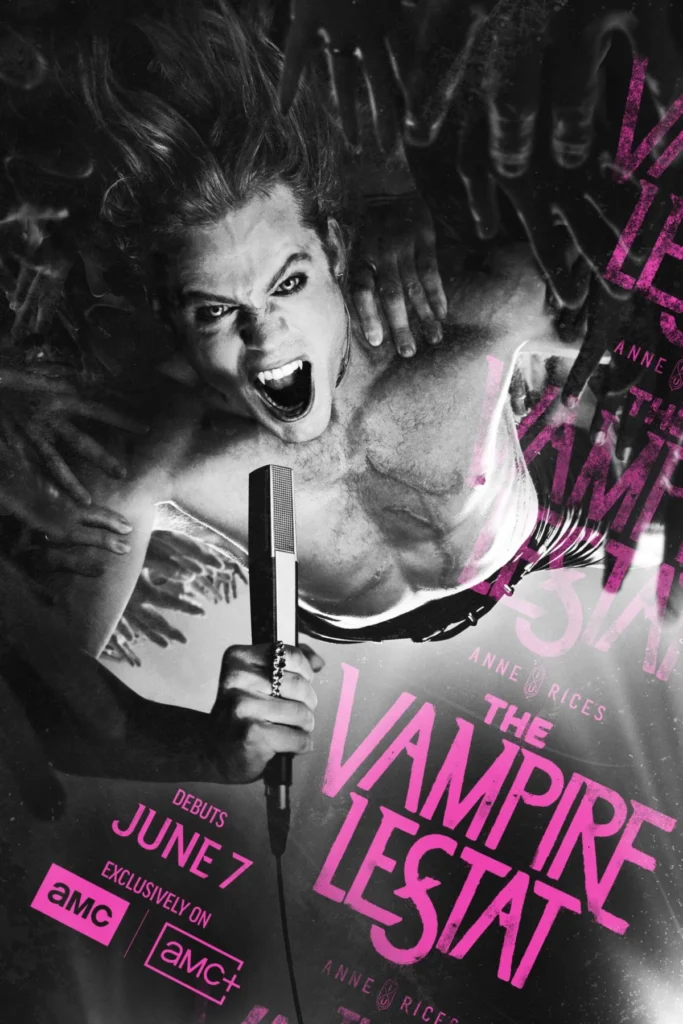

The immortal rock star Lestat de Lioncourt, a figure perpetually shrouded in both legend and controversy, has once again ignited the press with a barrage of characteristic pronouncements, this time targeting the musical contributions of composer Daniel Hart. As the highly anticipated third season of AMC’s Interview with the Vampire, rebranded as The Vampire Lestat, approaches its premiere on Sunday, June 7, the vampire’s provocative statements are amplifying the buzz around his upcoming one-night-only concert on June 2. This latest salvo from the ageless musician takes aim at Hart’s work not only on the AMC series but also on the score for the forthcoming film Mother Mary, a project that has garnered significant attention for its star-studded cast, including Anne Hathaway and Michaela Coel.
The transition of the series to The Vampire Lestat for Season 3 marks a pivotal narrative shift, delving into the enigmatic backstory of Lestat himself. The new season promises to immerse viewers in the vampire’s formative years as he embarks on an electrifying multi-city tour with his band, whose meteoric rise to fame parallels Lestat’s own burgeoning influence. Actor Sam Reid, who embodies the iconic vampire, has been instrumental in bringing Lestat’s musical persona to life, having personally recorded several songs for the series. Reid’s commitment extends to live performances during filming, a testament to his dedication to portraying the multifaceted rock star. The release of singles such as "Long Face" and the show’s theme song, "All Fall Down," has been accompanied by Lestat’s typically acerbic commentary, often in direct response to the more laudatory statements issued by composer Daniel Hart. This dynamic interplay, a carefully orchestrated PR strategy, underscores Lestat’s persona as a provocateur, even in the realm of music.
The latest musical offering, "Butterscotch Bitch," has become the focal point of this ongoing media narrative. Hart, reflecting on the track, expressed his intention for it to be the most authentic representation of Lestat’s character to date, stating, "And why not end the songwriting with a song that Lestat wrote about himself? He is, after all, The Lestat-iest Lestat that’s ever Lestat-ed." This self-referential sentiment, however, was met with a characteristically sharp retort from Lestat himself. The immortal musician’s public statement sarcastically suggested that "Butterscotch Bitch" might more accurately reflect Daniel Hart’s creative process, implying it was conceived "on a toilet in between vegan burritos and sessions for his Mother Mary score." Lestat further quipped that the song might find its niche on Hathaway’s "rescue dog grooming playlist," a jab that cleverly alludes to the film’s stars and subtly dismisses Hart’s artistic endeavors. This exchange, while ostensibly a public spat, serves to underscore the show’s commitment to Lestat’s audacious and often confrontational persona, a key element of his enduring appeal.
The Evolving Landscape of The Vampire Lestat
The rebranding of Interview with the Vampire to The Vampire Lestat for its third season signifies more than just a title change; it represents a profound narrative exploration of the character who has long been the enigmatic center of Anne Rice’s vampire chronicles. The upcoming season, set to premiere on AMC on Sunday, June 7, at 9/8c and streaming on AMC+, will pivot to a retrospective journey, charting Lestat’s early life and his ascent to rock superstardom. This chronological shift allows for a deeper understanding of the motivations and experiences that shaped the immortal musician, from his initial embrace of vampirism to his pioneering role in the world of music.
The narrative arc of Season 3 is expected to follow Lestat as he navigates the exhilarating, yet treacherous, landscape of a multi-city tour. This journey is not merely a physical one but also an internal exploration, as he is reportedly haunted by "muses" from his tumultuous past. These spectral companions are likely to represent significant figures and events that have influenced his long and often bloody existence, adding layers of psychological complexity to his character. As his band’s popularity escalates, so too does Lestat’s influence, extending his reach over both the mortal and immortal realms. This burgeoning power comes at a critical juncture, coinciding with the "Great Conversion," a mysterious and unprecedented surge in the vampire population, which threatens to destabilize the established order and ignite new conflicts.
The production of the series has consistently aimed to capture the authentic spirit of Lestat’s musical endeavors. Sam Reid’s direct involvement in recording and performing songs for the show has been a cornerstone of this effort. The release of singles like "Long Face" and "All Fall Down," the latter serving as the show’s theme song, has been strategically timed to coincide with promotional activities. Furthermore, the inclusion of a cover of Billy Idol’s iconic "Dancing With Myself" speaks to the show’s dedication to exploring Lestat’s musical roots and his impact on the rock and roll scene. These musical releases are not merely standalone pieces of content; they are integral components of the show’s overarching narrative and marketing strategy, designed to immerse audiences in Lestat’s world.
A Behind-the-Scenes Look at the Music and its Creators
The collaborative process between composer Daniel Hart and the show’s creative team, particularly in the context of Lestat’s persona, has been a defining characteristic of the series. Hart’s musical scores have been lauded for their ability to capture the dark allure and operatic grandeur of Rice’s universe. For The Vampire Lestat, Hart has been tasked with creating music that not only complements the on-screen drama but also embodies the rebellious spirit of Lestat’s rock persona.
Hart’s statement regarding "Butterscotch Bitch" underscores his deep engagement with the character and his creative ambition. His description of the song as "the song I wrote with the most knowledge of Lestat under my belt to date" suggests a meticulous approach to character interpretation through music. The phrase "The Lestat-iest Lestat that’s ever Lestat-ed" is a playful yet telling indication of Hart’s desire to distill the essence of the character into a single musical composition. This level of detail and commitment from a composer is crucial in translating a literary icon into a multi-sensory experience for television audiences.
The contrasting public statements from Lestat and Hart highlight a deliberate narrative strategy. The "b*tchy, in-character statements" attributed to Lestat serve as a direct counterpoint to Hart’s more earnest and appreciative commentary. This creates a dynamic tension that mirrors the often-combative relationships within the vampire lore. While Lestat’s pronouncements are presented as his own voice, they are, in reality, crafted by the show’s writers to maintain his established personality. This meta-narrative, where the fictional character engages in a public discourse about his own music and its creator, adds an intriguing layer of meta-commentary to the promotional campaign.
The implications of this promotional strategy are multifaceted. It generates considerable media attention, ensuring that the upcoming season and concert are top of mind for fans and potential viewers. It also reinforces Lestat’s character as a magnetic, albeit often abrasive, figure, whose pronouncements are as much a part of his performance as his music. By framing the musical releases within this ongoing public dialogue, AMC is not just promoting a television show; it is actively engaging audiences in the mythology of Lestat de Lioncourt.
The Ensemble Cast and Creative Forces Behind the Series
The success of The Vampire Lestat hinges not only on the central performance of Sam Reid but also on the contributions of a talented ensemble cast and a dedicated creative team. Jacob Anderson, who reprises his role as Louis de Pointe du Lac, remains a crucial presence, providing a counterpoint to Lestat’s unbridled ego. Assad Zaman as Armand, Eric Bogosian as Daniel Molloy, Delainey Hayles as Claudia, and Jennifer Ehle as Madeleine are also integral to the unfolding narrative, each bringing their unique interpretations to these complex characters.
The series is executive produced by a team of seasoned industry professionals, ensuring a high level of quality and artistic integrity. Mark Johnson, an award-winning producer known for his work on numerous acclaimed projects, lends his expertise to the production. Rolin Jones, who serves as creator, writer, and showrunner, is the driving force behind the narrative vision for The Vampire Lestat. His deep understanding of Anne Rice’s source material and his ability to translate it into compelling television are paramount to the show’s success. The team also includes Hannah Moscovitch, Christopher Rice, and the late Anne Rice, whose foundational work continues to inspire the series. The inclusion of Anne Rice’s name in the executive producer credits serves as a powerful reminder of the literary legacy that The Vampire Lestat is built upon.
The broader context of Anne Rice’s literary universe provides a rich tapestry from which the series draws its themes and characters. The vampires, with their eternal lives, complex moral codes, and often tragic existences, have captivated readers for decades. Lestat, in particular, has evolved from a villainous figure in early novels to a more nuanced and charismatic protagonist, a transformation that the television series aims to fully explore. The introduction of the "Great Conversion" in Season 3 suggests a significant turning point in the vampire world, potentially leading to new alliances, conflicts, and a redefinition of vampiric society.
The concert on June 2, presented as a "one-night-only" event, further amplifies the mystique surrounding Lestat. Such exclusive events are typical of major musical artists, and for a fictional character, it underscores the show’s commitment to blurring the lines between reality and fiction. The event serves as a promotional crescendo, building anticipation for the season premiere and offering fans a tangible experience of Lestat’s musical prowess. The critical and commercial success of Interview with the Vampire has already established a strong foundation for The Vampire Lestat, and the continued engagement with its characters and themes suggests a promising future for the franchise on AMC.
Analyzing the Implications of Lestat’s Media Strategy
Lestat’s consistent use of the press as a platform for his pronouncements is not merely a character quirk; it is a sophisticated media strategy that has proven effective in generating buzz and maintaining audience engagement. By positioning himself as an arrogant, self-aggrandizing artist, Lestat taps into archetypes that resonate with the public’s fascination with rock star personas. His jabs at Daniel Hart, while seemingly petty, serve to elevate the perceived importance of both the music and the composer. The more Lestat criticizes, the more attention is drawn to Hart’s work, creating a symbiotic relationship that benefits the promotional efforts of the show.
The inclusion of Mother Mary in Lestat’s critiques adds another layer of strategic depth. By referencing a film starring established Hollywood figures like Anne Hathaway and Michaela Coel, Lestat’s pronouncements gain wider relevance and reach. This cross-promotion, even in a negative context, ensures that The Vampire Lestat remains in the cultural conversation alongside other high-profile projects. It suggests a deliberate effort to integrate the show’s narrative into the broader entertainment landscape, leveraging the star power of associated projects to bolster its own visibility.
The implications of this approach extend beyond mere publicity. It allows AMC to explore the character of Lestat in a way that is both faithful to Anne Rice’s vision and relevant to contemporary media consumption. The meta-narrative of a fictional character engaging in real-world media cycles creates a unique form of audience engagement, inviting viewers to participate in the fictional world by dissecting and discussing Lestat’s public persona. This blurs the lines between passive viewership and active fandom, encouraging a deeper connection with the series.
Furthermore, the success of this strategy can be measured by the continued interest in The Vampire Lestat as it transitions into its third season. The fact that these "insulting statements" have become a recurring element of the promotional cycle indicates their effectiveness in capturing audience attention and fostering anticipation. The carefully curated conflict between Lestat and Daniel Hart serves as a compelling narrative hook, promising not only compelling storytelling on screen but also an ongoing, engaging public dialogue surrounding the series. As the premiere date approaches, the vampire’s voice, amplified by the press, continues to dominate the discourse, ensuring that The Vampire Lestat remains a significant cultural event.